Federated Farmers Welcomes ACT’s New Farming Policies
Federated Farmers has welcomed new rural policies released by ACT, saying they align closely with its own election priorities.
 increase font size
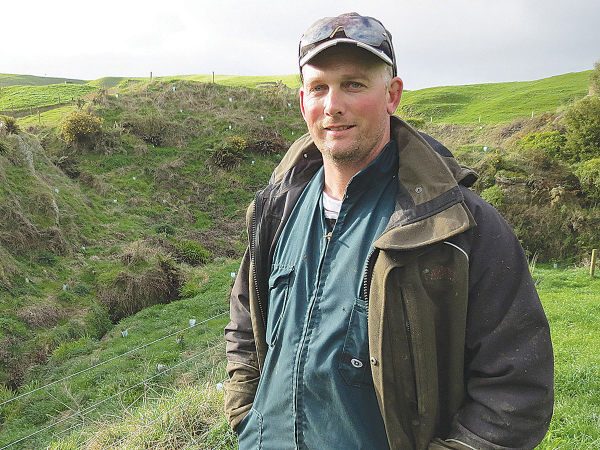 Federated Farmers dairy chairman Chris Lewis.
If you're a dairy farmer reading this, then ask yourself, are you a good boss?
Do you value your workers and is their wellbeing your priority?
Most farmers are good employers and to celebrate this, industry stakeholders have launched the Good Boss campaign.
A sector-wide initiative by Federated Farmers, DairyNZ, Dairy Women’s Network and NZ Young Farmers it was launched last month at a Federated Farmers event in Wellington.
The campaign has a simple objective – to celebrate dairy farmers who are good bosses and think about ways to be better bosses.
With 11,500 dairy farming businesses and most employing someone to help run the farm, the campaign is timely.
However, like every other sector, not everyone in the dairy sector turns out to be a good boss.
There are bad employers in the dairy sector; just last week a Twitter user, whose Twitter profile reads ‘English girl experiencing the Kiwi-style dairy systems in New Zealand’ asked fellow Twitter users to clarify what ‘sole charge’ is?
“I drove seven hours back from Kerikeri on Friday to look after this farm for three days. The owner got the cows in on Saturday morning and then left. But because he got the cows in, I don’t get paid ‘sole charge’ rates. Instead I got $40.”
Most farmers, who responded to the story on Twitter, slammed the farmer.
By any imagination, that doesn’t sound like a good boss at all and surely isn’t a reflection on other bosses in NZ dairy farming.
Federated Farmers dairy chairman Chris Lewis says most people can tell you a story about having worked for a bad one.
“They are memories that linger. They are stories that get shared about the pub and now sometimes on social media.
“As a sector we currently don’t have enough people who want to work on our farms. We are short staffed. Many of us live and feel the impacts of this every day.
“Without our 4000 odd (highly valued) migrant workers on temporary work visas we would be stuffed, cows would not be being milked.
“There are of course a number of reasons we can’t find enough capable employees – socio economic policy, urban migration, generational expectations etc. Some of these things are outside our control. But the thing that is inside our control that would make a difference – being a good boss.”
The Good Boss campaign is a great start: let’s hope it delivers a sector of good bosses.
Federated Farmers has welcomed new rural policies released by ACT, saying they align closely with its own election priorities.
Federated Farmers is backing Feilding High School’s call to keep Agriculture and Horticultural Science as a standalone subject in Year 11.
National’s pledge to introduce 19 new national standards shows the party is serious about getting Wellington out of farming, Federated Farmers says.
Today, 15 October, is the International Day of Rural Women, which recognises rural women’s contribution to farming, communities and the environment.
Mobile phone coverage and reliability are deteriorating in rural areas, and farming families are bearing the cost, according to a Federated Farmers survey.


Federated Farmers has welcomed new rural policies released by ACT, saying they align closely with its own election priorities.

Rural Contractors NZ says proposed changes to land transport rules for agricultural vehicles are a welcome response by the Government to out of date regulations which have seen members hit with huge fines.
Alliance is calling for final applications for its 2027 Graduate Programme, with applications closing on Sunday 25 October.
Decades piloting planes has ensured vet and farmer David Hayes is focused on safety. So, after a serious accident while welding on farm, he is sharing his experience so others can learn from it.
Canterbury milk processor, Synlait Milk has confirmed Leon Fung as its chief executive officer.
OPINION: Making it easier to collect rainwater and use it to grow crops and livestock is a no brainer.