Reducing onfarm emissions is a challenge facing all farmers, not just dairy. In fact, it is one of the biggest challenges facing the food producing sector worldwide.
New Zealand is more reliant on agriculture than many of its peers, and this year is a big one for farmers.
The Government is on track to introduce a zero carbon bill this year which will set an ambitious net zero emissions goal, and it plans to form an independent climate commission that will decide whether agricultural emissions will face a price in the ETS.
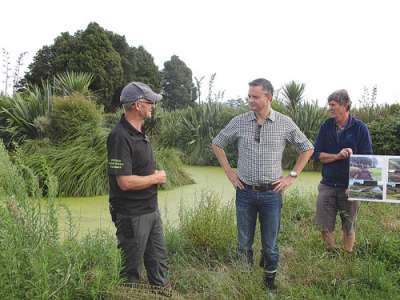
I recently joined Climate Change Minister James Shaw on a visit to Wairarapa to meet with dairy, sheep and beef, and arable farmers. The minister wanted to discuss the effects of climate change in the regions, and the mitigations by which farmers are reducing their carbon footprint.
What the minister made clear was the need for farmers to get a head start on regulations by looking at what mitigations they can adopt right now.
One person’s ‘impossible’ is another’s ‘possible’. While there is a perception that dairy farmers have their heads in the sand, in fact most want to do something about it.
It was a reflection on how engaged the agricultural sector is in addressing our emissions that representatives from so many farming sectors attended the Wairarapa meetings. They understand that an integrated approach to addressing water quality, biodiversity and onfarm emissions is needed if the sector is to meet the challenges of climate change.
Some farmers are ahead of the curve, planting extensively on their properties, adopting more efficient effluent management systems, and changing feed type, all while remaining profitable.
Kaiwaiwai dairy farm, one of the farms I visited with Minister Shaw, has even managed to halve the amount of water used on the farm and built a wetland to process nitrate runoff and reduce nitrous oxide emissions.
This year is the crunch point for all farmers. Through the Dairy Action for Climate Change, which is a DairyNZ and Fonterra initiative, we are working to educate farmers so they understand the issue and the mitigations now available, and the policy and science behind onfarm emissions.
The next step will be to work with the Government and the climate change commission to develop an emission reduction plan for the sector; that way we will know what to expect and can plan ahead.
This is our chance to take a leadership position on climate change. Getting ahead of the regulations is a great opportunity for the agricultural sector to show the public we are taking climate change seriously and that we are doing something about it.
• Kara Lok is a senior climate change advisor to DairyNZ.