International Day of Rural Women: Two DairyNZ Farmers’ Stories
Today, 15 October, is the International Day of Rural Women, which recognises rural women’s contribution to farming, communities and the environment.




 increase font size
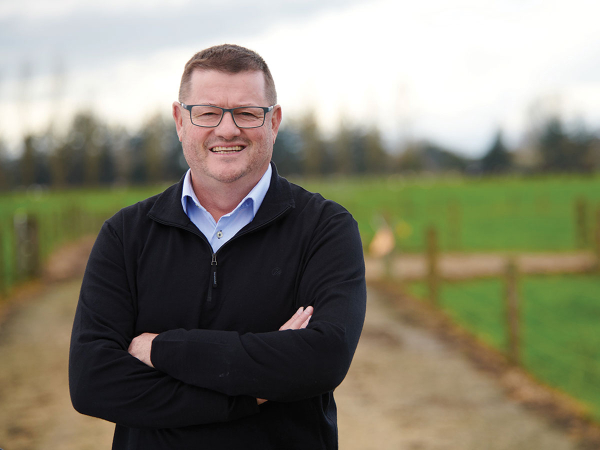 DairyNZ chief executive Campbell Parker.
Yesterday the Government used the opening of Fieldays to announce a major investment, as part of its Land Use Flexibility package, to support a more productive and sustainable future across six sectors including dairy.
The package includes $18.3 million in Government funding towards a seven-year co-funded programme called Responsible Dairy that DairyNZ will lead on behalf of the dairy sector.
DairyNZ CEO Campbell Parker says Responsible Dairy is a programme of co-investment into the long-term resilience of New Zealand dairy that recognises its status as New Zealand’s most valuable export sector.
“The New Zealand dairy sector is a cornerstone of the national economy, contributing significantly to exports, employment, and regional development," Parker says.
"In the year to 30 June 2025, New Zealand exported a record $27.15 billion of dairy products. Dairy now generates more than one in every four dollars of New Zealand’s foreign exchange receipts from goods and services exports and employs over 55,000 people," he says.
“Since around 2015, the dairy sector has reached a productivity plateau.
"Responsible Dairy will build resilience and value in the dairy sector by helping lift all farmers up to the next level of productivity, efficiency and sustainability within their individual farming business, while continuing to drive further environmental gains across the sector."
Parker says Government and sector co-investment in the programme is pivotal to accelerate innovation, scale up adoption, and efficiently deliver environmental and productivity gains across the dairy sector.
"It is expected to speed up the rate at which the sector adopts transformative technologies, getting them into active use years earlier than what might otherwise be the case to keep New Zealand dairy globally competitive," he says.
"Responsible Dairy will be led by DairyNZ on behalf of the sector. In total the programme funding is $45.85m over 7 years. $18.34m will come directly from the Ministry for Primary Industries Primary Sector Growth Fund, up to $19.73m via the existing DairyNZ levy, and the remainder from in-kind or cash contributions from our partners."
Responsible Dairy includes partnerships with leading farmers and dairy and technology companies to enable testing and demonstration of next-generation low footprint farm systems, transformative dairy conversion options, and stacked technologies on commercial farms.
In the first two years, Responsible Dairy will deliver initiatives that build strong foundations of a resilient dairy sector, including:
By 2050, the programme is expected to deliver:
Parker says that much like the current DairyNZ strategy, Responsible Dairy will use science-led innovation, coordinated action, and put practical tools into the hands of farmers to improve the resilience and economic performance of the sector.
“Arguably dairy farmers have done more to lift standards than any other sector. We’ve spent years investing into environmental improvements, better infrastructure, planting, effluent management, genetics and more resilient farm systems. That progress provides a strong foundation for the next phase of change. But standing still is not an option," says Parker.
“Our global competitors see the same opportunity as we do. They are innovating and adapting at an incredible rate and by comparison, we may not have challenged ourselves as hard as we could have as a sector.
“To protect value and stay ahead of global competition, our challenge is to grow and evolve the sector in ways that strengthen environmental outcomes and social license, while enhancing the provenance and sustainability attributes that underpin the premiums high value customers and consumers are willing to pay for New Zealand milk.
“The reality is that future value growth will look different to the past. There will be an abundance of opportunities for dairy systems that are supported by modern infrastructure, better environmental management, improved genetics and emerging technologies.
“Responsible Dairy supports that. It will give farmers options. As well as the tools and information that they can choose from to improve efficiency, productivity and environmental outcomes,” says Parker.
Responsible Dairy is backed by a coalition of co-funding partners across science, farming, finance, technology, fertiliser, and government including: DairyNZ, MPI, dairy companies, Craigmore Sustainables, Dairy Holdings, Pāmu, the Fertiliser Association of New Zealand, Rabobank, Halter, and Gallagher.
Science will be provided in partnership with Bioeconomy Science Institute Maiangi Taiao and Earth Science New Zealand.
Today, 15 October, is the International Day of Rural Women, which recognises rural women’s contribution to farming, communities and the environment.
The first major update to the Dairy Cattle Code of Welfare in more than a decade has been released, marking what DairyNZ describes as an important step in ensuring animal welfare standards continue to evolve alongside scientific evidence and on-farm realities.
Have a plan in place for your cows and staff.
DairyNZ deputy chair Cameron Henderson has been re-appointed unopposed for another term.
OPINION: The stats speak for themselves.


National’s pledge to introduce 19 new national standards shows the party is serious about getting Wellington out of farming, Federated Farmers says.
The National Party’s policies to make it easier to grow fresh vegetables, secure reliable water and energy and simplify farm planning are practical changes that will give growers the confidence to invest, according to Horticulture New Zealand (HortNZ).
Fonterra Co-operative Group chief financial officer Andrew Murray has resigned to take up a role outside the dairy giant.
A major move is about to get underway to improve the quality and viability of dairy beef and cattle in NZ.
Veterinarians say changes to the code of welfare for dairy cattle provides a positive foundation for improved cattle welfare across the country.
Today, 15 October, is the International Day of Rural Women, which recognises rural women’s contribution to farming, communities and the environment.


OPINION: It seems Canterbury processor Synlait is still in the doldrums.
OPINION: Get offside with New Zealand First leader Winston Peters at your own peril.




