Four Candidates Confirmed for Fonterra Board Election
Four candidates have been confirmed for two director positions on Fonterra’s board.
 increase font size
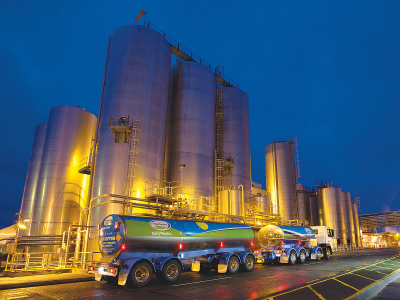
OPINION: Over the past week, Fonterra has been maligned by various commentators.
Some call it the end of the dream. Others are writing off Fonterra’s chances of a return to the black and are even hinting at a white (Chinese) knight in armour galloping towards a buy-out of the co-op.
Yes, Fonterra is in dire straits. Its share price is hovering around $3.50/share - a far cry from its heyday of $6.60/share as enjoyed by farmers in January 2018.
But the doomsayers writing off Fonterra must think again. The co-op is facing a storm - no ordinary storm one could say. But no one should write off the co-op yet.
Fonterra’s financial woes have arisen from bad decisions. They were not made by its 10,000 hardworking farmer owners but by a management and board that had lost sight of key principles of governance.
Fonterra is still earning billions of dollars by selling top quality dairy products worldwide. But it is also bleeding money via bad investments, mostly overseas. These investments - in China, Australia and South America - did not turn to custard overnight. The news media, commentators and some smaller players in these markets could see the problems growing on the horizon, yet the directors lacked the courage to admit they had it wrong.
This raises serious questions about the culture inside the Fonterra board. Who set the strategy? How often were strategy sessions held? Did the key leaders spend too much time in power play to maintain proper oversight and direction of the board?
It turns out that, despite their being 11 directors, the power has been concentrated in the hands of just one or two men.
Fonterra farmers should demand all 11 directors front up to farmer meetings to explain what each did to control or end the disastrous investment that have bled money over the years.
Some commentators say boardroom power at Fonterra is concentrated in the hands of two people -- the chairman and the chief executive.
A chairman behaving as if he were an executive chairman saps morale among other directors and managers. Discussions, questions and comments on strategy can only come to nought when the chairman’s less-powerful colleagues know ‘the boss’ has already decided strategy.
It’s too late to haul back former chief executive Theo Spierings from Europe to answer questions, and former chairman, the late John Wilson, has made his last exit.
Fonterra farmers must now take their losses on the chin as they determine to move on. But in one other thing they may also act powerfully in demanding that the directors come clean immediately on the state of poor investments that need to be written off.
Four candidates have been confirmed for two director positions on Fonterra’s board.
A record farmgate milk price and strong global demand is laying the foundation for continued growth of organic dairy farming in New Zealand.
Waikato milk processor Tatua has again declared a record milk payout to farmer shareholders, leaving other processors in the dust.
Fonterra has unveiled its annual results for the 2026 financial year, posting $27 billion in revenue and close to $20 billion returned to New Zealand farmer owners and unit holders.
Fonterra Co-operative Group has confirmed the independently assessed candidates standing for election to its board in 2026.


High country stations, mixed sheep and beef farms, Māori-owned farms, corporates and family operations are among the nine commercial farms taking part in the Livestock Innovation Farming Transformation programme, known as LIFT.
OPINION: New health and safety guidance unveiled by the Government recently provides farmers greater certainty about what is expected of them when managing risks on farm.
The National Animal Welfare Advisory Committee (NAWAC) is seeking public feedback on proposed changes to the Code of Welfare for Rodeos.
A New Zealand initiative supporting farmers to restore the health of grazing landscapes has received international backing through the Regenerative Fund for Nature, a global collaborative fund supporting regenerative agriculture and the communities that produce natural fibres for the fashion industry.
Combine premium New Zealand products, blend in a family ritual and what do you get? A world-class functional drink.
Entries are now open across eleven regions for the 2027 New Zealand Dairy Industry Awards (NZDIA).