Major Parties to Debate Farming Policy Ahead of Election
Leading figures from the major political parties will be questioned on their primary sector policies at the Rural Issues Debate at Mystery Creek Events Centre, Hamilton, on 30 September.
 increase font size
OPINION: After hogging the media limelight for telling a NZ Chinese MP to "go back home", Winston Peters has decided to focus on a domestic issue - oil and gas drilling.
On social media site 'X' last week, Peters claimed the rise in unemployment is directly attributable to the recent conflict in the Strait of Hormuz and the resulting massive increase in fuel costs which directly affects business costs.
"We said at the start of this conflict that this would severely impact both inflation and unemployment," he wrote.
Winnie now claims that this is more evidence of the need for New Zealand to find and control our own oil and gas in our deep-sea basins.
And with the Chinese holding the world's largest oil reserves, and exploration capability, he may be turning to them for some help on this.
Leading figures from the major political parties will be questioned on their primary sector policies at the Rural Issues Debate at Mystery Creek Events Centre, Hamilton, on 30 September.

OPINION: A founding principle of Groundswell NZ is that farmers, and people generally, should be provided with full and accurate information about regulations that directly affect them.
OPINION: Well, the silly season is upon us and all us politicians are running around shaking babies and kissing hands, or maybe the other way around.
As the election heats up, Organics Aotearoa New Zealand (OANZ) has launched its election scorecard designed to help voters wanting to support policies that grow organic and New Zealand's organic sector.
It was billed as a chance for all the political parties to woo the rural vote, but question marks hang over just how effective this was.



LIC shareholders have elected a new North Island representative to the co-operative's Board, along with five representatives to its Shareholder Reference Group (SRG), following the company's Annual Meeting held in Invercargill.
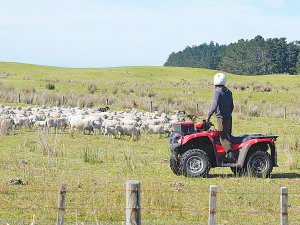
Farmers across parts of Southland and South Otago are continuing to deal with difficult conditions after a prolonged run of wet weather, with pressure building around feed supply, stock management, pasture damage, farm infrastructure and everyday workloads.
Federated Farmers says it welcomes Labour's commitment to reviewing the Sharemilking Agreements Act, calling on other major parties to do the same.
For Canterbury dairy farmers Sian Meijer and Rick Wobben, wearable technology has become one of their most valuable on-farm tools - helping manage 1850 cows across an expansive, high-performing dairy operation while improving efficiency, mating outcomes and day-to-day decision making.
Fonterra has unveiled its annual results for the 2026 financial year, posting $27 billion in revenue and close to $20 billion returned to New Zealand farmer owners and unit holders.
The first major update to the Dairy Cattle Code of Welfare in more than a decade has been released, marking what DairyNZ describes as an important step in ensuring animal welfare standards continue to evolve alongside scientific evidence and on-farm realities.