Fonterra FY26 Results: $9.69 Milk Price, $3.4bn Profit
Fonterra has unveiled its annual results for the 2026 financial year, posting $27 billion in revenue and close to $20 billion returned to New Zealand farmer owners and unit holders.
 increase font size

Fonterra's 10,500 farmer shareholders got hit by a double whammy last week.
The co-op’s Global Dairy Trade (GDT) auction was down for the eight successive time and, worryingly, whole milk powder prices suffered a whopping drop of 10.8%.
And rubbing salt to the wound, Fonterra farmers learnt that the co-op will be paying more than a dollar extra for milk collected in Australia.
As owners of the co-op, Fonterra farmers are struggling to make ends meet: last season they received $4.40/kgMS for farmgate milk plus 20-30c/kgMS as a dividend.
This season, the co-op has opened with $5.25/kgMS and the current GDT trend suggests that opening price is now under immense pressure.
But across the ditch, where Fonterra operates 10 manufacturing sites and processes 1.7 billion litres of milk, the co-op is forking out $6.30/kgMS to Australian suppliers who don’t own shares in the co-op.
Fonterra is also forecasting an average closing farmgate milk price range of $6.60-$6.82/kgMS for the season.
For the hardworking Fonterra shareholder in New Zealand, this is hard to fathom. It doesn’t make sense for shareholders to pay more for milk outside NZ while struggling to keep their businesses afloat.
Sure, the dynamics of the Australian dairy industry are different from those of NZ. Unlike in NZ, Fonterra is not a price setter in Australia. It plays second fiddle to Murray Goulburn, the country’s largest processor and owned by farmers.
Fonterra – like Saputo, Lion Dairy and Parmalat – is a foreign-owned corporate fighting for local milk.
While Fonterra shareholders understand the need to pay the right price for milk overseas, the big question is whether they are getting the right returns.
It’s no secret that Fonterra’s Australian business has been struggling. While the co-op manufactures award-winning cheeses, spreads, yoghurts and dairy desserts brands, the returns are woeful.
This prompts the question, is Fonterra right by ploughing hundreds of millions of dollars into overseas milk pools?
In a good year, when the payout is $8.40/kgMS, Fonterra farmers may not pay too much attention to returns in overseas milk pools. But when the chips are down and farm balance sheets are turning redder by the week, farmers are questioning the wisdom of expanding overseas.
Fonterra’s first obligation is to its farmer shareholders in NZ. Australia may be a strategic business but if it is not performing and giving proper returns to shareholders, it may be time to rethink its existence.
There’s no point in Fonterra shareholders forking out more money to Australian farmers while they remain in doldrums.
Fonterra has unveiled its annual results for the 2026 financial year, posting $27 billion in revenue and close to $20 billion returned to New Zealand farmer owners and unit holders.
Fonterra Co-operative Group has confirmed the independently assessed candidates standing for election to its board in 2026.
Fonterra has revised its Farmgate Milk Price forecast for the 2026/27 season, lifting the midpoint and narrowing the range on the back of improving global dairy commodity prices.
Outgoing Fonterra Co-operative Council chair John Stevenson says that it has been a privilege to represent the co-op's farmer shareholders.


Federated Farmers says it welcomes Labour's commitment to reviewing the Sharemilking Agreements Act, calling on other major parties to do the same.
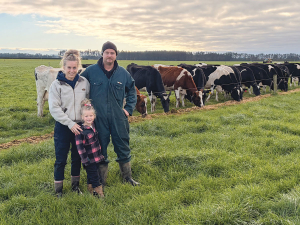
For Canterbury dairy farmers Sian Meijer and Rick Wobben, wearable technology has become one of their most valuable on-farm tools - helping manage 1850 cows across an expansive, high-performing dairy operation while improving efficiency, mating outcomes and day-to-day decision making.
Fonterra has unveiled its annual results for the 2026 financial year, posting $27 billion in revenue and close to $20 billion returned to New Zealand farmer owners and unit holders.
The first major update to the Dairy Cattle Code of Welfare in more than a decade has been released, marking what DairyNZ describes as an important step in ensuring animal welfare standards continue to evolve alongside scientific evidence and on-farm realities.
Ravensdown shareholders have elected Jane Montgomery and Kate Acland to the Ravensdown Board for three-year terms, following a closely contested director election.
Federated Farmers says new legislation replacing the Resource Management Act will cut red tape, unlock investment and help grow New Zealand's export-led economy, after the Planning Bill and Natural Environment Bill passed their third reading in Parliament yesterday.