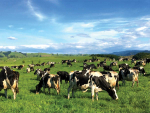
DairyNZ's Tracy Brown Flags El Nino Risk for Dairy Farms
Most dairy regions around the country have had a pretty good season so far says Tracy Brown.
 increase font size

AUSTRALIAN DAIRY farmers have been told to expect a lower farmgate mik price in the new season.
Dairy Australia says analysis of current commodity price and exchange rate settings indicate an opening price for 2012-13 between A$4.05 and A$4.40/kgMS compared to the 2011-12 opening price of A$4.75 to A$4.80/kgMS. The closing price for the current season is expected to range between A$5.30 and A$5.40/kgMS, while next season is forecast to close between A$4.50 and $4.90/kgMS.
In the 2012 Situation and Outlook Report, Dairy Australia managing director Ian Halliday says while the opening price would be lower, farmers in southern exporting regions are in a good position with strong competition for supply to continue.
“Manufacturers are keen to keep the throughput up as much as they can so we can expect them to open with as high prices as possible to retain supply,” Halliday says.
National milk production has also bounced back, increasing from 9.1 billion L last season to almost 9.5 billion L this season. Dairy Australia manager strategy and knowledge Joanne Bills says this is the first year of large growth in a decade driven by export-focused regions.
“We’ve seen some regional variation in production this season with extra volume generated in southeast Australia where the season has been largely favourable with good rainfall and low feed prices.”
Northern Victoria leads the way with 14% growth until March. Despite some areas of flooding, most farmers in the region enjoyed consistent rainfall, strong irrigation allocations and abundant home-grown feed.
Tasmania has also stepped up its output 10% on the same time last year thanks to good conditions.
Production in Queensland, central and northern NSW and Western Australia supplying the domestic drinking milk market has been static or in decline.
“Continued aggressive retail competition, disruptions caused by changes in private label supply contracts and uncertainty on processor milk requirements have undermined farmer confidence and stifled production growth,” says Bills.
Nationally farmers remain fairly positive about the future of the industry, with 66% per cent of those surveyed in this year’s National Dairy Farmer Survey indicating their optimism. This is a little down on last year’s 69%. The main reason for the positivity is the feeling demand will continue for dairy. However, milk price remains the single greatest challenge and the reason farmers feel negative about the future of their industry. Increasing fuel and electricity costs have also caused concern for those surveyed, rather than feed costs, which have previously concerned them.
There was a lot of regional variation in confidence in dairying regions: 91% of Tasmanian farmers were confident, while in Queensland just 43% of farmers were positive. The regional variation strongly reflects the different pricing and growth signals farmers are facing from the markets they service.
Of those 1002 farmers surveyed nationally, 48% describe their business as running “steady”, while 22% are in an expansion phase.
“Our figures suggest the majority of those in an expansion phase are large farmers – a good sign for future milk production,” says Bills.
Most dairy regions around the country have had a pretty good season so far says Tracy Brown.
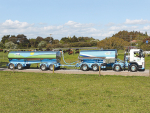
Fonterra says its interim results show continued momentum in its performance, with revenue of $13.9 billion in the first half of the 2026 financial year.
A solid recovery of global dairy prices this year makes a $9.50/kgMS milk price almost a shoo-in for this season.
Fonterra has slashed another 50c off its milk price forecast as global milk flows shows no sign of easing.
A $10 milk price remains on the cards for this season despite recent softening of global dairy prices.



Seed and grain companies share the concerns of arable farmers about the viability of their sector, says Seed and Grain New Zealand chief executive Dr Sarah Clark.
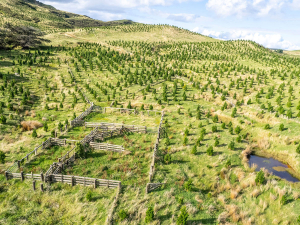
The New Zealand Institute of Forestry (NZIF) says unnecessary changes to New Zealand’s Emissions Trading Scheme (NZ ETS) will seriously erode investor confidence and result in significant reductions in forest planting rates.
For the first time in a quarter of a century, Federated Farmers has something positive to say about the Labour Party’s climate change policy leading into a general election.
A warning for New Zealand seed and grain companies – be prepared for an exodus of farmers from the arable sector.
Now in its fourth year, the 2026 Fencing Industry Awards, formed part of the proceedings of the FCANZ Conference, held in Nelson during August.
DairyNZ deputy chair Cameron Henderson has been re-appointed unopposed for another term.