NZ Food Safety Boss on Balancing Speed and Risk in Approvals
Striking a balance between meeting the needs of industry to speed up approval time for products but on the other hand ensuring that risks are properly assessed.
 increase font size
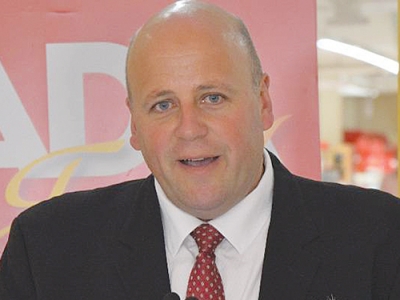 SADA president David Basham.
South Australian dairy farmers have begun exporting fresh milk to China.
Last month the first commercial shipment of 1872 one-litre bottles left Adelaide on a Cathay Pacific flight to Hong Kong, then by air to Nanjing in central eastern China, and so to retailers.
SADA Fresh was launched 18 months ago by the South Australian Dairyfarmers’ Association (SADA) “to help secure the future viability of the state’s dairy industry and its farmers”.
“Using the milk brand to draw investment to South Australia and open up new markets for our dairy products were always primary goals of the enterprise, so this is a very exciting day for us,” says SADA president David Basham.
“After the initial run the Chinese importer has committed to purchasing one air pallet of about 3960 bottles per week for the next three months, and there are expectations it will double after that, depending on the market’s response,” Basham says.
“Despite all the headlines recently about Chinese interest in Australian dairy products, and the new Free Trade Agreement between Australia and China, it is very difficult to crack this market and convert the talk into actual sales.
“Even though the initial shipment is relatively small, we hope this breakthrough will open doors for other South Australian dairy brands and lead to greater opportunities for us all.”
Parmalat holds the licence to process, package and supply SADA Fresh wholesale in South Australia, where it is currently retailed exclusively through Coles. The milk for China is also processed, packaged and exported by Parmalat, under a separate licensing agreement with SADA.
About half the bottles in last month’s shipment were used to promote the brand to Chinese customers and help build market share.
The milk will be retailed through conventional shops and supermarkets, and the online grocery stores now popular in China. Consumers can buy two or more bottles at a time and even subscribe to receive weekly deliveries.
Basham says the first shipment follows small-scale trial shipments in the past two months, and six months of planning and negotiation.
“The opportunity came last October when Austrade (the Australian Trade Commission) held a food expo in Melbourne. Among potential export buyers attending the event was a Chinese importer looking for companies that could supply fresh milk, and I just happened to be in Melbourne at the time so I met with them,” he says.
The association helped set up meetings with Parmalat who negotiated a formal contract with the Chinese buyer last month. In the meantime, trials were organised to fine-tune delivery and distribution protocols, and to make sure the milk meets Chinese quarantine regulations and quality control specifications.
“It’s been a far from straightforward process that has also involved developing a new label, not just to incorporate Chinese characters, but to feature blue rather than the brand’s usual red or yellow, to meet a request from the importer,” Basham says.
Striking a balance between meeting the needs of industry to speed up approval time for products but on the other hand ensuring that risks are properly assessed.

China remains New Zealand’s biggest market, taking $23 billion of our exports, but it’s no longer a commodity story, says Prime Minister Christopher Luxon.
Fonterra is strengthening its foodservice presence in China with the launch of a new cream for professional bakeries at Bakery China 2026 in Shanghai.
OPINION: Your old mate hears an international incident is threatening to blow up the long-standing Anzac alliance as Kiwis and Aussies argue over who wants new Australian resident and former NZ Prime Minister Jacinda Ardern.
OPINION: What does the birth rate in China have to do with stock trading? Just ask a2 Milk Company.


Waikato milk processor Tatua has again declared a record milk payout to farmer shareholders, leaving other processors in the dust.

A Labour-led Government won’t be bringing back the controversial freshwater rules of 2020.
National’s much-touted free trade deal with India featured in the Rural Issues Debate at Mystery Creek, Hamilton on Wednesday night.
New Zealand's 2026-27 freshwater fishing season has opened, with anglers encouraged to head to rivers and lakes over the coming days as conditions look favourable across much of the country.
Central Otago District Council (CODC) has voted against a plan to spread treated sewage sludge from Cromwell and Alexandra on farmland near Lauder, a decision Federated Farmers says reflects strong opposition from rural residents.
Pāmu has released its FY26 Integrated Annual Report, reporting a Net Operating Profit of $113 million, more than double the $49 million recorded in FY25.