ANZ Warns of Milk Price Risks as New Dairy Season Begins
The new dairy season is kicking off with plenty of risks to the forecast farmgate price, both upside and downside, says ANZ agricultural economist Matt Dilly.
 increase font size
 EU Agricultural Commissioner, Phil Hogan.
Embattled European dairy farmers are to get another $780 million to help them weather the downturn.
About $235m will be set aside for EU-wide incentives to persuade farmers to cut milk production.
EU's commissioner for agriculture and rural development, Phil Hogan, says in light of budgetary pressures the money is a 'robust response', raising to at least $1.5 billion the EU has assigned to farmers.
"Our ultimate goal is to see the much needed recovery of prices paid to farmers, so they make a living from their work and continue to provide safe, high quality food, and contribute to rural areas and rural jobs and the provision of public goods."
The UK will get $46m, the third-largest share in the EU.
NFU dairy board chairman Michael Oakes says the commission has once again shown support for the farmers.
However, UK farmers have already voluntarily reacted to market conditions by pulling back on production: daily deliveries for the last two weeks of June were 9% lower than the same period last year.
This is without financial incentive, he adds.
"While grateful to the commission, we all want to see a sector that is competitive and market-orientated.
"It's also essential the commission as soon as possible tells the details of the conditions for the financial support. The UK government must be given flexibility to decide how this money is used and should consult with industry to utilise this money as soon as possible."
Meanwhile members of the European Committee of the Regions (CoR) want urgent measures to limit milk production. A report to the CoR last year shows that regulation of milk production volumes would have a rapid and positive impact on the incomes of all producers.
The study shows that European regulation of production volumes would have a rapid and positive impact on farmgate milk prices.
This conclusion calls into question the theory that a decrease in production volumes at the EU level alone might not have an impact on European prices.
Temporarily capping production volumes would boost the incomes of all European producers. The baseline scenario -- a 6% cut in milk volumes over a year -- would see an increase in producers' gross margin of around $7.8b as a result of a 14.6% increase in the milk price and a 38% increase in the gross margin.
The new dairy season is kicking off with plenty of risks to the forecast farmgate price, both upside and downside, says ANZ agricultural economist Matt Dilly.
As expected, Fonterra has lifted its 2025-26 forecast farmgate milk price mid-point to $9.50/kgMS.
OPINION: The year has started positively for New Zealand dairy farmers and things are likely to get better.
Dairy farmers are still in a good place despite volatile global milk prices.
OPINION: What goes up must come down. So, global dairy prices retreating from lofty heights in recent months wouldn’t come as a surprise to many farmers.
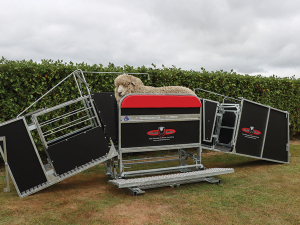
Oamaru-based livestock handling specialist Te Pari has bought Combi Clamp, the New Zealand manufacturer of Combi Clamp manual sheep handlers.
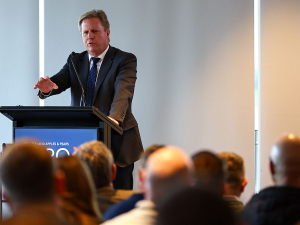
Agriculture Minister Todd McClay has admitted that a scheme bringing workers from Pacific nations to work on orchards has become too hard to navigate but says changes are coming.
A new app designed in New Zealand aims to help sheep, beef and deer farmers capture, analyse and use body condition score data more effectively.
Canterbury farmer Andy Macfarlane has been appointed to the board of AgriZeroNZ, the public-private partnership designed to accelerate the development and deployment of emissions reduction tools for New Zealand farmers.
For over 50 years Mel Ewers has been supporting the apple sector navigate through compliance and quality assurance issues.
The apple sector is enjoying a bumper harvest season.