NZ Apple Sector Pushes for Japan & Korea Market Access
The apple sector is working with the Government to unlock access to two key markets that could bring millions in revenue for apple growers.
 increase font size
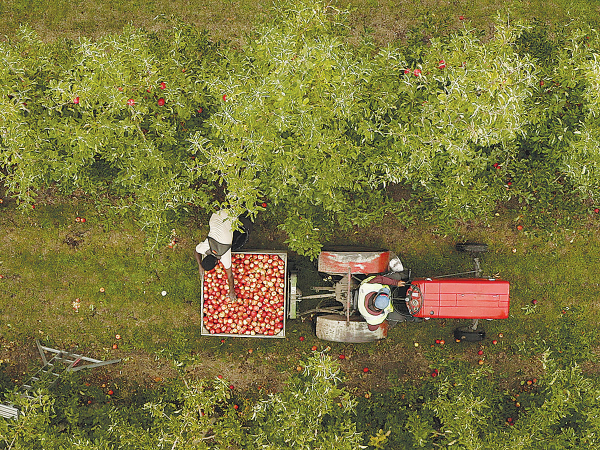 The 2024-25 apple season has been the best in a long time, says Apples and Pears NZ chief executive Karen Morrish.
The 2024-25 season apple harvest has “well and truly exceeded expectations”, says Apples and Pears NZ chief executive Karen Morrish.
She says in spring last year there were signs of a potentially good season, and the optimism has become a reality – this season is the best in a long time.
Morrish says this isn’t just the case in the major apple growing region Hawke’s Bay, but right across the country.
“We had perfect winter chilling, good chemical thinning results, the spring was stable, appropriate rainfall and a nice summer making for a great harvest,” Morrish told Hort News.
“The fruit is very clean, there has been good pest and disease management, apple size is great, and the colour of the fruit has been spectacular,” she says.
Morrish says Hawke’s Bays’ crop has been very good, despite it having to bear the ravages of Cyclone Gabrielle, but notes that the past four growing seasons have been tough.
She says there is mix of ages of apple trees in the region and the reality is they are going to perform at different levels.
Morrish says considering the battering the trees took in the cyclone, people are amazed at the resilience of the trees and the fact that they have flourished this year.
“I would say the good tree health is in many ways testament to the growers dealing to the situation appropriately – be that nutrition, pruning techniques and general attention – and that is paying dividends this year,” she says.
According to Morrish, the non-performing trees have been pulled out, but some others may still suffer a similar fate. However, three years on, things are manageable.
Despite this good season, everything in Hawke’s Bay is still not back to normal. The owners of smaller family orchards are still in the process of working out what to do.
Morrish says some have decided to sell up rather than take on debt to rebuild their businesses, while others have leased their land or have decided to grow another crop in the meantime.
“With the smaller orchards, it’s very much a personal decision because it affects the home as well as their livelihood,” she says.
For those who decided to try and recover from cyclone, the question is how much debt they can wear and what varieties of apples they should plant to get the best return in five years’ time.
Others are known to be looking at securing additional investor capital to fund their recovery. Morrish says even before Cyclone Gabrielle there had been considerable replanting of apples in the region. Some of these were lost in the cyclone, but Morrish says the replanting has still been a help.
“A lot of those new varieties are now hitting the five-year mark and that is adding to the positive vibes in the sector,” she says.
The apple sector is working with the Government to unlock access to two key markets that could bring millions in revenue for apple growers.
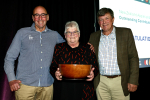
For over 50 years Mel Ewers has been supporting the apple sector navigate through compliance and quality assurance issues.
New Zealand apple and pear industry stakeholders are out in force for the annual conference in Queenstown.
The chief executive of Apples and Pears New Zealand, Danielle Adsett, says fruit quality this year is phenomenal and the sector is hitting crop estimates, which is great for growers.
New Zealand exporters are putting the blowtorch on politicians to get the free trade deal with India over the line.


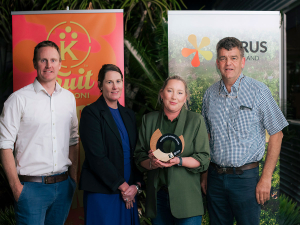
New Zealand's citrus growers were challenged to build their future on the value embedded in their fruit rather than the volume they produce, at Citrus New Zealand's annual gathering in Gisborne on 17 September.
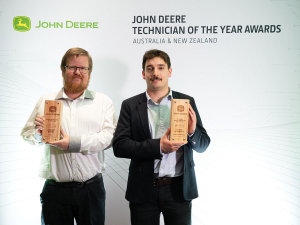
Leading John Deere technicians and apprentices from New Zealand and Australians were recognised at the recent sixth annual JD Technician of the Year Awards, held in Brisbane.
In Dacre, near Invercargill in New Zealand’s South Island, Bruce Dinnington is running a dairy operation unlike any other.
A free online platform aggregating governance vacancies across rural and regional New Zealand has been launched.
Environment Minister Nicola Grigg has announced details of a new rural plastics recycling scheme.
Agricultural drone operators say that a government decision to allow lower-risk drone work without certification won’t lower standards but drive innovation and efficiency.