
Apples and Pears NZ to focus on boosting grower returns
The CEO of Apples and Pears NZ, Karen Morrish, says the strategic focus of her organisation is to improve grower returns.




 increase font size
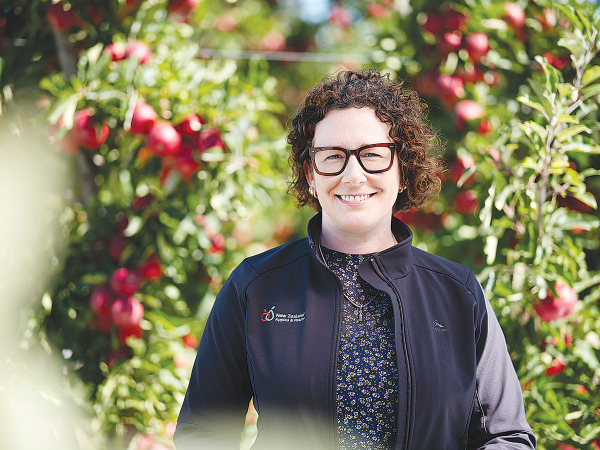 Karen Morrish says our growers take pride in producing fruit that is healthy, clean and sustainable.
OPINION: Earlier this month, we received the exciting news that New Zealand’s apple and pear sector had surpassed $1 billion in revenue for the very first time.
It is a significant achievement and a true testament to the hard work and resilience of our growers after a number of challenging seasons.
However, scratch at the surface of the data (NZAPI’s 2024 Economic Impact report), and you’ll reveal even more about our valuable and everchanging sector.
While planted area has more or less returned to a pre-Cyclone status quo and operating costs – along with inflation – continue to weigh heavy on growers, revenue has increased significantly, by 27%.
We attribute this movement to an increase in high-value, premium apples and pears, as well as improvements to productivity and a diversification of international markets.
It hasn’t come from flooding the global marketplace with New Zealand pipfruit – certainly Aotearoa is a small producer compared to most on the international stage. Rather it has eventuated by pulling sustainable levers that ensure a healthy operating environment conducive to grower prosperity.
It also comes from doing what we do best, producing the world’s best apples.
New Zealand apples and pears are renowned as a premium product. Our growers take pride in producing fruit that is healthy, clean and sustainable, and this year’s crop is exactly that.
Harvest is underway and the fruit coming off the trees is consistently excellent; clean, high-value, premium-quality fruit.
Textbook winter and spring conditions ensured New Zealand’s apple and pear harvest would have exceptional colour, eating and flavour, while storability is expected to be as good as ever.
What’s more, the 2025 New Zealand Apple and Pear’s annual crop estimate is predicting this season’s harvest to deliver a 10% increase on exports, from 19.1 million TCE in 2024 (actual) to a potential 21.0 million TCE in 2025.
It is a return to form for the industry after several challenge years and will have meaningful flow-on effects to related industries and the communities around us.
Our growers take immense pride in the economic impact that their industry contributes to New Zealand and the economic impact statistics highlight the value of the industry’s work.
As more older orchards are replanted with IP varieties with modern planting systems, the downstream benefits will be significant to the sector, national exports and the towns and cities we live in.
The 2024 Economic Impact data recorded a total economic impact of $2.5 billion to the New Zealand economy, up 27% from $1.9 billion in 2023. The industry now employs more than more than 13,500 people, up from 12,820 in 2023.
At a regional level, the growth trend continues.
In Hawke’s Bay, home to 65% of the nation’s apple and pears crop, the industry contributed $1.3 billion in total economic impact; increased its GDP contribution by 37% to $583 million; and now employs more than 7,000 people.
In Tasman, home to 23% of the national crop, the industry contributed $383 million in total economic impact; increased its GDP contribution by 8% to $179 million; and now employs more than 3,300 people.
In Tairāwhiti, home to 5% of the national crop, the industry contributed $75 million in total economic impact; increased its GDP contribution by 38%, from $25 million in 2023 to $35 million; and employs almost 100 people.
In Central Otago, home to 4% of the national crop, the industry contributed $65 million in total economic impact and increased its GDP contribution by 8% to $30 million.
Yet, as we take a moment to reflect on this achievement, it’s important to note revenue does not equate to orchard gate returns.
Our growers and the wider sector remain committed to growth and excellence, ensuring that New Zealand pipfruit is consistency recognised as the best in the world. However, returns that fund this growth, development and excellence are the critical requirement to ensure the industry remains buoyant.
So, we wait to see what 2025 will bring, and work to secure a legislative and working environment that delivers prosperity, not just to the New Zealand economy but back to our growers themselves.
Karen Morrish is chief executive of New Zealand Apples and Pears Inc.
The CEO of Apples and Pears NZ, Karen Morrish, says the strategic focus of her organisation is to improve grower returns.
The 2024-25 season apple harvest has “well and truly exceeded expectations”, says Apples and Pears NZ chief executive Karen Morrish.
OPINION: When we set out to document the economic impact of New Zealand's apple and pear industry, we expected to see a trickle-down effect somewhere along the way.
Apples and pears growers, targeting $2 billion in revenue by 2035, are banking on the support of local and central government.
New Zealand’s apple and pear industry contributes almost $2 billion of total revenue impact to the national economy, according to new research from MartinJenkins.


When Northland leather worker Vernon Suckling started making horse saddles 50 years ago, quad bikes and side-by-side vehicles were unheard of.

Alliance Group has confirmed that eligible farmer-shareholders who supply and continue to back the business will receive up to $20 million later this year, following the strategic investment partnership with Dawn Meats.
With a general election under five weeks away, Rural News is asking major political parties about their policies and positions on key issues facing the primary sector. We will run their responses to each question over the next four weeks. The ACT Party and the Greens didn't respond in time.
The red meat sector is in great heart.
Dr Scott Champion, Foundation for Arable Research chief executive, says that everyone in the supply chain had a role to play in driving the sector's long-term success.
Entries opened on Monday, 5 October 2026 for the 2027 New Zealand Dairy Industry Awards (NZDIA), which organisers describe as the nation's biggest celebration of excellence in the dairy sector.





OPINION: The same mainstream media muppets that brought you Jacindamania in 2017 have been flat out pimping for the Opportunities…
OPINION: Your old mate reckons the atrocious way farmers in the UK are treated by their lords and masters in…




