
NZ Apple Sector Pushes for Japan & Korea Market Access
The apple sector is working with the Government to unlock access to two key markets that could bring millions in revenue for apple growers.



 increase font size
 NZ Apples and Pears CEO, Karen Morrish.
New Zealand’s apple and pear industry contributes almost $2 billion of total revenue impact to the national economy, according to new research from MartinJenkins.
Employing more than 12,000 permanent and seasonal employees, the pipfruit industry contributed $1.96 billion of total revenue impact to New Zealand’s economy in 2023.
The industry has also recorded a growth rate that outstrips the national export growth rate, increasing its export value (largely due to productivity increases and value gains) from $347 million in 2012 to more than $892 million in 2023.
The Economic contribution of the New Zealand Apple and Pear Industry 2024 was conducted by MartinJenkins to reveal the value of the industry to the national and key regional economies.
It found that the industry contributes $918 million to the New Zealand’s GDP, comprising of $348 million direct sector contribution and $570 million of industry linkages and spending.
Regionally, the industry is more significant again, particularly in Nelson Tasman and Hawke’s Bay, where it is the second and third largest contributor to regional GDP respectively.
In Hawke’s Bay, home to 65% of apple and pear plantings, the industry contributes $424 million to the region’s GDP. In Tasman, where 23% of pipfruit plantings can be found, the industry contributes $166 million to the local GDP.
In Tairāwhiti, the third largest region by apple and pear planted area, the industry injected $25.5 million into the local GDP figures – a figure that is expected to grow even further with plenty of new apple varieties in the ground. Apples and pears contributed $28 million to Central Otago’s regional GDP.
The study also reveals that recent industry investments in research and development are reaping the rewards with innovation in growing systems and post-harvest processes already showing increased productivity.
New Zealand Apple and Pears chief executive Karen Morrish says the economic report will provide a valuable snapshot as the industry targets growth.
“As an industry, apples and pears have the potential to record considerable growth and vastly contribute to New Zealand’s economic prosperity.
“Our industry is a tier one horticulture sector that makes up a 20% of the national GDP contribution from horticulture, and what’s more, we have room to grow. The growth in our export value has come from increased productivity, investment in high value varieties as well as the diversification of international markets, which means our sector is well placed to further align with the Government’s desire to double export value in 10 years.
“However, growth is dependent on the supportive economic and regulatory conditions. Since 2020, conditions have not been ideal with growers struggling to access labour due to Covid-19 border closures, and Cyclone Gabrielle decimating the 2023 crop. As a result, industry revenue has declined by around 0.5 percent, per year from 2020 to 2023.
“We hope this new report will further encourage our local and central governments to recognise the value of the industry and work with us to ensure there is an operating environment that is conducive to growth.
“If this is in place, our growers will continue to grow the value of the sector and see our communities further supported. With the right settings, the valuable role of our industry to national and regional economies can be secured, and we can continue to produce the world’s best quality fruit right here in New Zealand.”
Nicola Grigg, Associate Minister of Agriculture (Horticulture) said: “As the Minister responsible for Horticulture, I am so thrilled at the remarkable achievements of an industry that, despite enormous pressures and challenges, has proven both resilient and adaptable. Through innovation, collaboration and determination, our growers continue to set the standards emulated by other growers around the world.
“Apple and pear exports are adding immense value to the New Zealand economy and the New Zealand Government stands ready to support its growth and success.”
The apple sector is working with the Government to unlock access to two key markets that could bring millions in revenue for apple growers.

For over 50 years Mel Ewers has been supporting the apple sector navigate through compliance and quality assurance issues.
New Zealand apple and pear industry stakeholders are out in force for the annual conference in Queenstown.
Eighteen months ago, when negotiations for a free trade deal with India were announced, New Zealand apple growers expressed their desire to be part of the deal.
As we move into the late-summer and autumn period, much of the country’s fruit growing regions are entering operationally critical windows of the horticultural calendar. The question on grower’s minds is ‘what is the outlook for the March-April harvest?’



Federated Farmers says it welcomes Labour's commitment to reviewing the Sharemilking Agreements Act, calling on other major parties to do the same.
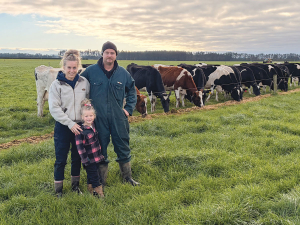
For Canterbury dairy farmers Sian Meijer and Rick Wobben, wearable technology has become one of their most valuable on-farm tools - helping manage 1850 cows across an expansive, high-performing dairy operation while improving efficiency, mating outcomes and day-to-day decision making.
Fonterra has unveiled its annual results for the 2026 financial year, posting $27 billion in revenue and close to $20 billion returned to New Zealand farmer owners and unit holders.
The first major update to the Dairy Cattle Code of Welfare in more than a decade has been released, marking what DairyNZ describes as an important step in ensuring animal welfare standards continue to evolve alongside scientific evidence and on-farm realities.
Ravensdown shareholders have elected Jane Montgomery and Kate Acland to the Ravensdown Board for three-year terms, following a closely contested director election.
Federated Farmers says new legislation replacing the Resource Management Act will cut red tape, unlock investment and help grow New Zealand's export-led economy, after the Planning Bill and Natural Environment Bill passed their third reading in Parliament yesterday.


OPINION: The same mainstream media muppets that brought you Jacindamania in 2017 have been flat out pimping for the Opportunities…
OPINION: Your old mate reckons the atrocious way farmers in the UK are treated by their lords and masters in…




