A Northland grower wants the horticulture sector to show stronger leadership in opposing a proposal to ban the chemical Hi-Cane.
Brett Heap, a courgette grower from KeriKeri, says the industry mustn't allow a free pass to the Environmental Protection Authority (EPA) on Hi-Cane's future.
"I do not believe the likes of EPA make sound judgement," he told Hort News.
"It is more about power and control over the agrichemical industry and it has also become too emotive in dealing with a few pressure groups."
Heap wants kiwifruit and horticulture sector leaders to stand up to the EPA.
"Right now, growers are feeling that when EPA says jump, their leaders ask 'how high?' It's time to show some leadership."
Heap questioned how many members of the EPA had experience in the use of agrichemicals.
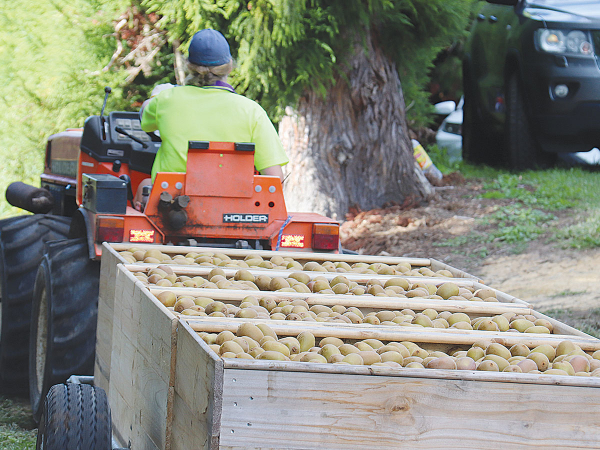
Hydrogen cyanamide or Hi-Cane is a spray used by kiwifruit growers to help buds form after winter and is also used by some other fruit growers. First brought to New Zealand in 1988, it is now banned in Europe and is under review in the US.
The EPA is currently holding public consultations on its proposal to gradually phase-out of the use of hydrogen cyanamide, leading to a total ban in five years.
EPA general manager of hazardous substances group, Dr Chris Hill, says it is aware of growers' reliance on hydrogen cyanamide over many years.
Hill says kiwifruit growers and Zespri have been closely involved in the reassessment process since grounds were established in September 2019.
"Our proposals are a draft. They are likely to evolve further before they reach the decision-making committtee, which is responsible for making the ultimate call on the reassessment," he told Rural News.
"While we accept that there are economic benefits from hydrogen cyanamide use, new information suggests these are outweighed by the environmental risks and adverse health effects.
"For those who work with the spray, the latest science indicates that repeated exposure over time is toxic to the reproductive system and thyroid."
Growers are warning that the withdrawal of Hi-Cane could reduce yield and impact profitability.
NZ Kiwifruit Growers Incorporated (NZKGI) chief executive Colin Bond agrees that banning Hi-Cane would be disastrous.
"The removal of Hi-Cane in northern regions could have a severe impact on kiwifruit production and reduce yields to uneconomic levels for growers, particularly affecting green growers," he told Hort News.
Some growers have contacted NZKGI concerned with the EPA's recommendations on the use of Hi-Cane in NZ.
Bond says NZKGI is currently consulting with growers to form a position which will be submitted in response to the EPA's recommendations.
He says Hi-Cane is critical for kiwifruit production where it is used once a year in late winter primarily to compensate for inadequate winter chill. "The industry is continuing to search for alternative products."