
Canterbury Boosts Wallaby Control With $2M Funding Push
Wallaby control efforts in Canterbury have received a major boost, with Canterbury Regional Council releasing $2 million from its Pest Management Reserve.




 increase font size
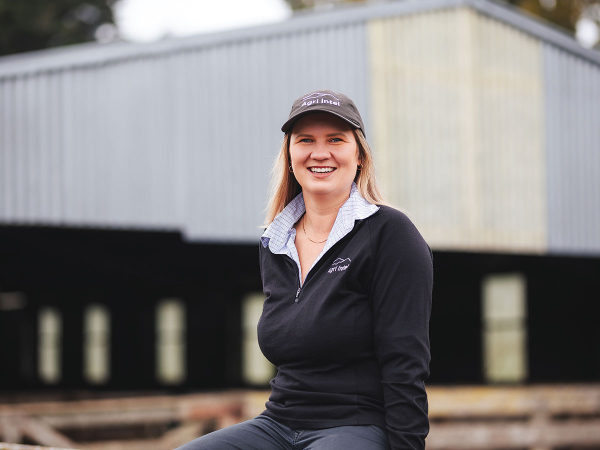 Charlotte Senior is a director of farm consultancy Agri Intel and one of about 20 accredited FEP auditors in the Environment Canterbury area.
Newly released data from Environment Canterbury (ECan) Farm Environment Plan (FEP) audits are showing a dramatic lift in environmental performance across the region.
The number of farms receiving A grades in Canterbury has gone from 14% in 2017 to 77% in 2024-25, while the number of C and D grades dropped from 12% to 2% over the same period.
Charlotte Senior, a director of farm consultancy Agri Intel and one of about 20 accredited FEP auditors in the ECan area, said releasing the data helped show that the efforts made by farmers are being recognised and felt.
"It can make you wonder if it's all worth it when you are stuck doing paperwork or looking at the cost associated with auditing, but be assured it is," she said.
"Direction is more important than speed, and the data from the FEP programme shows farmers are heading in the right direction."
Senior acts as environmental advisor to the lower Selwyn catchment's Eastern Plains Land User Group (EPLUG), a group of about 130 farmers in an area across the top of Lake Ellesmere/Te Waihora, from State Highway One to the sea. She presented the numbers to a recent meeting of the group.
The figures showed that Selwyn outperforms wider Canterbury, reflecting its earlier adoption of audits in 2017 under the Canterbury Land and Water Regional Plan.
The rest of Canterbury was about two to three years later.
"Both Canterbury and Selwyn have lifted, but Selwyn led the way - A grades have become the norm and C and D grades are now almost gone," said Senior.
Meanwhile, Central Plains Water Limited's (CPWL) groundwater monitoring shows nitrate levels trending down in most of the wells the company monitors.
"The good news is that data across Selwyn backs up the progress we're seeing on the ground," said Senior.
Sixty per cent of wells monitored by CPWL had shown clear signs of improvement over the past five years.
Senior said a standout area of improvement has been irrigation management. While noting it was still the management area with the second-most issues (next to effluent), they've seen real progress in irrigation efficiency and management, even as requirements to comply have become more stringent.
"It's a real good news story," said Senior. "People are now understanding and using their data rather than just buying gear and collecting numbers they don't look at."
Senior said about 3000 audits have now taken place. The FEP standards protect the good farmers.
"It's not an easy feat to get an A grade and the farmers that get that should be really proud of that.
"They've met a lot of standards and in order to do so; they understand what good management practice is."
She said the community as a whole wanted confidence that farmers were meeting minimum standards but it was disappointing when talking to people outside rural New Zealand, that they had no idea about the FEPs and the audit process, and that farmers could actually lose their licence to farm if they don't make the grade.
She pointed out that irrigation schemes could turn a farmer's water off if they continually get poor grades. Good farmers wanted that accountability and they didn't want poor performers dragging the industry down.
Farming professionals such as those supplying soil moisture probes or fertiliser advice also needed a healthy accountability, she said.
"We're trying to achieve a really difficult outcome, to improve water quality. It's a long-term issue."
'Huge Progress'
Federated Farmers vice president Colin Hurst has welcomed the figures, saying the huge progress made shows that the vast majority of farmers are highly motivated to lift their game.
"Our sector is constantly being bagged by certain greenie groups as uncaring stewards of land and water, yet these results show completely the opposite.
"Farmers are frustrated by this sort of criticism - anyone would be.
"Maybe the findings from this independent monitoring by the regional council will blunt some of the carping we face from some quarters."
Wallaby control efforts in Canterbury have received a major boost, with Canterbury Regional Council releasing $2 million from its Pest Management Reserve.
Buying or building a rural or semi-rural property? Make sure you know where the wastewater goes, says Environment Canterbury.
OPINION: Canterbury grows most of the country's wheat, barley and oat crops. But persistently low wheat prices, coupled with a high milk payout, are believed to be driving farmers out of the industry in the hunt for the dairy dollar, according to media reports.
Environment Canterbury, alongside industry partners and a group of farmers, is encouraging farmers to consider composting as an environmentally friendly alternative to offal pits.
OPINION: The Hound wonders, is there some variety of idiot juice in the water in Canterbury? It seems so.


Farmer-owned fertiliser company, Ballance Agri Nutrients is welcoming National’s plan to negotiate security agreements with key supplier countries to protect New Zealand-bound products from export restrictions and greater supply chain certainty.

Carrfields has announced the appointment of Stu Hall to the newly created role of chief operating officer, Carrfields Ltd, reflecting the continued growth of their agribusinesses and the need to ensure the company has the leadership capacity and support in place as it pursues the emerging opportunities ahead.
New Zealand's role is not to compete with Indian growers, according to NZ Apples and Pears.
The potato industry is celebrating the success of two rising stars - James Blair, the 2026 Young Grower of the Year and runner-up and innovation award winner, Amber Davy.
Twenty-eight emerging leaders from across the horticulture sector spent two days last month learning valuable skills and connecting with industry experts.
There are five entrants in this year’s Young Horticulturist of the Year, competing in a series of technical, practical, business and leadership challenges.
OPINION: It seems Canterbury processor Synlait is still in the doldrums.
OPINION: Get offside with New Zealand First leader Winston Peters at your own peril.




