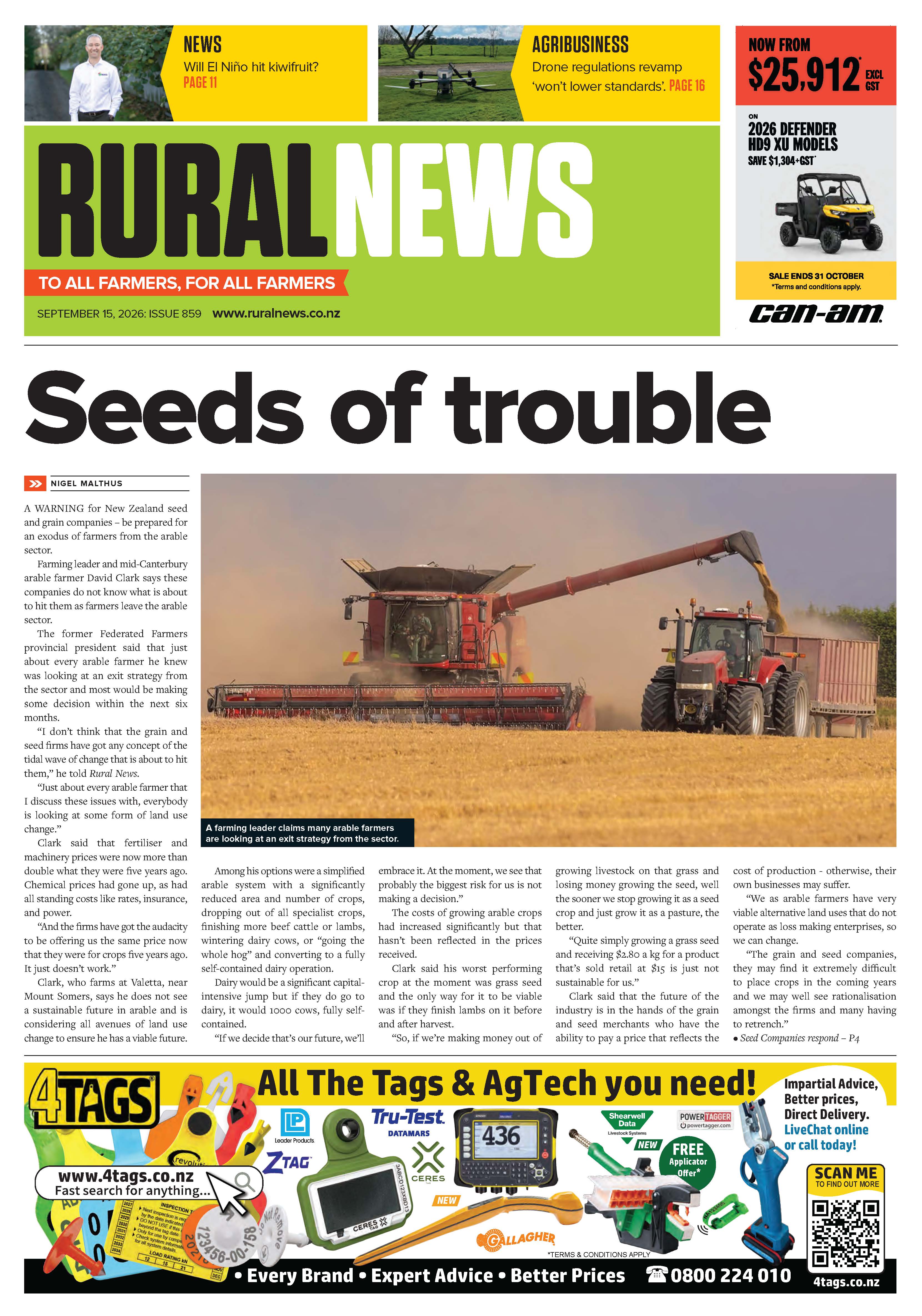
Massey Uses Portable Analyser to Measure Pasture Soil GHGs
Researchers at Massey University are using a special piece of scientific equipment to improve the measurement of greenhouse gas emissions from pasture soils.




 increase font size
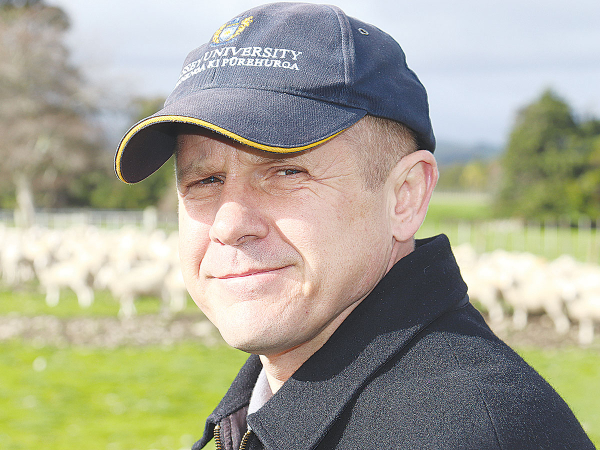 Professor Paul Kenyon
Expect greater collaboration between Massey University’s school of Agriculture and Environment and Ireland’s leading agriculture university, the University College of Dublin (UCD), in the future.
That the message from Professor Paul Kenyon who heads the Massey School and who recently returned from Ireland, where he spent three weeks at UCD in Dublin and the Irish agriculture research organisation Teagasc – one of its main sheep research stations – at Athenry near Galway city.
Kenyon’s trip was funded by the European Union and was part of a special exchange programme for academic staff and postgraduate students from the two agricultural universities.
Kenyon says for academic staff, it’s about teaching undergraduate students, and for post graduate students, it’s about spending time studying in each other’s country to understand their respective agricultural production systems and university life.
“So, I taught some undergrads and post grads at UCD in Dublin, plus I went and talked to academic staff about areas in which we have similarities in terms of interacting with high schools to attract students into our respective courses to meet current students and industry demands,” he says.
Kenyon says the second part of the trip was about collaborative research and seeing other sheep and beef projects underway in Ireland. He says Massey and UCD already have collaborate programmes running, in particular with Professor Tommy Boland of UCD who’s been to NZ many times.
Kenyon says he was keen to learn about what programmes – especially of a commercial nature –
UCD is involved at its Lyons research farm just out of Dublin and the Teagasc research station.
“At Athenry, I spent time with an Irish PhD student that I co-supervise in conjunction with UCD who’s looking at pasture swards and the use of greater levels of clover. I had a good chat to her and then I took the opportunity to look at more opportunities for collaboration between the two countries,” he says.
Joint Research
Ireland and NZ have much in common; both have pastoral-based systems and have to deal with similar issues in the environmental and animal production space. Paul Kenyon says that both countries can learn a lot from each other by greater collaboration.
“The advantage of working collaboratively [is] that we can do research faster because we operate in different hemispheres and effectively get two springs within the space of 12 months,” he says.
A big part of Kenyon’s Ireland trip was to firm up a student exchange programme between UCD and Massey. He says four Irish PhD students will spend three or four months at Massey and a NZ student will be going to UCD and their Lyons research farm early this year.
Kenyon says one of the roles of his trip has been to connect people in UCD and other organisations, many of whom were not directly related to the specific aims of this trip.
“I forged linkages and collaborations that hopefully others will take up for the benefit of both countries,” he says.
The big end game in this collaboration programme is to source funding for future research. Professor Kenyon says there are international funding bodies who are looking to invest in collaborative research – especially if the partners are from different hemispheres. He says both UCD and Massey, both leading agricultural universities in their respective countries, are keen to tap into these funding sources and understand what each is doing to ensure that high quality bids for funding are made.
Researchers at Massey University are using a special piece of scientific equipment to improve the measurement of greenhouse gas emissions from pasture soils.

Interest in agritech and production animal systems has prompted Massey University's School of Agriculture and the Environment to new majors to its popular animal science degree.
The industry is crying out for graduates with agricultural related degrees.
A four year trial has reaffirmed that mixing plantain into dairy pastures can help reduce nitrogen losses to freshwater while maintaining milk production and profitability, say researchers.
Special courses for secondary school teachers to help excite kids about agriculture and horticulture are now being run at Massey University.


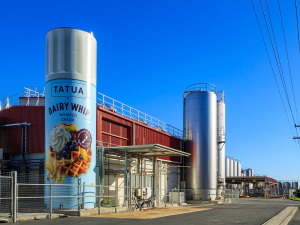
Waikato milk processor Tatua has again declared a record milk payout to farmer shareholders, leaving other processors in the dust.
A Labour-led Government won’t be bringing back the controversial freshwater rules of 2020.
National’s much-touted free trade deal with India featured in the Rural Issues Debate at Mystery Creek, Hamilton on Wednesday night.
New Zealand's 2026-27 freshwater fishing season has opened, with anglers encouraged to head to rivers and lakes over the coming days as conditions look favourable across much of the country.
Central Otago District Council (CODC) has voted against a plan to spread treated sewage sludge from Cromwell and Alexandra on farmland near Lauder, a decision Federated Farmers says reflects strong opposition from rural residents.
Pāmu has released its FY26 Integrated Annual Report, reporting a Net Operating Profit of $113 million, more than double the $49 million recorded in FY25.



OPINION: The same mainstream media muppets that brought you Jacindamania in 2017 have been flat out pimping for the Opportunities…
OPINION: Your old mate reckons the atrocious way farmers in the UK are treated by their lords and masters in…