Seeka Posts Record $62m Profit as Zespri Lifts 2026 Forecast
More signs of a booming kiwifruit sector.
 increase font size
 Zespri chief executive Dan Mathieson says rampant inflation is making a difficult season even tougher both in NZ and overseas.
Skyrocketing inflation both in NZ and in Zespri markets overseas is presenting new challenges for the kiwifruit sector.
Not only is the industry having to quickly sort out a fruit-quality issue at home - caused by a number of factors including a general lack of skilled labour - inflation is affecting buying patterns in some of its major overseas markets.
Zespri chief executive Dan Mathieson told Hort News that on the home front wages are rising as are other input costs on orchard such as fuel. He says, due to their reduced spending power, consumers have been more discerning about what they put in the supermarket trolley.
"So, inflation has impacted us both ends - at home in terms of costs and in the marketplace and in terms of purchasing power of consumers. That is something we are looking at, so we are doing well in terms of demand and we are able to hold our price position, which is excellent," he explains. "We expect that while wage inflation will continue to grow, it'll probably grow at a slightly lower rate over the next few years."
The other impact is still freight costs, which Mathieson says are huge. He says this has impacted on the orchard gate return (OGR) to growers and in the last couple of years the cost of freight paid by growers has doubled. Mathieson says there are signs that the demand for shipping - particularly in the containerised area - is starting to moderate over the next 12 to 24 months.
"We'd expect to see some change in the container rates and what we are already seeing is fuel costs coming back. Hopefully that will be passed on to the customers and we will see freight rates moderate."
Mathieson says Zespri has been chartering refrigerated container ships for the past couple of decades and has built up strong relationships with shipping partners in Asia and Europe and consequently has been able to lock in really good rates.
The Markets
Mathieson says, despite the many challenges Zespri is facing, it is encouraged by the strong growth and demand for kiwifruit.
He says a lot of this is based on consumer demand for healthy and nutritious foods.
He says SunGold is hitting a real sweet spot with consumers because of this and the fact that it’s a ready-to-eat fruit.
“Meaning you can pick it up on the supermarket shelf and take it home and you can eat it straight away. That’s been a real benefit for us to enlarge the kiwifruit portfolio and category because it has not only brought new consumers to the category, but also the repeat purchase rates are a lot higher.”
Mathieson says they still see a strong future for green and are focusing on their key markets for this – Asia, Japan and Korea. The major markets in Europe are Spain, Germany, France and the Benelux region. He says an exciting prospect is Vietnam.
Mathieson says Zespri is also focused on new green varieties coming through the R&D pipeline. A number of these are out with growers and will hopefully go to full commercialisation around 2027.
He adds that the new variety Ruby Red has been an exciting development and is proving very popular with young people because of its attractive red flesh and flavour.
More signs of a booming kiwifruit sector.
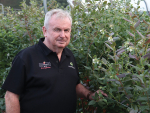
Blueberries have the potential to become a major horticultural export, earning up to $150 million within the next three to five years.
Westpac NZ has become the first New Zealand bank to receive approval from the Reserve Bank of New Zealand (RBNZ) to secure and leverage kiwifruit growers' Zespri shares.
New Zealand's kiwifruit industry has welcomed Government co-investment in a new five-year programme designed to help growers produce higher yields of premium fruit, with less water, fewer nutrients and reduced environmental impact.
Zespri's sales of kiwifruit for the 2025 season have broken all past records.


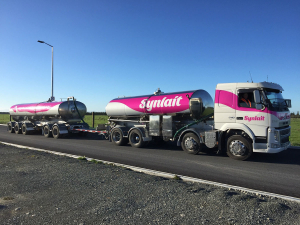
Synlait has swung to second-half profit as operations stabilise, but the dairy processor still posted a $75.4m annual loss.

LIC shareholders have elected a new North Island representative to the co-operative's Board, along with five representatives to its Shareholder Reference Group (SRG), following the company's Annual Meeting held in Invercargill.
Farmers across parts of Southland and South Otago are continuing to deal with difficult conditions after a prolonged run of wet weather, with pressure building around feed supply, stock management, pasture damage, farm infrastructure and everyday workloads.
Federated Farmers says it welcomes Labour's commitment to reviewing the Sharemilking Agreements Act, calling on other major parties to do the same.
For Canterbury dairy farmers Sian Meijer and Rick Wobben, wearable technology has become one of their most valuable on-farm tools - helping manage 1850 cows across an expansive, high-performing dairy operation while improving efficiency, mating outcomes and day-to-day decision making.
Fonterra has unveiled its annual results for the 2026 financial year, posting $27 billion in revenue and close to $20 billion returned to New Zealand farmer owners and unit holders.