LeaderBrand Leads with AI Innovation
Major New Zealand fresh produce grower is tapping AI to manage weeds on one of its farms.
 increase font size
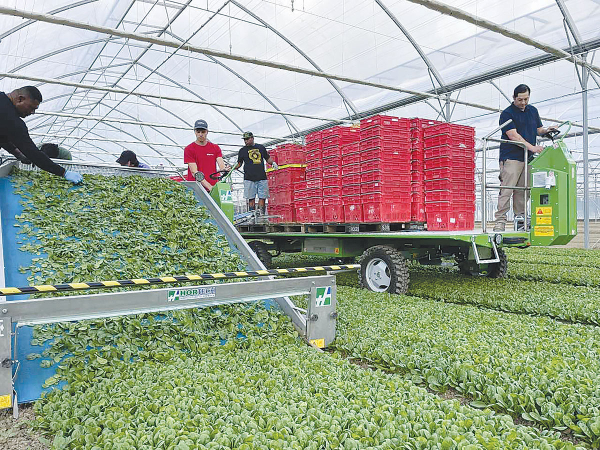 The electric harvest machines have been specifically designed to suit LeaderBrand’s indoor environment and cropping system with quality, accuracy and harvesting widths.
One of the largest horticulture commercial growing companies in NZ has just begun using a new electric harvester and self-propelled cargo platforms to operate in its new mega greenhouse.
LeaderBrand's general manager of farming, Gordon McPhail, says it's all part of the company's plan to find new ways to farm for a healthier future and try to help reduce carbon emissions.
The machines are being used in the company's 10.7 hectare glass house at its base in Gisborne. The huge glass house is unique in that vegetables - mainly salad types - are grown in the natural soil. It also has its own 40 million litre storage dam to irrigate plants.
The new Hortech eco-slide electrice harvester and Hortech cargo platform are both the first of their kind in NZ. The machines have been specifically designed to suit LeaderBrand's indoor environment and cropping system with quality, accuracy and harvesting widths.
McPhail says the new machines will reduce emissions and save on fuel and oil as well as demonstrating new ways to farm sustainably and with new techology, which is an important focus for LeaderBrand.
"We're always looking for different ways we can be more climate friendl, and this is another step in the right direction. It's also great for the safety of our team as the electric harvester is less noisy than our diesel engines, which is helping to improve communication and safety for our teams in the greenhouse," he told Hort News.
McPhail says the greenhouse is the right environment for LeaderBrand to trial and test if electric equipment will work in their business. He says they designed the front packhouse of the facility with electric harvesters in mind getting the wiring and outlets built into the greenhouse before they commissioned the equipment.
"With oversight charging we can get a solid 12-hour run time on the harvester, which is more than enough power to get us through our day which suits our busy team perfectly."
McPhail says that technology and innovation continue to advance in the electric space - particularly in controlled environments. But he adds that there is still a lot of research needed around scenarios involving work in the open field situation with variable workloads and potential to be far away from charging stations.
McPhail told Hort News that the LeaderBrand team will continue to keep up to date with the industry experts and look for opportunities that make sense for their business environment.
Major New Zealand fresh produce grower is tapping AI to manage weeds on one of its farms.
A pillar of New Zealand's horticultural industry, Dr Stuart Davis, was farewelled at a well-attended funeral service in Tuakau, South Auckland, on December 18.
Spinach is NZ's favourite leafy green, according to the Department of Statistics.
Gisborne's record hot dry summer weather has produced rewards for one of the country's largest commercial growers based in the region - Leaderbrand.
Regenerative farming trials in Gisborne, in partnership with Woolworths, LeaderBrand, and Plant & Food Research, are uncovering promising opportunities for sustainable vegetable farming in New Zealand.


Dairy processors are ready to further boost New Zealand’s export earnings but want the incoming government to match their ambition with good policy.
Massey University is best placed to solve the “problems” facing the dairy industry, says vice chancellor, Pierre Venter.
Synlait's longest serving employee – a man who joined the Canterbury-based milk processor even before it began processing milk – is now its newest executive.
A dairy industry leader believes eradicating the common and costly disease, Bovine Viral Diarrhoea (BVD) is within reach.
A farmgate milk price of $10/kgMS this season is firming up as milk powder prices soar and the New Zealand dollar weakens.
Federated Farmers has welcomed new rural policies released by ACT, saying they align closely with its own election priorities.