James Blair Named 2026 Young Grower National Champion
James Blair, an agronomist for AS Wilcox and the Pukekohe regional champion, has won the 2026 Young Grower national title.
 increase font size
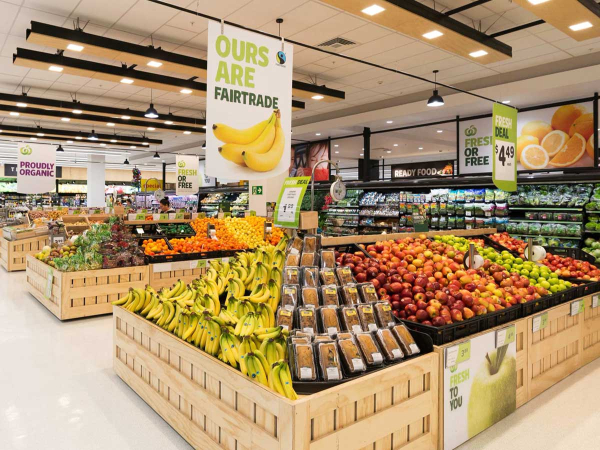 Woolworths says that with an extended period of settled and warmer growing conditions this year, we find ourselves in a market of plentiful supply.
One of the country’s two largest supermarket chains is reporting that for the first time since the disruption of Covid, they have largely full supply on almost all fruit and vegetables grown locally.
Woolworths has told Horticulture NZ conference in Tauranga that with an extended period of settled and warmer growing conditions this year, we find ourselves in a market of plentiful supply.
Woolworths head of vegetable and hort buying team, Glenn Bewly noted that the supply and demand equation can be a difficult balance to get right, especially with the external pressures of a subdued economy.
He told the conference that a recent survey conducted by IPSOS NZ found that the ‘cost of living’ was comfortably the single most significant issue that customers faced today.
“While we have recently seen RBNZ starting to reduce the cash rate and a shift for the wider market from inflation to deflation, we can expect that cost-of-living pressures will continue to be felt for some time.
“With value seeking behaviour at record highs, the ability to bring value to customers is essential. And with growers benefiting from higher yields and good quality turnout, this has helped to deliver some fantastic value for retail customers.
“Customers have reacted well and collectively we have seen examples of record-breaking volumes,” Bewly says.
He pointed out, however, that there has been an ongoing challenge of driving consumption to a point that consistently allows for demand to come up to a high enough level to meet that of supply.
“This has made for a challenging market. We are collectively working to grow consumption levels of fruit and veg.
“We continue to be focused on delivering value, quality and freshness for Kiwis across NZ. If consumers have a fantastic experience, we know they are more likely to consume and buy more.”
Earlier this year Woolworths opened its second fresh produce state of the art distribution centre.
Bewly says this completed Woolworths’ national coverage for delivering fruit and vegetables for their store network – allowing them to handle with care and have the appropriate temperature controls to maximise freshness and quality for customers.
“We know our customers react positively to this, with a noticeable positive step change in our customer feedback in the South Island following our Christchurch DC opening.
“We continue to invest in upskilling our produce team, through our program known as Cultivate. We are also focused on driving passion across our wider business, through ‘The Fresh Commitment’, a workstream focused on driving passion across our teams in store, in our DC’s and across support offices, empowering staff to never walk past fresh products which they themselves would not be happy buying.”
Woolworths is also rolling out chilled front of store displays, allowing them to display in season products such as strawberries at the front of the store - helping to maximise quality for the end consumer.
“We know for highly temperature sensitive lines spending time outside of a chilled environment can have a detrimental effect on shelf life,” says Bewly.
James Blair, an agronomist for AS Wilcox and the Pukekohe regional champion, has won the 2026 Young Grower national title.
Blueberries have the potential to become a major horticultural export, earning up to $150 million within the next three to five years.
New Zealand needs to make sure that it continues to focus on its own food security, according to HortNZ board member and blueberry grower Dermott Malley.
According to a progress report on the Aotearoa Horticulture Action Plan (AHAP), New Zealand's horticulture sector is making real progress on the big issues facing growers.
Agriculture Minister Todd McClay has admitted that a scheme bringing workers from Pacific nations to work on orchards has become too hard to navigate but says changes are coming.



Entries opened on Monday, 5 October 2026 for the 2027 New Zealand Dairy Industry Awards (NZDIA), which organisers describe as the nation's biggest celebration of excellence in the dairy sector.
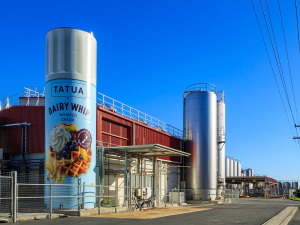
Waikato milk processor Tatua has again declared a record milk payout to farmer shareholders, leaving other processors in the dust.
A Labour-led Government won’t be bringing back the controversial freshwater rules of 2020.
National’s much-touted free trade deal with India featured in the Rural Issues Debate at Mystery Creek, Hamilton on Wednesday night.
New Zealand's 2026-27 freshwater fishing season has opened, with anglers encouraged to head to rivers and lakes over the coming days as conditions look favourable across much of the country.
Central Otago District Council (CODC) has voted against a plan to spread treated sewage sludge from Cromwell and Alexandra on farmland near Lauder, a decision Federated Farmers says reflects strong opposition from rural residents.