NZKGI Responds to Migrant Worker Exploitation Reports
Where any worker in the kiwifruit industry is mistreated, we expect the authorities to take action.
 increase font size
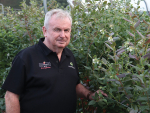
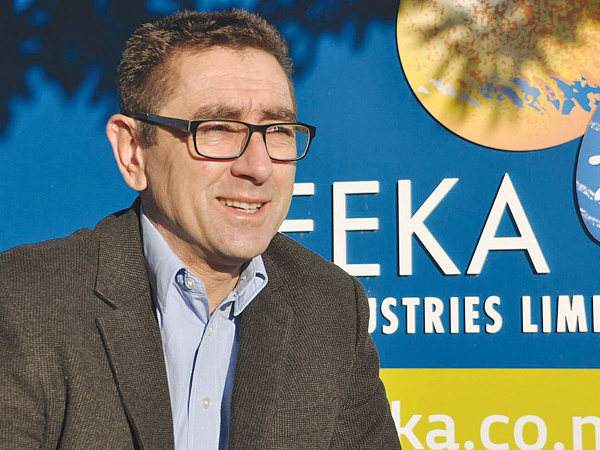 Seeka chief executive Michael Franks.
For kiwifruit grower and exporter, Seeka growth is part of the listed company's DNA.
Started by a small group of orchardists in NZ's kiwifruit capital Te Puke 30 years ago, Seeka has grown into a company with an enterprise value of $380 million.
Last year, the company generated a record profit of $23.5 million, up 44% on the previous year.
Chief executive Michael Franks says the company has a strong growth strategy and last year was "an aggressive year" in terms of growth.
The company recorded three major kiwifruit acquisitions: Opotiki Packing and Cool Storage (OPAC), Orangewood in Kerikeri and NZ Fruits in Gisborne.
Franks says the acquisitions will lift volumes and synergies are set to deliver benefits from a larger business from this year.
Franks says since 2012 the company has been on a growth trajectory.
"I think out compound annual growth rate since 2012 is about 29%," he told Hort News.
"We started with company enterprise value of around $26m and have an enterprise value today of $380m. We've come a long way in a short amount of time."
The growth strategy is a deliberate one. It is part of the company's plan to lift operational excellence, drive earnings and maximise returns for shareholders.
But Franks says Seeka understands that it is still a small company.
"Our market capitalisation is still small," he says. "But to achieve our aspiration and be bigger than what we are today, we are prepared to go after opportunities in line with strategy.
"We are prepared to have a go: it's in our DNA."
Despite what Franks calls "a small company," Seeka is no slouch when it comes to the fresh fruit market.
The company has four business units.
As a kiwifruit grower, it churns out 10% of the NZ's total kiwifruit crop and processes about 26% of the national crop.
Seeka doesn't own any orchards. Instead, it leases and develops orchards on land through long term leases and agreements with farmers.
The company has a network of orchard managers in Northland, Bay of Plenty, Hawke's Bay and Gisborne. Through this arrangement the company grows crops and shares profits with about 800 farmers.
Franks says there is strong demand for kiwifruit around the globe because of its nutritious value and the NZ provenance.
But there are headwinds: inflation, very high orchard values, shipping disruptions and perhaps even an inefficient supply chain.
The arrival of Covid dealt another major blow to the kiwifruit sector.
Border closures not only stopped the inflow of backpackers, a key source of part-time labour for picking and packing fruits, it also depleted the local workforce as more people fell ill.
For Seeka, at the height of the Covid outbreak in the regions, 471 staff members were away from work on one day - 250 of were infected while 221 were in isolation as close contacts.
Franks says these were trying times for the 11 packhouses run buy the company. He thanks staff for trading roles and keeping the operations running.
"We had technical staff, orchard managers and drivers prepared to go and work in packhouses," he says.
"It was very difficult but we got through and I pay tribute to our dedicated workforce for going beyond what was reasonable expected to get the job done."
Apart from kiwifruit, Seeka is NZ's largest grower of kiwiberry and second largest avocado grower.
Where any worker in the kiwifruit industry is mistreated, we expect the authorities to take action.

Kiwifruit growers are watchful but remain optimistic as concerns around the potential effects of the El Niño weather pattern this season.
More signs of a booming kiwifruit sector.
After delivering a strong financial year, rural trader PGG Wrightson says the coming months will depend on customer confidence and weather.
New Zealand growers have always adapted to changing conditions, but one challenge is steadily gaining ground across the horticulture sector: resistance.


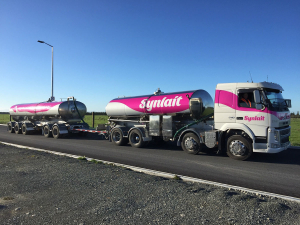
Synlait has swung to second-half profit as operations stabilise, but the dairy processor still posted a $75.4m annual loss.

LIC shareholders have elected a new North Island representative to the co-operative's Board, along with five representatives to its Shareholder Reference Group (SRG), following the company's Annual Meeting held in Invercargill.
Farmers across parts of Southland and South Otago are continuing to deal with difficult conditions after a prolonged run of wet weather, with pressure building around feed supply, stock management, pasture damage, farm infrastructure and everyday workloads.
Federated Farmers says it welcomes Labour's commitment to reviewing the Sharemilking Agreements Act, calling on other major parties to do the same.
For Canterbury dairy farmers Sian Meijer and Rick Wobben, wearable technology has become one of their most valuable on-farm tools - helping manage 1850 cows across an expansive, high-performing dairy operation while improving efficiency, mating outcomes and day-to-day decision making.
Fonterra has unveiled its annual results for the 2026 financial year, posting $27 billion in revenue and close to $20 billion returned to New Zealand farmer owners and unit holders.