Ruataniwha dam busted?
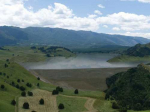
The future of the controversial Ruataniwha water storage dam in central Hawkes Bay is in limbo, following the recent local body election.
 increase font size

CONSENTS APPLICATIONS for the dam and the overall Ruataniwha scheme are expected to be lodged in March, to be heard by the Environmental Protection Agency (EPA) to ensure independence.
The chairman of Hawkes Bay Regional Council, Wairoa sheep and beef farmer Fenton Wilson, says while the scheme offers huge opportunities, it’s not a done-deal until the consent process is complete.
The Ruatanaiwha scheme looks to be the first to benefit from the Government’s kick-start of such projects – $80 million in the 2013/14 budget to set up a Crown company to develop regional water infrastructure, as announced recently by then Minister of Primary Industry David Carter.
Cash is expected to begin flowing in July, the $80 million being some of $400 million spread over five years, Carter says.
“Most of the initial $80 million will be available for grants. This company will have low overheads and… can partner with investors to get some bigger schemes of the ground as quickly as possible. There is no set ratio of cash input by investors; every project will be different. But the Government will be a minority investor, never a majority investor.”
Reliable irrigation is critical to the Government growth strategy to lift primary exports, Carter says. Ruataniwha is a good example of projects fundable by the new scheme.
“What has driven me to fight for this policy through the cabinet process is that I can find no example anywhere in the world where a large scale irrigation scheme has been successfully launched without the involvement of a central government,” he says.
Fenton Wilson agrees that without the prospect of government investment, getting Ruataniwha off the ground would be challenging.
“To suggest we would do it without them would be a step too far. I am heartened to hear John Key saying they are not chasing huge dividends from these investments.”
Wilson says while dairying is likely to benefit from the scheme it’s not at the top of heap. Other types of farming – especially cropping – give excellent returns from the use of water. And a return to normal summer flows would be good for the Tukituki River.
The future of the controversial Ruataniwha water storage dam in central Hawkes Bay is in limbo, following the recent local body election.

The Ruataniwha water storage scheme saga has gone far beyond soap opera territory: fantasy has long since replaced fact, the noisy quashing any sense.
A controversial land swap deal which would have advanced the Ruataniwha dam scheme may now not go ahead.
Greenpeace is known for pulling stunts that land it on newspaper front pages and prime time news.
Horticulture New Zealand has welcomed the announcement of the progress made in funding for the Ruataniwha Dam project in Hawke's Bay.

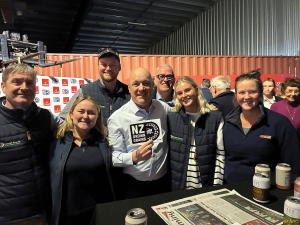
A central Canterbury business which turns malting barley into a key ingredient in beer making has celebrated its 100% New Zealand-grown status with a special event.
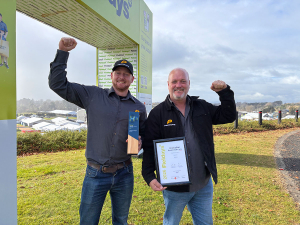
A farm shed solution to a long-standing safety problem has captured the public’s vote in the Fieldays Innovation Awards with AWS, with Waikato dairy farmer Warren Storey’s invention The PostMate, winning the 2026 Fieldays Innovation Awards People’s Choice Award, supported by KingSt. Advertising.
OPINION: The latest update from the Ministry for Primary Industries (MPI) on the state of NZ's primary sector paints a positive picturee about its performance over the past 12 months.
The recently signed free trade agreement with India is an invitation to strengthen relationships between the New Zealand and Indian strong wool industries, says Wool Impact chief executive Andy Caughey.
Strengthening the voice of vegetable growers on "big ticket items" will be the immediate focus of newly formed New Zealand Vegetable Council (NZVeg), says inaugural chair Alison Stewart.
Prime Minister Christopher Luxon says the red meat sector is doing an excellent job promoting our pasture-fed system around the globe.