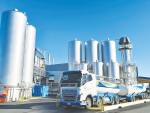
Fonterra lifts forecast milk price mid-point, advance rate
Fonterra has bumped up its forecast farmgate milk price for the season on the back of rising commodity prices and a strong balance sheet.
 increase font size

GOAT MILK sales growth of 50% in two years is prompting the Dairy Goat Cooperative (Hamilton) to look for suppliers in Northland and Taranaki.
"We now export to 20 countries, and sales in Malaysia, Hong Kong, China, Thailand and Korea keep growing at record levels," co-op chief executive Dave Stanley told a recent meeting of the Waikato branch of the New Zealand Institute of Agricultural and Horticultural Science.
When Stanley started with the co-op, in 1993, he was the only employee. Now there are 100, and turnover tops $100m/year from four plants in Hamilton drying, blending and canning product.
"Our plants are state-of-the-art, and farmers are hugely impressed when we take them round the sites."
Stanley says the co-op has deliberately kept a low profile as, compared to bovine dairy, it's still a niche market.
"But despite producing a comparatively high priced product for infant food, our customers, particularly in Asia, seem prepared to pay for it in increasing numbers."
Goat milk is secreted in the same way as human's – apocrine secretion – whereas cow's is merocrine secretion. Protein differences are important.
"Some reports say many Asians are lactose intolerant [hence demand for goat milk].
"In fact, goat milk also contains lactose, but it's the different proteins that mainly make the difference."
Fonterra has bumped up its forecast farmgate milk price for the season on the back of rising commodity prices and a strong balance sheet.
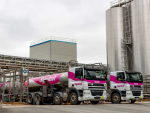
Canterbury milk processor Synlait has settled a long-running dispute over exclusive manufacturing rights and pricing with a cornerstone shareholder, a2 Milk Company.
Outgoing Fonterra director Leonie Guiney is satisfied that she’s leaving the farmer co-operative with a stronger balance sheet.
Fonterra says its milk collections for July were 2.4% lower than July last year.
Plant-based beverages are expensive and provide only a small fraction of the nutritional goodness of cow's milk, according to a new study done in Massey University.


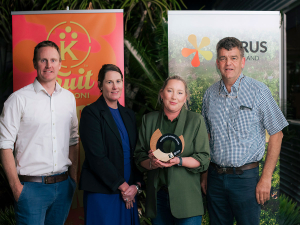
New Zealand's citrus growers were challenged to build their future on the value embedded in their fruit rather than the volume they produce, at Citrus New Zealand's annual gathering in Gisborne on 17 September.
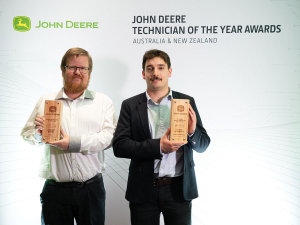
Leading John Deere technicians and apprentices from New Zealand and Australians were recognised at the recent sixth annual JD Technician of the Year Awards, held in Brisbane.
In Dacre, near Invercargill in New Zealand’s South Island, Bruce Dinnington is running a dairy operation unlike any other.
A free online platform aggregating governance vacancies across rural and regional New Zealand has been launched.
Environment Minister Nicola Grigg has announced details of a new rural plastics recycling scheme.
Agricultural drone operators say that a government decision to allow lower-risk drone work without certification won’t lower standards but drive innovation and efficiency.




