Massey VC Says University Best Placed to Support Dairy
Massey University is best placed to solve the “problems” facing the dairy industry, says vice chancellor, Pierre Venter.




 increase font size
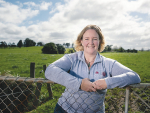
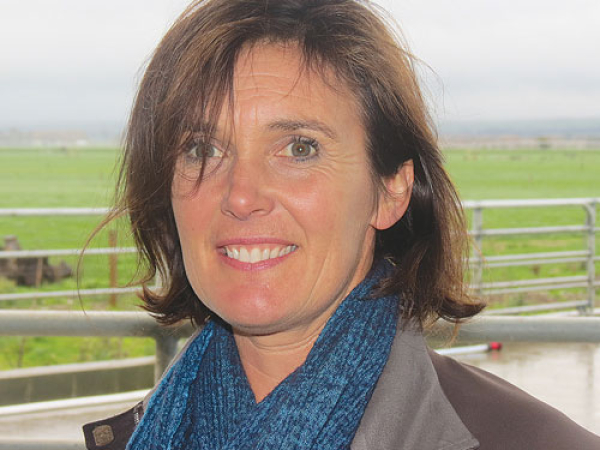 Retiring Fonterra director Leonie Guiney.
Outgoing Fonterra director Leonie Guiney is satisfied that she’s leaving the farmer co-operative with a stronger balance sheet.
Guiney, an advocate of the co-operative model, says a strong balance sheet has been one of her core focuses during her nine-year board membership.
She believes that after “over-reaching” in 2017, Fonterra now has a sound balance sheet, with the board and management working very well together, thanks to the leadership of chair Peter McBride.
Guiney told <em that a strong balance sheet is the ultimate risk management tool against shocks. At the same time, it can help the business grow. </em
“The balance sheet being stronger is about resilience to shocks that a business that exports like we do is exposed to,” says Guiney. “But it also puts us in a position to take opportunities.
“Just like a farm business that can ride the cycles with a repeatable cash surplus even in the lows, a cooperative that can do same can get stronger and keep its farmer shareholder suppliers committed.
“It also protects the future of farmers whose investment in infrastructure are long term. Weakness begets weakness. Strength builds on itself and attracts committed supply. It matters.”
Under Fonterra’s board charter, directors can serve a maximum nine-year term. Guiney is not re-standing for election and will retire at the co-op’s annual meeting in November, to be held in the North Island.
Guiney and her husband Kieran own five farms- three in Fairlie, one in Pleasant Point, and one in Rai Valley in Marlborough. The couple sold a farm to a longserving sharemilker earlier this year. Having built their business through 50/50sharemilking, they now have highly capable three 50/50 sharemilkers and two managers on their farms.
Guiney says they will now spend more time in helping young people develop their dairy careers but isn’t ruling out future governance roles in the primary industry sector.
“I’m passionate about dairy farming and the industry and there’s no other place I want to be - because firstly, we have this fantastic climate and grass-fed system that allows us to farm profitably.
“Secondly, we have a fantastic sharemilking system where people stat with nothing and end up owning land.
“And thirdly, we got the scale of a co-op which enable us to take on debt and risk because the co-op will prioritise the milk price.”
On challenges facing the dairy sector, Guiney says they are cyclical.
“Yes, interest rates are high relative to where they were a few years ago but not as high when compared to the 1980s and even at 12% when we started in the 2000s.”
Guiney’s says farmers must always strive for “a cash surplus business”.
“And Fonterra is an extension of our farming business and must also remain a cash surplus business with a safe balance sheet and can still significantly improve its focus on efficient use of resource.”
Her advice to farmers, especially younger farmers, is to stay engaged with the co-operative.
“My retirement from the board gives younger farmers the opportunity to get engaged. In the past when Fonterra faced tough issues, our farmers were upset and angry, but they stayed engaged and that helped change the co-op, for the better.
“The biggest mistake is when farmers start to think that everything is rosy and start to disengage.”
One of the biggest risks is taking the model for granted, she adds.
“The impact of shortterm thinking and supply competition leads to poor long-term outcomes for farmers.
“We can see what has happened in Australia and Europe and the meat industry in NZ where they don’t have a strong co-op.
“Among endless debates about ‘adding value’, a wise Canterbury farmer summed it up for me making the point ‘you can add value anywhere along the supply chain, it’s who captures it that matters’.
Massey University is best placed to solve the “problems” facing the dairy industry, says vice chancellor, Pierre Venter.
Fonterra shareholders can begin voting on Tuesday 20 October in the 2026 Board of Directors’ election, a Co-operative Council election in one Ward, and seven Annual Meeting resolutions.
Fonterra Co-operative Group chief financial officer Andrew Murray has resigned to take up a role outside the dairy giant.
Four candidates have been confirmed for two director positions on Fonterra’s board.
A record farmgate milk price and strong global demand is laying the foundation for continued growth of organic dairy farming in New Zealand.


Dairy processors are ready to further boost New Zealand’s export earnings but want the incoming government to match their ambition with good policy.
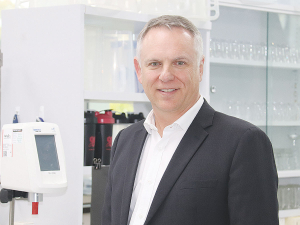
Massey University is best placed to solve the “problems” facing the dairy industry, says vice chancellor, Pierre Venter.
Synlait's longest serving employee – a man who joined the Canterbury-based milk processor even before it began processing milk – is now its newest executive.
A dairy industry leader believes eradicating the common and costly disease, Bovine Viral Diarrhoea (BVD) is within reach.
A farmgate milk price of $10/kgMS this season is firming up as milk powder prices soar and the New Zealand dollar weakens.
Federated Farmers has welcomed new rural policies released by ACT, saying they align closely with its own election priorities.


OPINION: The same mainstream media muppets that brought you Jacindamania in 2017 have been flat out pimping for the Opportunities…
OPINION: Your old mate reckons the atrocious way farmers in the UK are treated by their lords and masters in…




