NZKGI Responds to Migrant Worker Exploitation Reports
Where any worker in the kiwifruit industry is mistreated, we expect the authorities to take action.
 increase font size
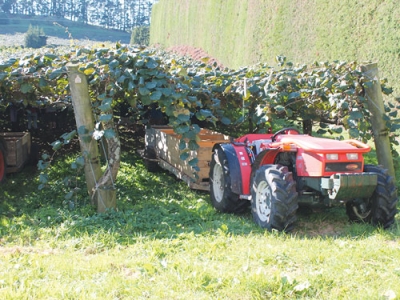 Kiwifruit orchard values are going through the roof on the back of a revamped sector.
Orchard values are going through the roof compared even with pre-Psa levels, says Zespri chief operating officer Simon Limmer.
He says the vine killing disease Psa impacted growers' balance sheets significantly, but the banks were flexible in working through Psa issues with growers.
"Most growers were able to survive Psa and see their orchard values not only recover but increase significantly. Land values in kiwifruit country are through the roof, particularly the Gold but even the Green.
"The kiwifruit industry is attracting a lot of attention in the primary sector compared to what's going on with other primary industries."
Orchard gate returns are about $65,000/ha on average across the whole industry. That's compared to about $30,000 in the 2005-06 period.
Limmer adds that Gold3 has been a big driver of the shift, so has greater productivity overall, particularly in Green.
The Green on average is forecast to maintain on average $50,000/ha; the cost per hectare has risen significantly in the last few years from about $20,000 to $25,000 - $30,000/ha.
Psa forced growers to be more vigilant and more proactive in protecting their crops. But productivity has also grown.
Gold is delivering $100,000 - $130,000/ha in yield and market price. On-orchard costs are $30,000 - $35,000/ha and productivity is higher.
The value of a Gold orchard is said to be about $600,000/ha (from about $450,000/ha pre Psa) and Green is about $400,000/ha (from about $250,000/ha).
Where any worker in the kiwifruit industry is mistreated, we expect the authorities to take action.

Kiwifruit growers are watchful but remain optimistic as concerns around the potential effects of the El Niño weather pattern this season.
More signs of a booming kiwifruit sector.
After delivering a strong financial year, rural trader PGG Wrightson says the coming months will depend on customer confidence and weather.
New Zealand growers have always adapted to changing conditions, but one challenge is steadily gaining ground across the horticulture sector: resistance.


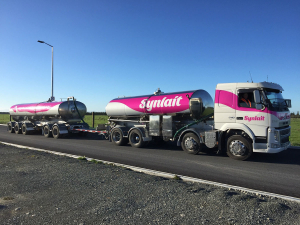
Synlait has swung to second-half profit as operations stabilise, but the dairy processor still posted a $75.4m annual loss.

LIC shareholders have elected a new North Island representative to the co-operative's Board, along with five representatives to its Shareholder Reference Group (SRG), following the company's Annual Meeting held in Invercargill.
Farmers across parts of Southland and South Otago are continuing to deal with difficult conditions after a prolonged run of wet weather, with pressure building around feed supply, stock management, pasture damage, farm infrastructure and everyday workloads.
Federated Farmers says it welcomes Labour's commitment to reviewing the Sharemilking Agreements Act, calling on other major parties to do the same.
For Canterbury dairy farmers Sian Meijer and Rick Wobben, wearable technology has become one of their most valuable on-farm tools - helping manage 1850 cows across an expansive, high-performing dairy operation while improving efficiency, mating outcomes and day-to-day decision making.
Fonterra has unveiled its annual results for the 2026 financial year, posting $27 billion in revenue and close to $20 billion returned to New Zealand farmer owners and unit holders.