Drench resistance already impacting NZ farm profits
Drench resistance is already hitting farm profits; it's not just a future problem.
 increase font size
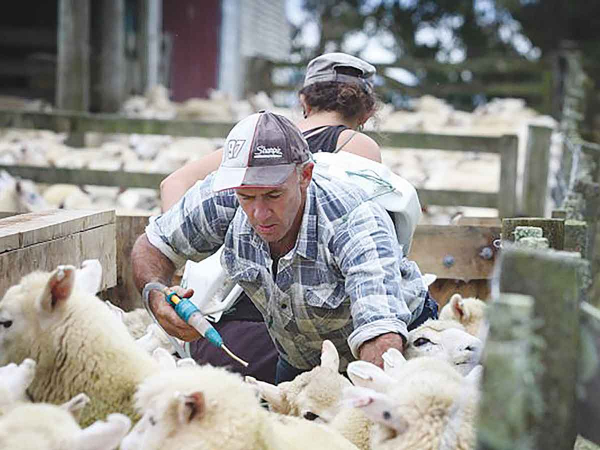 Drench resistance is controllable with the appropriate management.
An emerging drench resistance issue has been identified on Beef + Lamb New Zealand's Future Farm Lanercost in North Canterbury and a holistic plan is being put in place to protect future livestock productivity.
Lanercost's management team was alerted to a problem last spring when lamb weaning weights were below what would have expected in an otherwise outstanding season.
Consultant vet Ben Allott looked at a number of possible issues, but parasitism identified during a post-mortem was deemed to be the most likely cause of poor lamb performance.
"I don't think drench resistance is limiting production here, but poor drench selection decisions could have. But I suspect a wider systems issue is all leading to a parasite challenge problem."
Allott says Lanercost is on the precipice in that it does have multi-drug resistance Osertagia and if the system is set up so that thee is a continued reliance on drench or chemical input, then the situation will rapidly deteriorate.
"The onus is on us to implement farm management that will halt the progression of drench resistance and ultimately we would like to improve." Tests have shown some resistance to benzimidazoles (BZs) and levamisoles (LVs), but Dr Dave Leathwick from AgResearch believes this resistance is manageable with the appropriate management.
This is an early warning, and you need to pay attention to it."
Leathwick says the management team is fortunate to have the option of drenching as they have effective drenches available to them, which is not the case on a growing number of farms.
Lanercost is far from unusal in having a degree of drench resistance. Leathwick says there are very few farms in New Zealand that don't have resistance of some sort.
"There might be 10% of sheep farms that don't have any resistance, but that is possibly being generous and in cattle farms there are none. I am sure every cattle farm in NZ has Cooperia resistance."
The focus at Lanercost is to develop long-term sustainable policies that will enable them to maximise productivity and profitability in their sheep flock without relying on drenches.
The management team on Lanercost will soon be documenting their parasite management decisions on the Future Farm page of B+LMNZ's website. This will give farmers the opportunity to see what worked, what didn't, and lessons learnt.
Preventing Further Drench Resistance
The following management strategies are being implemented on Lanercost to halt more drench resistance:
For more information on parasite management go to www.wormwise.co.nz.
Drench resistance is already hitting farm profits; it's not just a future problem.
TB differential slaughter levy rates are changing with dairy animals paying $12.25/head, an increase of 75c from next month.
At least one in three Kiwi sheep farms has triple drench resistance, according to the latest drench efficacy testing undertaken by Techion.
There was one outstanding achievement that Sam McIvor can bask in the glory of from his time as chief executive at B+LNZ and that is the much-improved relationships across the wider primary sector.
Beef + Lamb New Zealand is seeking global partnerships as it works to revolutionise internal parasite management in the face of increasingly widespread drench resistance.


OPINION: Farmers around the country are welcoming the proposed reform of local government.
A move to boost farmer uptake of low methane emitting sheep is underway.
Silver Fern Farms has tackled the ongoing war-induced shipping challenges to mideast markets by airlifting 90 tonnes of chilled New Zealand lamb and beef to the United Arab Emirates.
The primary sector is leading New Zealand's economic recovery, according to economist and researcher Cameron Bagrie.
Dairy industry leader Jim van der Poel didn't make much of the invitation he received to the recent New Zealand Dairy Industry Awards in Rotorua.
Farmers around the country are going public big time, demanding their local district, city and regional councils come up with amalgamation plans that meet the needs of rural communities and don't allow urban councils to dominate.