Farmers need to have a robust facial eczema (FE) prevention plan in place, says animal health company Agritrade.
The company makes the Time Capsule, sold for 20 years as a preventative.
FE spores grow when rain follows a long period of dry weather. Dead pasture material at the base of the sward is the medium on which Pithomyces spores grow and the warm ground temperatures (>12°C) that follow rain are ideal for rapid spore growth.
As pasture disappears (the onset of drought) FE risk increases as animals are forced to graze lower into the litter where the spores reside.
“It’s critical that farmers continuously monitor, using either pasture or faecal testing, to determine when preventative action is necessary to keep animals adequately protected.”
March and April are often the peak months for FE spore counts, though high counts can happen in January or earlier.
“Animals need not suffer unnecessarily from FE,” Agritrade says. “Protecting them will avoid liver damage that will harm milk and meat production. FE is preventable with a sound management plan.”
Staying vigilant is especially important for sheep farmers as often the breeding season coincides with peak spore counts.
“Many ewe losses can be attributed to liver damage caused by FE. Ewes exposed to even a moderate challenge can show a delayed onset of oestrus, fewer oestruses and a reduced lambing percentage.”
Spore testing is easy to do and is available from most veterinarians. Use district spore counts as a guide only, as they are not applicable to individual properties.
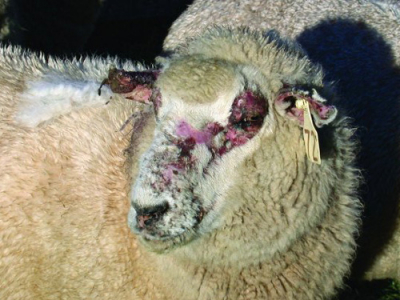
“By the time FE becomes visible, the damage to the liver has already occurred,” Agritrade says. “Prevention is the cure.”