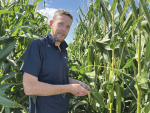
Fall Armyworm in NZ Maize: Four Years of Research
Four years since it was first detected in New Zealand, researchers and growers now know much more about management of maize pest fall armyworm (FAW).
 increase font size
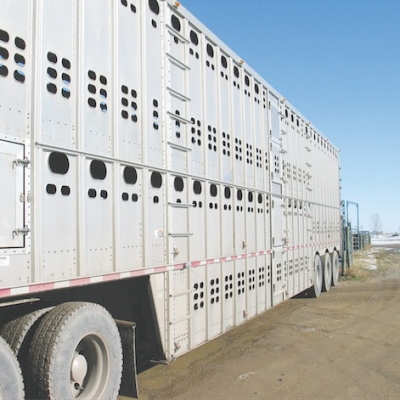 Canadian calf truck - University of Saskatchewan
THE LONGER calves travel on a truck, the more weight they lose, Canadian research published in the Journal of Animal Science shows.
A team from the University of Saskatchewan found average weight loss on long, up to 23-hour trips was 4.5%, falling to 1.6% for 11-hour journeys.
Calves in compartments where higher temperatures and humidity were recorded had higher weight loss than peers in cooler, dryer compartments on the same trip.
Non-highway travel and stationary periods caused the highest temperatures and humidities.
The researchers evaluated 2,238 beef calves in 24 commercial loads from auctions or single sources to feedlots between September 2010 and November 2012 in Alberta. Ear tags with devices to record temperature and humidity were used on calves, with similar data loggers fitted in various parts of the trailers: deck, doghouse, belly, and back, as well as on the driver’s and passenger’s mirrors to record ambient conditions.
Drivers logged cattle conditions before the journey, at stops and at destination. Calves were weaned 24 to 48 hours before transport and had access to hay and water between weaning and transport. Stress was measured before and after transit through salivary cortisol levels, weight loss and morbidity.
Calves transported in summer lost more weight (“shrink”) than winter movements but salivary cortisol levels were higher in winter. Researchers found that despite elevated stress levels most animals arrived healthy and in good condition. However, because of the stress recorded, the authors suggest further research should be conducted on the relationship between transportation and cattle welfare.
“The influence of transport did not result in poor welfare within the study population, but may be of importance for higher-risk cattle.”
Four years since it was first detected in New Zealand, researchers and growers now know much more about management of maize pest fall armyworm (FAW).
Generative AI in the workplace, trials in the field, and industry-relevant research took centre stage at this year’s Grape Days events in Central Otago, Hawke’s Bay and Marlborough.
Scientists from the Ministry for Primary Industries (MPI) are part of an international team working to develop a low-cost diagnostic tool that could significantly improve food crop production in developing countries.
Scion is running experimental research burns near Christchurch from March 3-14, to test new theories on how wildfires spread under various conditions.
OPINION: The politics of science or is it the science of politics that is driving research in New Zealand?


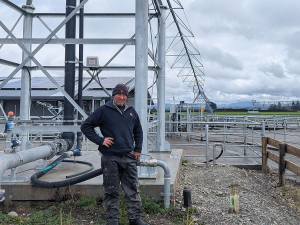
Converting a longstanding cropping farm to dairy was the only way to ensure the land stayed in the family long term, says new dairy farmer Rod May.

As the election heats up, Organics Aotearoa New Zealand (OANZ) has launched its election scorecard designed to help voters wanting to support policies that grow organic and New Zealand's organic sector.
A 'tsunami' of milk from key exporting countries is winding down and this may be good news for New Zealand dairy farmers.
Will the good times last? That's one of the key issues to come out of the latest Federated Farmers confidence survey.
Outgoing Fonterra Co-operative Council chair John Stevenson says that it has been a privilege to represent the co-op's farmer shareholders.
Have a plan in place for your cows and staff.