At least one in three Kiwi sheep farms has triple drench resistance, according to the latest drench efficacy testing undertaken by Techion.
The company which helps farmers manage parasites in animals, says the sheep industry’s reliance on drenches to deal with parasites is the reason a growing group of farmers are facing the failure of their drenches.
The company which helps farmers manage parasites in animals, says the sheep industry’s reliance on drenches to deal with parasites is the reason a growing group of farmers are facing the failure of their drenches.
It wants farmers to integrate alternative parasite management approaches and move beyond relying solely on drenches to deal with the parasite problem.
A further analysis of data estimates the production cost to the sheep industry at $110 million annually – equating to around $70,000/property for farmers unknowingly using ineffective drench.
Every year Techion does more than 50,000 FEC (faecal egg count) tests at its Mosgiel laboratory and its network of FECPAK users, including FECRT (faecal egg count reduction test) tests through its DrenchSmart service.
Results for the first seven months of 2024 showed that triple drenches (BZ/Lev/Aba) were failing on 34% of New Zealand sheep farms. Other common drench options fared no better: BZ/Lev combinations failed on 47% of properties, while Lev/Aba combinations failed on 39% of properties tested.
Techion founder and managing director Greg Mirams says that another significantly worrying trend in this year’s results is that some drenches are showing signs of diminished efficacy on a growing number of properties.
Techion claims that, until now, the newer novel active drenches, such as those containing Monepantel and Derquantel, have been considered the gold standard for quarantine drenching or as effective options in cases where farmers have widespread drench resistance.
Compounding this issue, these novel actives are expensive and, at times, challenging to source. Without access to effective drenches, farmers have limited options to preserve animal health and flock performance if drenching is the primary tool in their farm’s parasite management toolbox, it says.
 |
|---|
|
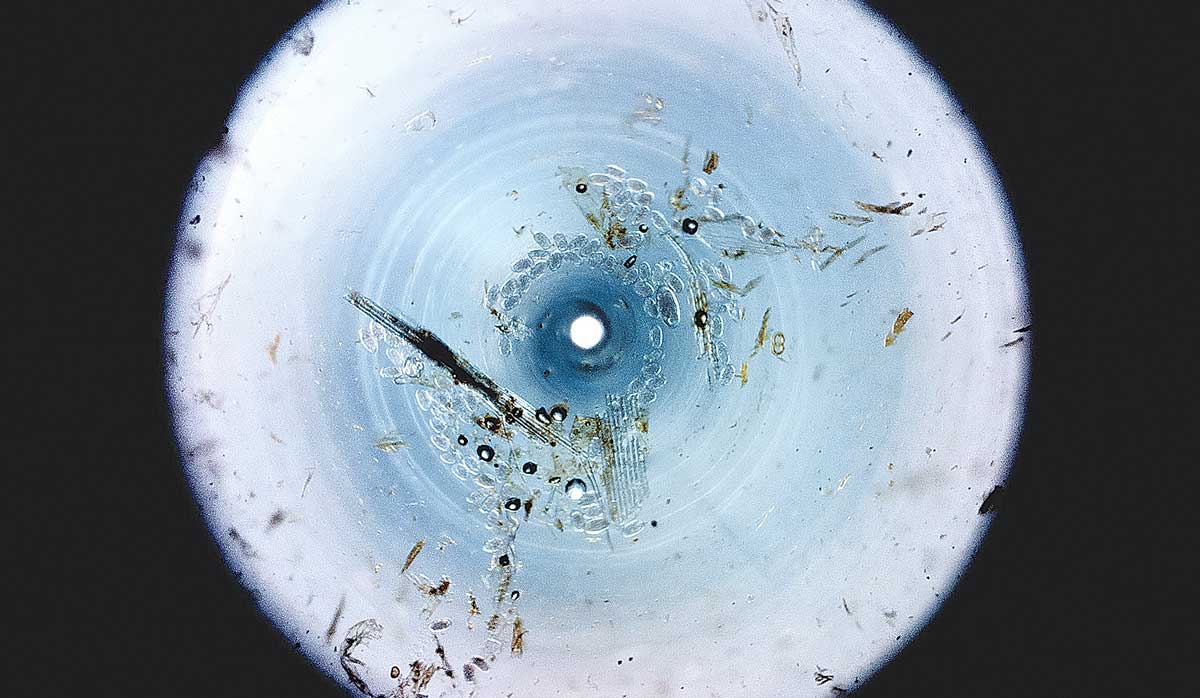
Result of a faecal egg count test.
|
“As access to effective drenches reduces, integrated parasite management strategies are essential to safeguard the future of animal health and performance," Mirams says.
“With a one in three chance of new stock coming from a farm with triple resistance, it is essential farmers’ quarantine procedures are effective. By undertaking FEC testing following a quarantine drench, farmers can gain comfort that imported animals are not passing resistant parasites onto their property.
“Beyond the quarantine procedure, farmers need to take control of their parasites by educating themselves on alternative parasite management options related to their operation. The key is the ability to monitor FEC levels and the implementation of integrated parasite management strategies.
“At a time when the farming sector is facing low returns, being able to manage farm costs is vital. Paying for and using drenches without checking they are working could be wasting time and money. The most critical step is to know what you are dealing with, which begins by investing in a FECRT test to ensure that the drenches being purchased are effective,” he says.