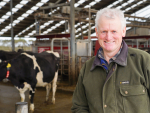
Inside the Southland Dairy Farm Where Robots and Pasture Work Together
In Dacre, near Invercargill in New Zealand’s South Island, Bruce Dinnington is running a dairy operation unlike any other.
 increase font size
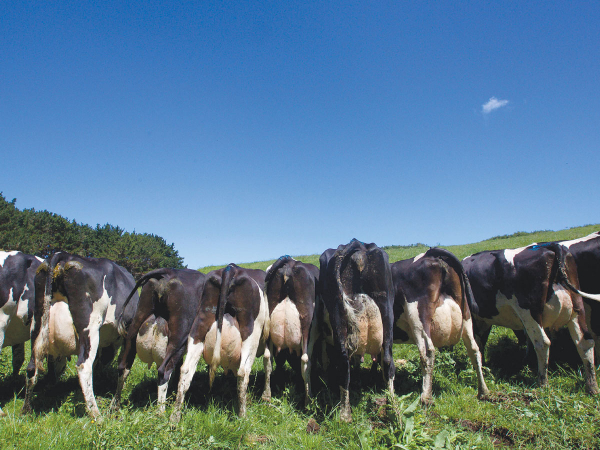 Steiner’s actions caused “unreasonable and unnecessary” pain and distress to the cows in his care.
A Waikato farmer who admitted to breaking the tails of more than 300 cows has been sentenced to community work and banned from owning cows.
Glen Raymond Steiner appeared in the Tokoroa District Court on Wednesday for sentencing after the case was brought to court by the Ministry for Primary Industries.
Steiner has been disqualified from owning or being in charge of all bovine animals. He earlier pleaded guilty to one representative charge of ill treatment of animals.
Judge Tony Snell took a starting point of six months' imprisonment and gave discounts for it being Steiner's first conviction, as well as his personal circumstances and early guilty plea.
The 43-year-old contract milker was sentenced to four months' community detention and 120 hours' community work in addition to being disqualified from owning or being in charge of any bovine animal for three years.
He was ordered to pay vet bills of $954.
Judge Snell commented that Steiner's actions were in the upper limit of this type of offence and that the type of offending and its effect on the industry was significant.
It could easily cause reputation harm to the dairy industry and the individual farming operation involved, he said.
MPI animal welfare and NAIT compliance manager Gray Harrison said the offending first came to light after a mob of dairy cull cows he sent to the meat works were found to have tail breaks.
“A MPI veterinarian reported the tail breaks, which led us to inspect the remainder of the herd at the dairy farm where Steiner worked.”
Of the 313 cows that Steiner physically handled, the majority were found to have been handled in a way that caused tail breaks.
More than 150 cows were found to have multiple breakages in their tails and 133 were determined to be recent breakages.
In the agreed Summary of Facts, Steiner’s actions were deemed to have caused “unreasonable and unnecessary” pain and distress to the cows in his care.
As a contract milker, it was his responsibility to ensure all animals on the property were handled in a way that minimised pain, distress and injury; including tail breakages.
Scientific research indicates it would require significantly more force to break a tail than dislocate a finger and the breaking of a tail or twisting would cause immediate, severe pain and distress.
In Dacre, near Invercargill in New Zealand’s South Island, Bruce Dinnington is running a dairy operation unlike any other.

Rural leader Mark Hooper has been appointed as an independent director to the NZPork board, bringing extensive farming, governance and advocacy experience to the role.
Climate, nature and animal wellbeing make up Fonterra's refreshed sustainability roadmap released last week.
B+LNZ's Wormwise veterinarian Mary Bowron has won the Best Sheep and Beef Vet of the Year Award in recognition of her outstanding contribution to New Zealand’s sheep and beef sector.
With lambing underway in many regions, Beef + Lamb New Zealand is encouraging farmers to put together a wellequipped lambing kit to help minimise lamb losses, particularly in bad weather.


Beef + Lamb New Zealand (B+LNZ) says it welcomes the passage of the Natural Environment Bill and Planning Bill, calling the bills a positive step for sheep and beef farmers.
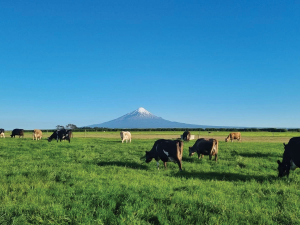
A spate of southerly winds bringing cold temperatures has presented challenges for Taranaki dairy farmers.
Converting a longstanding cropping farm to dairy was the only way to ensure the land stayed in the family long term, says new dairy farmer Rod May.
As the election heats up, Organics Aotearoa New Zealand (OANZ) has launched its election scorecard designed to help voters wanting to support policies that grow organic and New Zealand's organic sector.
A 'tsunami' of milk from key exporting countries is winding down and this may be good news for New Zealand dairy farmers.
Will the good times last? That's one of the key issues to come out of the latest Federated Farmers confidence survey.




