The primary sector is welcoming the appointment of Dr John Roche as the Prime Minister's new chief science advisor.
Roche is the Ministry for Primary Industries (MPI) chief science advisor and will retain that role in addition to taking up his new position, which is seen as a 'part-time' role.
Roche will also be the deputy chair of the newly appointed Science and Technology Advisory Council which will be headed by Science Minister Shane Reti.
The other members are Sir Peter Gluckman, Craig Piggot, the founder of the 'Halter', Fonterra executive Komal Mistry-Mehta, Genesis Energy chief executive Malcolm Johns, and engineer Merryn Tawahi from the Auckland Bioengineering Institute.
Prime Minister Christopher Luxon says while NZ has world-class scientists in our universities and research institutes, they are working in a system held back by outdated settings.
He says to unlock the full potential of science and technology, there is a need for a sharper focus on commercialisation, better access to global investment, and clearer priorities at home.
Support for Roche has come from Lincoln Agritech chief executive Professor Travis Glare, who described the appointment as an excellent choice given his experience in public funding for research, and alignment with policy needs. He says it is pleasing to see these new appointments and the establishment of the Science and Technology Advisory Council as part of the revamp of the New Zealand science system.
"There is a strong need for strategic direction for research investment in this country and it is hoped that the committee are able to provide a balance portfolio approach," says Glare.
Glare says he hopes the advisory council helps promote the need for increased investment in research as a mechanism to increase the wealth and wellbeing of all New Zealanders.
While apparently supporting Roche's appointment, the co-chair of the NZ Association of Scientists has taken a dig at the composition of the advisor panel. Dr Lucy Stewart claims there is a "very significant focus on the dairy industry".
"While important to the country's economy, it is fair to say it does not, nor should it, make up half of our science and research capability and focus," she says.
'A Huge Honour'
Dr John Roche is a respected agricultural scientist. He previously worked for DairyNZ as a principal scientist before joining MPI in 2018. He is an adjunct professor at the Auckland University School of Biological Sciences and has held science appointments in Ireland and Australia.
Born in County Kerry in Ireland, Roche obtained his doctorate in animal nutrition at the prestigious University College of Dublin, UCD. He also has a master's degree in farm systems and pasture management.
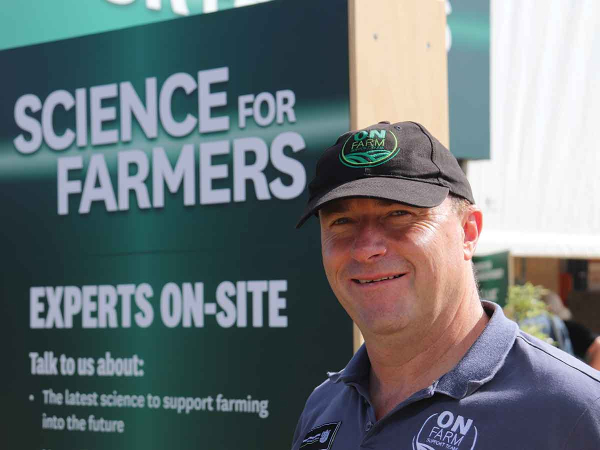
In his role at MPI, he led the task force to deal with M bovis and more recently has headed up the Ministry's On Farm Support (OFS) team and set up the Science For Farmers programme. Most of these successful ventures are due at least in part to his strong Irish connections, particularly the influence of Teagasc, the Irish Agricultural Institute (former MAF in NZ).
The OFS initiative is designed to get MPI more involved at the grassroots level of farming and to better understand the needs of farmers and bring them to the notice of his colleagues and government. It's likely Roche will have to give up the directorship of that team when he steps into his new role.
Roche was back home in Ireland when the announcement was made, but in a statement he says, "as someone who has dedicated their career to research and science it is a huge honour to be appointed to the role".
He says he's looking forward to working closely with members of the PM's new Advisory Council and is confident its independent advice will ensure taxpayer-funded science and innovation delivers real outcomes.