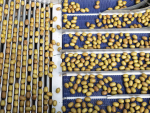
Seeka Posts Record $62m Profit as Zespri Lifts 2026 Forecast
More signs of a booming kiwifruit sector.
 increase font size
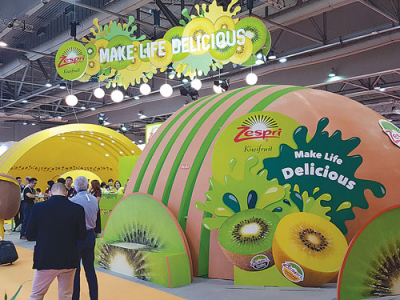 Zespri’s stand at Asia Fruit Logistica. Photo: Horticulture NZ.
Fewer tyre kickers than previously and people there to do real business was one of the observations made at Asia Fruit Logistica, says Horticulture NZ acting chief executive Richard Palmer.
That was reflected by all the NZ stand-holders there who were flat out for the whole week, Palmer told Rural News.
The annual event, held at the Asia World Expo in Hong Kong in early September, is the pre-eminent produce event in Asia.
“There were still people meeting new customers and signing deals there, but lots of exhibitors from NZ also just using the chance to meeting existing customers, talk over how the programmes are going and setting out some for the future, particularly where they have their own varieties that they are shipping into particular markets,” says Palmer.
On the technology side, one of the presentations was on the use of blockchain and how that might apply to traceability and food safety in the produce industry.
“It certainly has potential; not a big showcase on it but certainly people were very interested in what that might offer on the side of the business providing assurance to customers.
“But constantly there are innovations in all sorts of produce on show. You have people from Europe, from across Asia, from Central and South America and from Oceania. So there are lots of new varieties coming to market from all over the world.
“It is always nice to keep in touch with what your competition is doing and which sorts of products are ‘hot’ in the market.
“It is a useful opportunity to gauge where we fit in that space,” Palmer adds.
But he says the main focus is on Asia as a fast-growing produce export market for NZ and for others.
“We have been in [the Asia market] reasonably early compared to other countries, so we are making sure we keep some profile, which is a bit of credibility with our customers. It is also a chance to meet with all your Asian customers in one place.”
On development on the e-commerce side, Palmer says if you looked at that three years ago you would have said the online e-tailers are the way to go -- they are driving hard on their business.
“But for produce it has been pretty tough for them. It is not the easiest thing to ship – not like shipping a shirt or something like that.
“What we are seeing now is more local online like the Pagodas in China – a local store that will deliver your produce to you in 59 minutes. That is an iteration in the online sales that is really a local retailer delivering from an online platform, rather than a big distribution centre delivering in four-five days like the Amazons or JD.com,” he explains.
“It is one of those evolutions you see in product in the e-commerce space; it is a little bit different from other sales.”
More signs of a booming kiwifruit sector.
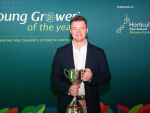
James Blair, an agronomist for AS Wilcox and the Pukekohe regional champion, has won the 2026 Young Grower national title.
Blueberries have the potential to become a major horticultural export, earning up to $150 million within the next three to five years.
New Zealand needs to make sure that it continues to focus on its own food security, according to HortNZ board member and blueberry grower Dermott Malley.
According to a progress report on the Aotearoa Horticulture Action Plan (AHAP), New Zealand's horticulture sector is making real progress on the big issues facing growers.


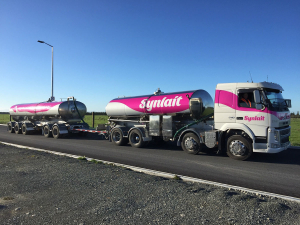
Synlait has swung to second-half profit as operations stabilise, but the dairy processor still posted a $75.4m annual loss.

LIC shareholders have elected a new North Island representative to the co-operative's Board, along with five representatives to its Shareholder Reference Group (SRG), following the company's Annual Meeting held in Invercargill.
Farmers across parts of Southland and South Otago are continuing to deal with difficult conditions after a prolonged run of wet weather, with pressure building around feed supply, stock management, pasture damage, farm infrastructure and everyday workloads.
Federated Farmers says it welcomes Labour's commitment to reviewing the Sharemilking Agreements Act, calling on other major parties to do the same.
For Canterbury dairy farmers Sian Meijer and Rick Wobben, wearable technology has become one of their most valuable on-farm tools - helping manage 1850 cows across an expansive, high-performing dairy operation while improving efficiency, mating outcomes and day-to-day decision making.
Fonterra has unveiled its annual results for the 2026 financial year, posting $27 billion in revenue and close to $20 billion returned to New Zealand farmer owners and unit holders.