Sweet or sour deal?
Not all stakeholders involved in the proposed merger of honey industry groups - ApiNZ and Unique Manuka Factor Honey Association (UMFHA) combining to form a larger organisation - think the deal is so sweet.
 increase font size
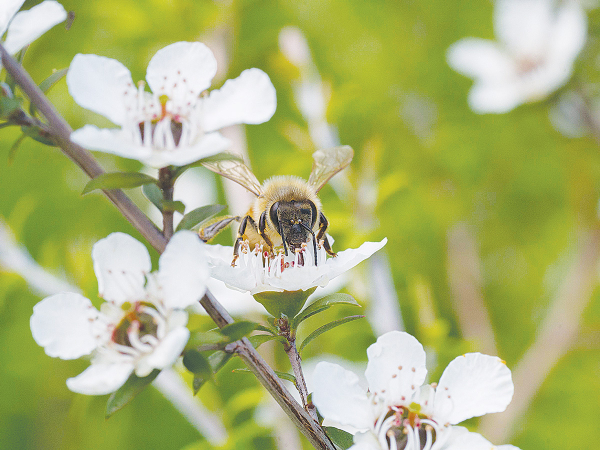 Relationship between Australian and New Zealand manuka honey producers has turned sour.
The Australian Manuka Honey Association (AMHA) is calling a recent study by the Unique Manuka Factor Honey Association (UMFHA) "reprehensible, misleading and laughably self-serving" and has served the NZ team a cease-and-desist notice.
Back in early February, the UMFHA published a study in which they sourced and tested over 40 foreign samples claiming to be manuka honey. The study found that all foreign samples failed to meet New Zealand government manuka identification tests and concluded that only New Zealand honey was thus able to claim to be true manuka honey.
Manuka honey is produced by bees that forage nectar of the Leptospermum scoparium plant, commonly known as manuka trees. Leptospermum is native to New Zealand and parts of southeastern Australia.
However, recently-appointed AMHA chairman Dr Ben McKee has called foul on the methodology.
"The circular reasoning is that they cannot be authentic because the honey is not marked as a product of New Zealand and is not exclusively collected from the Leptospermum species that exists in New Zealand," he says.
McKee claims that the campaign is deliberately misleading, anti-competitive and contradicted the findings of several international court authorities, which say that manuka honey can be gathered from any of the 85 subspecies of the Leptospermum family.
"It's simply sour grapes."
McKee adds that consumer buy manuka honey because of its unique antibacterial properties caused by its MGO (methylgyoxal) content, not because of its country of origin. He says the campaign could have serious consequences for Australian beekeepers.
McKee adds that while the Australian industry doesn't enjoy conflict with New Zealand, they will stand their ground.
"We will not allow them to portray our product as somehow inauthentic or inferior, especially when the scientific evidence shows Australian manuka is as potent, if not more than, New Zealand manuka honey," he added.
"Consumers and retailers deserve to have a clear understanding of what they are buying without the New Zealand industry resorting to dirty tricks, and I would encourage them to do their own research."
McKee claims that Australia has a larger diversity of Leptospermum cultivars which can be used to create honey with higher MGO count than New Zealand manuka, thus having stronger antimicrobial benefits.
The international manuka honey market is forecast to be worth around $1.27 billion in annual trade by 2027, with products selling for up to A$500 per kilo.
Not all stakeholders involved in the proposed merger of honey industry groups - ApiNZ and Unique Manuka Factor Honey Association (UMFHA) combining to form a larger organisation - think the deal is so sweet.
A big shakeup in the honey sector is about to take place with the news that the industry good body, ApiNZ, and the export focused Unique Manuka Factor Honey Association are looking to merge to form a new industry body.
Thousands of honey retailers and professionals worldwide are getting a taste of the remarkable properties of New Zealand mānuka honey.
In what your old mate reckons is par for the course for the current Government, it has blown more taxpayer money on a wasted cause.
New Zealand honey producers are "disappointed but undeterred", while Australian beekeepers have welcomed a "common sense" ruling.

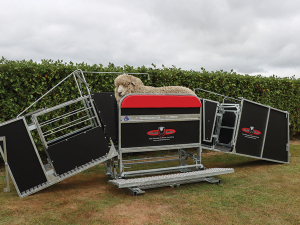
Oamaru-based livestock handling specialist Te Pari has bought Combi Clamp, the New Zealand manufacturer of Combi Clamp manual sheep handlers.
Agriculture Minister Todd McClay has admitted that a scheme bringing workers from Pacific nations to work on orchards has become too hard to navigate but says changes are coming.
A new app designed in New Zealand aims to help sheep, beef and deer farmers capture, analyse and use body condition score data more effectively.
Canterbury farmer Andy Macfarlane has been appointed to the board of AgriZeroNZ, the public-private partnership designed to accelerate the development and deployment of emissions reduction tools for New Zealand farmers.
For over 50 years Mel Ewers has been supporting the apple sector navigate through compliance and quality assurance issues.
The apple sector is enjoying a bumper harvest season.