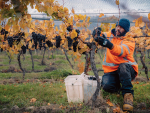
SWNZ Strengthens People Pillar for Global Markets
With ethical employment practices a "hot topic" in key markets, Sustainable Winegrowing New Zealand (SWNZ) is strengthening its People Pillar.
 increase font size

A Stratford farmer is to pay a former worker wage arrears after the Ministry of Business, Innovation and Employment's Labour Inspectorate identified breaches of minimum employment rights.
The case follows Labour Inspectorate action in the dairy sector focussing on employer maintenance of accurate time and wage records.
The Labour Inspectorate found the worker's pay was averaged across seasons and didn't meet the minimum wage rate.
The worker was employed as a farm assistant between 2 November 2010 and 19 October 2012 and towards the end of his employment lodged a complaint with the ministry regarding his rate of pay.
He was paid a salary of $30,000 per annum, which rose to $32,000 per annum in April 2012, and was required to work 49-60 hours a week. His hours would drop to 38-44 hours a week in the dry season.
After an investigation by the Labour Inspectorate identified breaches of the Minimum Wage Act, a demand notice to repay $6473.77 in arrears was issued to the farmer.
The farmer then filed an objection with the Employment Relations Authority (ERA) on the basis weekly wages paid under the minimum wage should be offset against wages paid during the dry season.
In a determination released this week the ERA found that payment by way of salary cannot be used as a mechanism to avoid paying minimum wage and the arrears are to be repaid.
Labour Inspectorate general manager George Mason says any practice of seasonal averaging in the agriculture sector is not lawful.
"Averaging out pay across a season, especially for those earning low salaries, is likely to breach the minimum wage rates set in legislation," says Mr Mason.
"It will also likely breach requirements for paid holidays, including public holidays and special leave.
"Employees should be receiving at least the minimum wage for the hours, days and weeks actually worked and employers must maintain accurate time and wage records to ensure that this occurs"
The Labour Inspectorate takes any breaches of minimum employment rights seriously, with non-compliance attracting fines of up to $10,000 for an individual and $20,000 for a company.
With ethical employment practices a "hot topic" in key markets, Sustainable Winegrowing New Zealand (SWNZ) is strengthening its People Pillar.

OPINION: Farmers have been clear: it is getting harder, not easier, to find and keep good people.
Building on the success of last year's events, the opportunity to attend People Expos is back for 2025, offering farmers the chance to be inspired and gain more tips and insights for their toolkits to support their people on farm.
Historically payroll software was written for commercial businesses where everything was relatively stock standard.
With a 12-year history of recruiting specialised operators from overseas to service the agricultural contracting industry, Hanzon Jobs typically brings in around 200 people to New Zealand each year from the UK and Ireland.



Federated Farmers says it welcomes Labour's commitment to reviewing the Sharemilking Agreements Act, calling on other major parties to do the same.
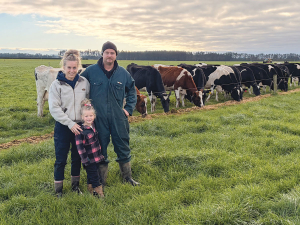
For Canterbury dairy farmers Sian Meijer and Rick Wobben, wearable technology has become one of their most valuable on-farm tools - helping manage 1850 cows across an expansive, high-performing dairy operation while improving efficiency, mating outcomes and day-to-day decision making.
Fonterra has unveiled its annual results for the 2026 financial year, posting $27 billion in revenue and close to $20 billion returned to New Zealand farmer owners and unit holders.
The first major update to the Dairy Cattle Code of Welfare in more than a decade has been released, marking what DairyNZ describes as an important step in ensuring animal welfare standards continue to evolve alongside scientific evidence and on-farm realities.
Ravensdown shareholders have elected Jane Montgomery and Kate Acland to the Ravensdown Board for three-year terms, following a closely contested director election.
Federated Farmers says new legislation replacing the Resource Management Act will cut red tape, unlock investment and help grow New Zealand's export-led economy, after the Planning Bill and Natural Environment Bill passed their third reading in Parliament yesterday.




