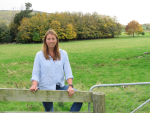
Rabobank Australia and New Zealand has appointed Sarah Sivyer as the senior animal proteins analyst in its Food & Agribusiness Research and Advisory (FAR) division.
Sivyer will undertake high quality research of the animal proteins sector – beef, sheepmeat and pork – supporting Rabobank's analysis of key markets in the food and agricultural sectors in the region.
Rabobank general manager for the bank's Food and Agribusiness Research & Advisory division Luke Chandler said Sivyer would be a valuable asset to the research team given her experience across a range of agricultural industries.
"Not only has Sarah been involved with the hands-on and strategic running of her family cattle property, she has also built a career working with leading global agricultural companies, which gives her an excellent foundation for her role at Rabobank," Chandler said.
"Sarah's career experience reflects her local and global perspective on agriculture which is important for our clients who are operating at all levels of the supply chain. We are very pleased to have her supporting our business at Rabobank."
Born and bred on a cattle property in the Hunter Valley, New South Wales, Sivyer has worked with the World Bank as an agribusiness consultant responsible for reviewing the New Zealand and Australian agri markets. Prior to this, she was based in Switzerland working for the crop protection company Syngenta as the food security agenda manager.
Sivyer holds an MBA from Oxford University and is highly involved in running the family Simmental and Hereford cattle property.
Sivyer says she is keen to continue contributing to the agricultural industry as part of the research team at Rabobank.
"Our family has been in farming since 1837 – I've always wanted to be able to contribute to the industry, both personally and professionally," she says.
"I think agriculture is critical to New Zealand's future, more so than ever right now, and society is building its awareness around the importance of farming and agricultural industries. Ag is certainly on the radar."
Sivyer says, from a "protein perspective", New Zealand and Australia are entering an increasingly important era when it comes to the supply and demand equation for agricultural products.
"With regard to emerging markets, protein consumption is increasing and New Zealand and Australia's role in supplying those markets is paramount – it will be fascinating to see how that unfolds in the future," she says.
"Looking from a global food security perspective, as our population grows to nine billion by 2050, we'll need to sustainably increase agricultural production by around 70% and I see a big growth story there with regard to protein consumption."
The world's leading food and agribusiness bank, Rabobank is one of Australia and New Zealand's largest rural banks and a major provider of corporate financial services to the region's food and agribusiness sector. The Food & Agribusiness Research and Advisory team is a dedicated unit within Rabobank which undertakes research into food and agribusiness sectors. The local FAR team is part of a global network of about 80 research analysts across the bank.