Biosecurity New Zealand says its frontline teams are ready for the anticipated influx of summer travellers with changes to arrivals processing at airports and the introduction of new hosts to help people.
Biosecurity New Zealand northern regional commissioner Mike Inglis says the new hosts are joining biosecurity frontline teams for the first time this summer. The roles are designed to improve the overall traveller experience.
“Hosts will be a friendly face to greet travellers at the biosecurity control area,” Inglis says. “They will be an important part of the biosecurity team, ensuring travellers know how to navigate the biosecurity system and what to expect when they reach our officers.”
“Travellers are at the heart of everything we do, so we’re striving to deliver the best possible outcomes for them,” he adds.
The hosts will be easily identifiable, wearing “Biosecurity New Zealand host” t-shirts and follow a successful trial at Auckland Airport of new systems and processes for low-risk passengers during the September-October school holidays.
“We’ve fully introduced those changes and they’ve kept passengers moving smoothly through biosecurity checks,” Inglis says.
“Our officers use biosecurity information provided by passengers on their traveller declaration to assess people with nothing to declare and who are low risk,” he explains. “These passengers are then directed to a biosecurity express lane for processing, reducing the pressure on the border system during peak times.”
Biosecurity teams were further bolstered last month, with 23 new quarantine officers joining the Auckland team and four new detector dog handlers and their dogs deployed – two in Auckland, and one each at Wellington and Christchurch airports.
Another 19 officers graduated in December to boost biosecurity teams at other international airports, with seven in Wellington, eight in Christchurch and four in Queenstown. A new intake has begun their training and will graduate in March.
The focus for quarantine officers this summer is screening for exotic fruit flies and the brown marmorated stink bug, along with other pests and diseases that could have a devastating impact on the economy and the environment.
“We ask international travellers to be understanding of the need to protect New Zealand from biosecurity threats,” says Inglis.
“Travelling light is best, so if it’s a non-essential item, please don’t bring it to New Zealand. Please be patient as you get your bags checked or are required to answer questions from our officers, who are working especially hard over this period.”
Inglis says the biosecurity system is working well.
“In the three months from September, quarantine officers seized more than 30,000 risk items from passengers. Of these, over 20,000 items were destroyed and about 2,000 people fined. The finds included dried fruit in a milk container, a whole vine of peanuts and an assortment of seeds in the lining of a suitcase.”
Passengers can do several things to help them be checked efficiently by our biosecurity staff on arrival and help protect our more than $57 billion in annual primary sector exports, including:
- Fill out your digital declaration correctly before arrival so our experienced staff can efficiently and accurately assess biosecurity risk.
- Declare all risk items on your card – like food, plants, wooden products, soil, water, outdoor equipment, and animal products so we can assess and prevent any pests or diseases entering New Zealand.
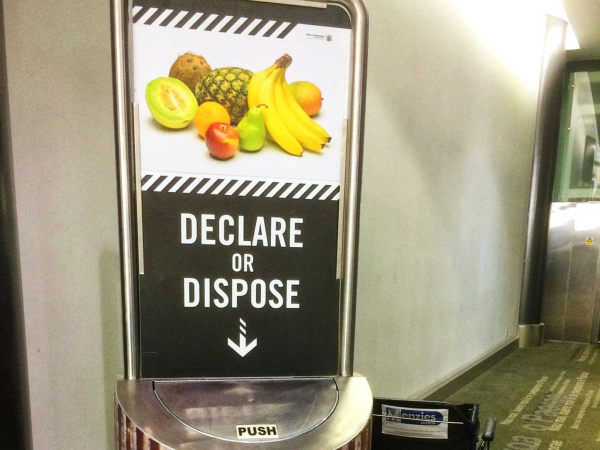
- Dispose of undeclared risk goods in marked amnesty bins on your arrival to avoid being searched or fined. This material is safely disposed of to remove biosecurity risk.
- Families/groups should stay together to help with efficient processing.