Election 2026: How Parties Would Lift the Arable Sector
As part of its Election 2026 coverage, Rural News asked political parties how they would help pull the arable sector out of the doldrums. Here's what they said:
 increase font size
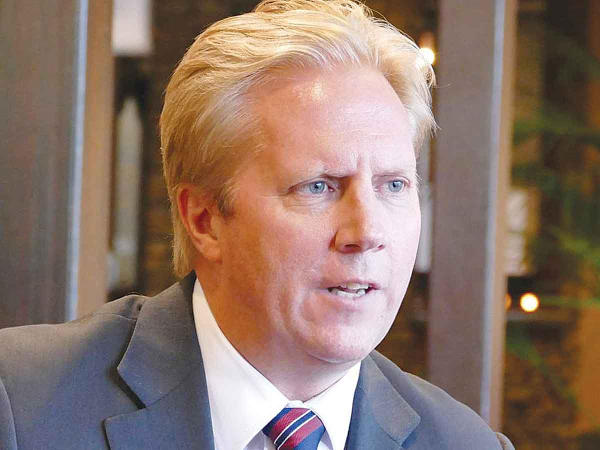 Agriculture Minister Todd McClay
The Government says it is sharpening its focus and support for the food and fibre industry in Budget 2025.
Agriculture Minister Todd McClay says $4.95 billion has been set aside to continue baseline funding for the Ministry for Primary Industries (MPI) for the next four years.
“This year alone, the food and fibre sector is forecast to contribute $56.9 billion to the economy, that’s why we’re focused on unlocking new global opportunities –from the UK and EU, to the Gulf, and India– while cutting red tape so producers can get on with the job.”
The government has also introduced a series of what it calls ‘grassroots investments’.
Included in that is $246 million over the course of four years for a new Primary Sector Growth Fund (PSGF).
The PSGF replaces the former Sustainable Food and Fibre Futures Fund and will focus on practical projects aimed at reducing costs across the sector value chain and delivering stronger returns on investment to the farm and forest gate.
The fund is designed to support projects that are business-led, market-driven, and commercially focused.
“We’ll be working with the sector to find the best projects that help drive returns, including new high-value products, and providing practical tools for farmers and growers,” McClay says.
He says projects that increase productivity and support the quality demanded by global consumers remain a priority.
There will also be $400,000 over the next four years to support A&P shows across the country.
A $2 million Rural Wellbeing Fund is also being set up, which Rural Communities Minister Mark Patterson says builds on the Government's $1 million investment in the Rural Support Trusts.
The fund will be administered by MPI, with successful applicants selected by a governance group including industry representatives.
“This is about giving rural people the tools and connections they need to stay supported,” Patterson says.
“Initiatives that bring people together through events, advice, or peer networks are a key part of building long-term resilience across the sector.”
Rural Women New Zealand (RWNZ) will receive $250,000 from the Government for the 2025/26 financial year to help the organization expand its reach during its 100th year.
“Rural Women New Zealand has been a backbone of rural life for 100 years,” Patterson says.
“This funding will support the important work they do every day – helping connect people to services, building strong local networks, and advocating for rural voices to be heard.”
Associate Agriculture Minister Nicola Grigg says that rural women are the “beating heart” of the New Zealand economy.
“Rural women are at the heart of our rural economy – they lead businesses, care for families and hold communities together,” Grigg says.
“By backing Rural Women New Zealand, we’re investing in the strength and resilience of the rural sector itself,” she adds. “This is about ensuring women have the resources and support they need to lead their communities into the next century.”
As part of its Election 2026 coverage, Rural News asked political parties how they would help pull the arable sector out of the doldrums. Here's what they said:
Food and fibre exports have returned a billion- dollar bonus to the country.
The Government is backing work on a community-led water storage scheme that could irrigate up to 11,000 more hectares of the Poverty Bay flats, Agriculture Minister Todd McClay says.
The Minister for Rural Communities, Mark Patterson, says there's a massive infrastructure deficit in rural areas.
A Labour-led Government won’t be bringing back the controversial freshwater rules of 2020.


Federated Farmers has welcomed new rural policies released by ACT, saying they align closely with its own election priorities.
Rural Contractors NZ says proposed changes to land transport rules for agricultural vehicles are a welcome response by the Government to out of date regulations which have seen members hit with huge fines.
Alliance is calling for final applications for its 2027 Graduate Programme, with applications closing on Sunday 25 October.
Decades piloting planes has ensured vet and farmer David Hayes is focused on safety. So, after a serious accident while welding on farm, he is sharing his experience so others can learn from it.
Canterbury milk processor, Synlait Milk has confirmed Leon Fung as its chief executive officer.
OPINION: Making it easier to collect rainwater and use it to grow crops and livestock is a no brainer.