Fall Armyworm in NZ Maize: Four Years of Research
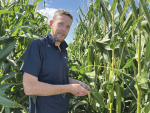
Four years since it was first detected in New Zealand, researchers and growers now know much more about management of maize pest fall armyworm (FAW).
 increase font size

THE CHIEF executive of the Foundation for Arable Research, FAR, says to date the drop in the price of milksolids isn’t affecting arable farmers.
Nick Pyke says this is because most of them are contracted at last year’s prices or have forward sold crops at good prices. Given the shortage of grain in New Zealand the prices are holding up well, he says.
But Pyke warns that after the 2014-15 season things may change and prices won’t remain the same as now. Towards the end of this season’s harvest in March and April 2015, when there is more grain on the market, the price are likely to drop a bit at that point.
“In maize production, the forecast in July was that the area of maize was going to be up slightly, but that could have changed quite markedly if farmers had changed their minds on their plantings. From what I hear it could be pretty much business as usual in both islands.”
Pyke says farmers have come out of droughts and will be looking to build up their supplementary feed stocks. Many dairy farmers who run intensive systems rely on extra feed and he doesn’t see them cutting this out overnight.
Meanwhile observers say it’s not all doom and gloom in the grain market as a result of the drop in dairy payout. But in their October grain market update, Farmlands reports there is little interest from the dairy sector in buying new season wheat and barley. They say the grain market is very fluid and seems set to remain that way in the short term.
Four years since it was first detected in New Zealand, researchers and growers now know much more about management of maize pest fall armyworm (FAW).
As spring calving cows head into dry-off, the priority shifts to one thing: setting cows up to calve at the target body condition score (BCS).
Early December marks a key transition for many dairy farmers, as weaned replacement heifers head off-farm to grazing.
I recently had the pleasure of attending an AgFirst event in Hamilton where the results of the 2024-25 Waikato-Bay of Plenty Dairy Financial Survey were shared. Based on a 136ha farm milking 379 cows, average farm profit before tax was $405,892, an incredible 286% increase on the 23-24 season.
Over the past few months, I’ve had the privilege of speaking with many farmers at events and one-on-one.


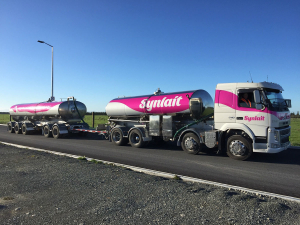
Synlait has swung to second-half profit as operations stabilise, but the dairy processor still posted a $75.4m annual loss.

LIC shareholders have elected a new North Island representative to the co-operative's Board, along with five representatives to its Shareholder Reference Group (SRG), following the company's Annual Meeting held in Invercargill.
Farmers across parts of Southland and South Otago are continuing to deal with difficult conditions after a prolonged run of wet weather, with pressure building around feed supply, stock management, pasture damage, farm infrastructure and everyday workloads.
Federated Farmers says it welcomes Labour's commitment to reviewing the Sharemilking Agreements Act, calling on other major parties to do the same.
For Canterbury dairy farmers Sian Meijer and Rick Wobben, wearable technology has become one of their most valuable on-farm tools - helping manage 1850 cows across an expansive, high-performing dairy operation while improving efficiency, mating outcomes and day-to-day decision making.
Fonterra has unveiled its annual results for the 2026 financial year, posting $27 billion in revenue and close to $20 billion returned to New Zealand farmer owners and unit holders.