IRRIGATION NEW Zealand (INZ) cautiously welcomes the Board of Inquiry's final decision on the Tukituki Catchment Proposal which allows for the Ruataniwha scheme to go ahead based on "what appear to be more achievable conditions for irrigators".
The Board of Inquiry has agreed to the plan change request and has granted resource consent applications.
INZ says it is pleased the board has amended the rule that would have required individual farmers to observe the dissolved nitrate (DIN) limit of 0.8mg, which was originally set as a condition in the board's draft decision.
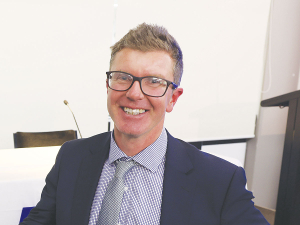
"As the NIWA map showing DIN levels across the country showed us, an individual 0.8mg DIN limit would put most farmers in breach and was an unrealistic condition. However, the detail of the report remains to be carefully worked through to properly ascertain what the amended conditions mean for irrigators," says INZ chief executive Andrew Curtis.
The board has amended the DIN rule so that as long as a famer complies with the LUC leaching rates, they can continue to use their land. The board has also made the scheme more viable for farmers by raising the upper threshold for exceeding LUC leaching rates.
"This decision indicatively shows us that common sense has prevailed. The Ruataniwha dam will be of huge benefit to the Hawkes Bay community and this looks like a positive step for New Zealand in future proofing its access to water and its socio-economic development," says Curtis.
INZ advocates for an approach to nutrient limits that first identifies the issues and then finds the most cost effective solutions. This could be limiting one or both nitrogen and phosphate.
The Board of Inquiry's decision follows hot on the heels of a positive decision by the Hawke's Bay Regional Council to contribute $80 million for development of the scheme.
INZ says it is committed to finding a way for New Zealand to develop irrigation schemes within acceptable environmental limits. "Irrigation in New Zealand needs to progress to protect the country from climatic variations and to enhance the country's ability to feed its population and to contribute to feeding the world," says Curtis.