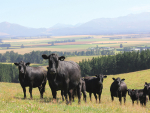
BVD Control Begins Long Before You See A Problem
Bovine Viral Diarrhoea (BVD) is sometimes viewed as a dairy industry issue, but the reality is that the disease can have serious consequences for beef breeding herds as well.
 increase font size
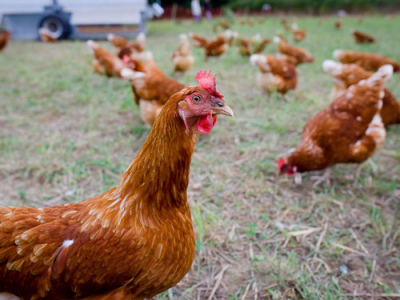
A suspected new disease in the New Zealand poultry industry is a disappointment, says Michael Brooks, executive director, Egg Producers Federation (EPF).
He says the local industry had been considered free of IBD type 1 and has worked hard to protect its unique disease-free status for at least 20 years.
The detection of the suspected type 1 strain on Mainland’s Waikouaiti farm in Otago has some industry members concerned.
But overall there is “confidence it is being controlled well,” Brooks told Rural News.
“We had a IBD type 1 outbreak in NZ in 1993 and were able to successfully eradicate it,” he said.
“Biosecurity NZ is working with us and NZ’s trading partners to manage any potential trade impacts and are looking into a range of possibilities to determine how the virus may have arrived in NZ.”
Biosecurity NZ says there is no evidence that IBD type 1 poses any risk to humans or animal or bird species.
Brooks says the strain was discovered at Mainland’s Waikouaiti farm in Otago via its own regular voluntary testing routine.
IBD is contagious amongst poultry aged two to 15 weeks.
“When Mainland’s testing identified a possible positive for IBD, no birds were exhibiting any signs of illness or distress. They continue to show no symptoms, which is not uncommon with some virus strains, and all birds are through what would be the critical period of the virus.
“Also, a second Mainland property near the Waikouaiti facility has returned suspect results.”
More overseas testing is required to confirm IBD type 1. Biosecurity NZ has suspended trade to four countries which require a guarantee that NZ is IBD type 1 free. Australia is the largest importer of NZ chicken meat.
Testing for IBD on egg and poultry farms nationwide has accelerated.
Operations at the Waikouaiti farm will continue as usual as none of their birds show any signs of illness.
“Mainland has exemplary biosecurity measures in place, and Biosecurity NZ and the industry have confidence the virus will not spread from that facility,” Brooks said.
Biosecurity NZ confirmed no birds at the Mainland Poultry farm in Waikouaiti have disease symptoms. The farm is under voluntary biosecurity controls as a precautionary measure.
Overseas testing results are expected in mid-September.
Departmental chief scientist Dr John Roche says the virus can affect the immune system of young chickens but it poses no risk to human or animal health.
Biosecurity NZ response manager David Yard says it will work with industry to consider options to manage the situation.
Bovine Viral Diarrhoea (BVD) is sometimes viewed as a dairy industry issue, but the reality is that the disease can have serious consequences for beef breeding herds as well.

Election years are always a concerning time for farmers, according to DairyNZ chair Tracy Brown.
Testing confirms H5 bird flu in a single northern giant petrel, found dead on a remote Cape Palliser beach in the Wairarapa, says Dr Mary van Andel, the Ministry for Primary Industries' (MPI) Chief Veterinary Officer.
Bovine Viral Diarrhoea (BVD) is sometimes viewed as a dairy industry issue, but the reality is that the disease can have serious consequences for beef breeding herds as well.
Four years since it was first detected in New Zealand, researchers and growers now know much more about management of maize pest fall armyworm (FAW).


The Royal New Zealand College of General Practitioners (the College) and Hauora Taiwhenua Rural Health Network are calling for investment in a proposed new training pathway for rural GPs, warning that many rural practices are struggling to recruit while a large share of the existing workforce nears retirement.
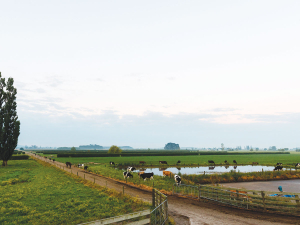
Federated Farmers has called on Central Otago District Council (CODC) to drop or vote down a plan to truck sludge from Alexandra and Cromwell to farmland near Lauder, warning it would compound an "outrageous" situation created by a separate council's decision weeks earlier.
Synlait has swung to second-half profit as operations stabilise, but the dairy processor still posted a $75.4m annual loss.
LIC shareholders have elected a new North Island representative to the co-operative's Board, along with five representatives to its Shareholder Reference Group (SRG), following the company's Annual Meeting held in Invercargill.
Farmers across parts of Southland and South Otago are continuing to deal with difficult conditions after a prolonged run of wet weather, with pressure building around feed supply, stock management, pasture damage, farm infrastructure and everyday workloads.
Federated Farmers says it welcomes Labour's commitment to reviewing the Sharemilking Agreements Act, calling on other major parties to do the same.