Farmers Wait Out Close Election, Says Federated Farmers
Farmers will wait it out like the rest of the country as the composition of the incoming government remains up in the air.
 increase font size
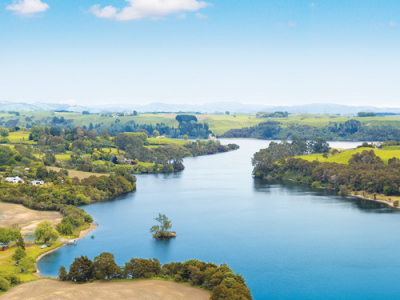 The Waikato Regional Council is welcoming a Feds-led joint project testing the implications of Healthy Rivers.
The Waikato Regional Council is welcoming a Federated Farmers-led joint project testing the implications of the Healthy Rivers/Wai Ora: Proposed Waikato Regional Plan Change 1 for the rural community.
The council is contributing $30,000 and staff resources to the project which is exploring the realities of implementing the plan change across all sectors including dairy, sheep and beef, arable, drystock, equestrian and lifestyle blocks.
“The research will help provide critical information for the submissions process of the proposed plan change itself and also for when we enter the implementation of the new rules once they become operative,” says council chief executive Vaughan Payne.
“Our support for this Federated Farmers initiative underpins the strongly collaborative approach we are taking with the rural sector on Healthy Rivers Wai Ora.
“There are a lot of questions circulating about what the plan change will look like in practice and this project will help us further understand where the issues really are.”
The project focusses on the development of farm environment plans which are a key aspect of the plan change.
These farm environment plans are due to identify contaminant losses from individual farms to water bodies, how contaminants escape from farms and what actions will need to be undertaken to mitigate and reduce these losses. If adopted, the plan change will see landowners farming over 20ha and commercial vegetable growers needing to provide farm environment plans. In first priority areas these will be required from July 2020, with different deadlines for other priority areas after that.
The Federated Farmers-led project is designed to assist in ironing out any fish hooks in the farm environment plan process so industry sectors can make informed submissions and suggestions for how the plan change can be improved.
The project is jointly funded by Federated Farmers Waikato, the council, Fonterra, DairyNZ and the Foundation for Arable Research. There are 12 independent farms taking part and another 12 Fonterra farms participating to determine what the plan change could look like run under an industry scheme.
The council will publicly notify the proposed plan changed later this month and has allowed more than four months for the public to make submissions to ensure they have time to understand what’s planned and make informed comments.
Farmers will wait it out like the rest of the country as the composition of the incoming government remains up in the air.

OPINION: The Government's decision to reinstate agriculture and horticultural science as a standalone subject from Year 11 is the right one.
With less than a week to go before voters choose the next government, Federated Farmers has a simple message to its members - get out and vote.
Federated Farmers has welcomed new rural policies released by ACT, saying they align closely with its own election priorities.
A farmgate milk price of $10/kgMS this season is firming up as milk powder prices soar and the New Zealand dollar weakens.


During the nesting season, from September to December, industrious starlings can quickly build nests in the darker areas behind tractor and vehicle, usually close to hot engines, typically resulting in localised damage or in some cases complete write-offs.
The meat processing industry is much more collegial than it was in the past and is now more focused on common goals.
With the last couple of months having seen some potential tractor purchases put on hold with the impending election and continued input cost rises, year-to-date figures, ending September, has seen deliveries up around 5% over the same period in 2025, with a total of 2026 units.
Beef+Lamb New Zealand is calling for nominations for director roles in the Northern South Island and Northern North Island electoral districts.
Fonterra chief executive, Richard Allen says being resilient has helped the dairy industry overcome extreme volatility in recent years.
The head of the Ministry for Primary Industries (MPI) trade and international relations group says New Zealand is well-positioned to secure trade access and compete internationally as the world becomes more complicated, demanding and uncertain.