International Day of Rural Women: Two DairyNZ Farmers’ Stories
Today, 15 October, is the International Day of Rural Women, which recognises rural women’s contribution to farming, communities and the environment.
 increase font size
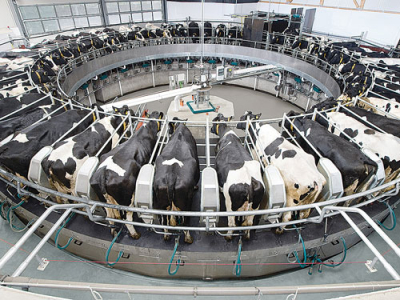 Cow numbers in NZ are dropping, but milk yield is up.
Anti-dairying activists should be rejoicing: New Zealand’s milking herd has shrunk for the second year in a row.
But milk output continues to soar, according to the latest national dairy statistics.
NZ Dairy Statistics 2016-17 shows milking cow and herd numbers both fell: cows numbered 4.86 million, down again from 4.99m in 2015-16; herd numbers fell from 11,918 to 11,748 (-170 herds).
But over the 12 months to June 2017, the average dairy cow produced a record milk quantity containing record milk solids. The average production per cow was 4259L in the 2016-17 season, containing 381kgMS, versus 4185L and 372kgMS in 2015-16.
However, despite the decline in cow numbers dairy companies processed very similar milk quantities: 20.7 billion L containing 1.85b kgMS in 2016-17; the previous season saw 20.9b L (1.86b kgMS).
The results are positive for NZ and its farmers, says DairyNZ.
Senior economist Matthew Newman says the rising trend in per-cow milk production shows farmers are opting for animals that are year-on-year more efficient at converting grass into milk – the industry’s objective.
“We are producing similar milk quantities from fewer cows, partly because we are breeding better animals and feeding them well,” says Newman.
“The average herd is now 414 cows, down from 419 in 2015-16. We are now at the lowest level of cows milked since 2012; North Island cow numbers declined 90,000 to 2.89m, and South Island numbers fell 46,000 to 1.97m.”
LIC general manager NZ markets Malcolm Ellis says the statistics reflect a shift in the industry.
“Farmers are acknowledging that, as an industry, if they are not going to be milking more cows then they need to be milking better ones.
“The lower payout in previous seasons forced some farmers to reconsider their cow numbers as part of a wider farm system review, but these stats prove it can pay off for a farming business.
“It boils down to the fundamentals of herd improvement: creating high quality herd replacements that will out-perform their mothers in productivity, longevity and fertility.”
Quick facts
- The South Island now produces 43.4% of national milksolids versus 35.6% a decade ago
- Milk production in the South Island increased 1.2% in 2015-16, with increases in North Canterbury (+0.8%), Otago (+2.3%) and Southland (+4.9%)
- North Island milk production declined 1.9% in 2016-17, with all regions except Taupo (+2.2%), Taranaki (+0.9%) and Manawatu (no change) producing less milk than in 2015-16.
Today, 15 October, is the International Day of Rural Women, which recognises rural women’s contribution to farming, communities and the environment.
The first major update to the Dairy Cattle Code of Welfare in more than a decade has been released, marking what DairyNZ describes as an important step in ensuring animal welfare standards continue to evolve alongside scientific evidence and on-farm realities.
Have a plan in place for your cows and staff.
DairyNZ deputy chair Cameron Henderson has been re-appointed unopposed for another term.
OPINION: The stats speak for themselves.


Dairy processors are ready to further boost New Zealand’s export earnings but want the incoming government to match their ambition with good policy.
Massey University is best placed to solve the “problems” facing the dairy industry, says vice chancellor, Pierre Venter.
Synlait's longest serving employee – a man who joined the Canterbury-based milk processor even before it began processing milk – is now its newest executive.
A dairy industry leader believes eradicating the common and costly disease, Bovine Viral Diarrhoea (BVD) is within reach.
A farmgate milk price of $10/kgMS this season is firming up as milk powder prices soar and the New Zealand dollar weakens.
Federated Farmers has welcomed new rural policies released by ACT, saying they align closely with its own election priorities.