Semi-robotic milking technology to boost parlour efficiency
Waikato Milking Systems’ latest innovation, ErgoPOD is now commercially available within New Zealand and Australia.
 increase font size
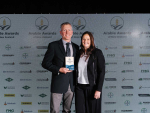
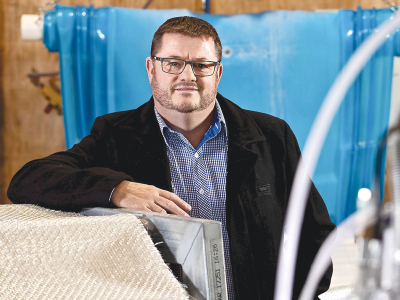 Waikato Milking Systems chief executive Campbell Parker.
The days of rapid, large-scale dairy conversions in New Zealand are at an end, says Waikato Milking Systems chief executive NZ Campbell Parker.
He says that while many in the industry thought the reduction in new dairy conversions was just “a dip in the market”, the conversion market hasn’t come back and it’s unlikely to.
“The large scale dairy conversions experienced in NZ over the past couple of decades were driven by different market forces than what exist today.”
Parker says this change is prompting a change in direction for Waikato Milking Systems.
“The focus for us now is on upgrading existing milking systems, whether equipment and technology or replacing entire milking systems within an existing shed.
“We’ve got five or six projects this winter which are just that, replacing existing rotary platforms, but we’ve got a tight window to complete the work before the next season.”
Parker joined the company as NZ general manager in July 2017 and was appointed chief executive NZ in April 2018.
The company, which turned 50 in 2017, makes milking systems in New Zealand and exports to 30 other countries. It also makes milking automation technology and dairy herd management systems at its headquarters in Horotiu, north of Hamilton.
Parker says the company needs to evolve to help farmers meet new challenges being driven by consumers of dairy products. Fieldays gave opportunity to explain those changes and show how the company could help.
Parker says it must now move from being “just a milking machine company” towards being a leader in R&D to provide farmers with the technology needed to meet consumer expectations.
“The challenge for farmers is to take a broader view outside their farm gate and realise that consumers are driving the need for more of a focus on sustainability and food traceability.
“NZ has to realise this as an opportunity and understand how to get the best price for our produce, for some of the unique advantages we have in our grass-based system.”
He also sees milking automation becoming more important as “the next generation of farmers” shows interest in adopting technology to help manage much larger herds than 20 years ago.
“The fundamentals of grass management and good animal husbandry are not changing, but how you use information to make those decisions is becoming more accurate.”
Parker says having products which capture data is now important.
“Public awareness of managing dairy effluent is high and so equipping farmers with the right technology and systems is firmly on the company’s radar.”
International growth
Campbell Parker says five years ago about 80% of the company’s revenue was domestic and 20% international.
“Today the balance has tipped to where international markets make up over 50% of the company’s revenue.”
He said the change came down to less capital investment in the domestic market, reflecting fewer dairy conversions.
It’s a shift the company had to realise, Parker said, and recently it had begun to recruit staff with different skills in sales, marketing, technology and R&D.
Partnering with companies that complement its own products was also a possibility, rather than trying to manufacture a competing product.
“In NZ you had an average of 147 dairy conversions a year for 20 years. What you needed then was a salesperson who could put a quote together and deliver on a new product. Today, you need a salesperson who can be more proactive rather than reactive. They need to find out how they can help the customer be more productive with what they’ve already got.”
Waikato Milking Systems’ latest innovation, ErgoPOD is now commercially available within New Zealand and Australia.
Waikato Milking Systems has unveiled the final production version of its ErgoPOD, a state-of-the-art semi-robotic technology designed to increase milking speed, productivity, and efficiency in the parlour.
While Waikato Milking Systems is committed to solving the challenges dairy farmers face with some of the world’s most innovative and technologically advanced dairy solutions, their approach differs from other companies, as their focus falls on retaining the essence of dairy farming.
Numedic Ltd has acquired a major part of Waikato Milking Systems' effluent and environmental business, including the well-known Cobra range of travelling rain gun irrigators.
OPINION: In the heartland of rural New Zealand, Waikato Milking Systems is on a transformative journey that seeks to revolutionise dairy farming practices with their latest innovation, ErgoPOD.

OPINION: David Seymour and James Meager's plan to make it easier for farmers and orchardists to operate drones can best be described a 'courageous' move.
New Zealand wool is reaching new heights as air filtration companies move away from synthetic products to biodegradable alternatives.
Opuha Dam's ability to protect South Canterbury communities from major flooding has taken a significant step forward, with Opuha Water Limited (OWL) successfully commissioning a new outlet valve capable of releasing record volumes of water from the dam ahead of a weather event.
There's been widespread support from the primary sector for the Government's announcement on changes to freshwater farm plans that come under the Natural Environment Bill, which is now set to replace the existing RMA.
A partnership between state-owned enterprise Pāmu (Landcorp Farming Limited) and charity Meet the Need is putting more than quality New Zealand beef into food bank parcels this year.
The Opportunity Party has faced criticism during the election campaign that its policies are too urban-focused and offer little for rural communities.