NZKGI Responds to Migrant Worker Exploitation Reports
Where any worker in the kiwifruit industry is mistreated, we expect the authorities to take action.
 increase font size
 Zespri chief executive Lain Jager.
The kiwifruit industry initially lost a billion dollars -- about one-third of its capital value -- to Psa, says Zespri chief executive Lain Jager.
However, the industry has bounced back strongly; capital values have soared higher despite Psa lingering in orchards.
Jager, who spoke at a recent dairy industry conference in Waikato, described the outbreak in late 2010 and the following few years as “pretty dark times”.
He told the Smaller Milking and Supply Herds (SMASH) conference that the Psa bacteria which kills kiwifruit vines wiped out Zespri Gold kiwifruit; production slumped from 30 million trays a year to 10m trays.
Owners of Gold kiwifruit orchards saw their land values drop from $600,000/ha to $80,000 - $110,000/ha.
Jager says many kiwifruit growers were forced to find jobs to support their families.
“During the whole period there was one bankruptcy and no one committed suicide,” he says. “There was a huge focus on R&D and collective pulling together of the industry.”
Tests done on Psa-affected kiwifruit showed the cheaper Green Hayward variety “pretty tolerant but the Gold variety intolerant”. However, Zespri Gold growers could not go back to growing the Hayward variety.
“If you are a Gold kiwifruit grower, your income levels are much higher than the Green kiwifruit growers; you couldn’t go back to growing green… the financial case wouldn’t work,” says Jager.
But the kiwifruit industry enjoyed “a huge dollop of good luck”. Another Gold variety developed earlier -- Zespri SunGold – was found to withstand the bacteria much better than the Zespri Gold variety.
Backed by the banks, the industry planted 2000ha of SunGold kiwifruit.
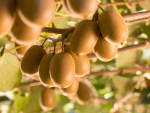
Jager says it worked “splendidly”. “The SunGold kiwifruit works well; it has a higher yield than the old Zespri Gold, bigger fruit and a broader taste appeal.”
Jager says the kiwifruit industry realises that now it is obliged to farm in the presence of Psa bacteria.
The industry has pulled resources together and the result is higher productivity from orchards since Psa.
While the higher yields could be technical -- the impact of Psa causing stress in the vine and causing more floral behavior -- Jager says better orchard management could also be the reason.
“Ironically we are more positive than we were before Psa but that should never undervalue the pain and struggle people went through in the Psa environment.
“It was a real trial by fire; we were either going to pull together or the industry was going to pull apart.
Kiwifruit industry
- 2500 growers
- Median size of orchards- 3ha
- Total revenues of $2 billion
- Earnings before interest and taxes -$20,000/ha (Green kiwifruit), $80,000 (Gold)
- Land costs- $350,000/ha (Green), $700,000/ha (Gold)
Where any worker in the kiwifruit industry is mistreated, we expect the authorities to take action.

Kiwifruit growers are watchful but remain optimistic as concerns around the potential effects of the El Niño weather pattern this season.
More signs of a booming kiwifruit sector.
After delivering a strong financial year, rural trader PGG Wrightson says the coming months will depend on customer confidence and weather.
New Zealand growers have always adapted to changing conditions, but one challenge is steadily gaining ground across the horticulture sector: resistance.


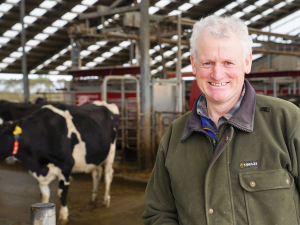
In Dacre, near Invercargill in New Zealand’s South Island, Bruce Dinnington is running a dairy operation unlike any other.

A free online platform aggregating governance vacancies across rural and regional New Zealand has been launched.
Environment Minister Nicola Grigg has announced details of a new rural plastics recycling scheme.
Agricultural drone operators say that a government decision to allow lower-risk drone work without certification won’t lower standards but drive innovation and efficiency.
OPINION: Warning bells are ringing in the arable sector.
Farmgate lamb prices are down by 8%, beef cattle by 4.5% and farm expenditure up by 4.2%.