Patterson: Rural NZ Faces a "Massive" Infrastructure Deficit
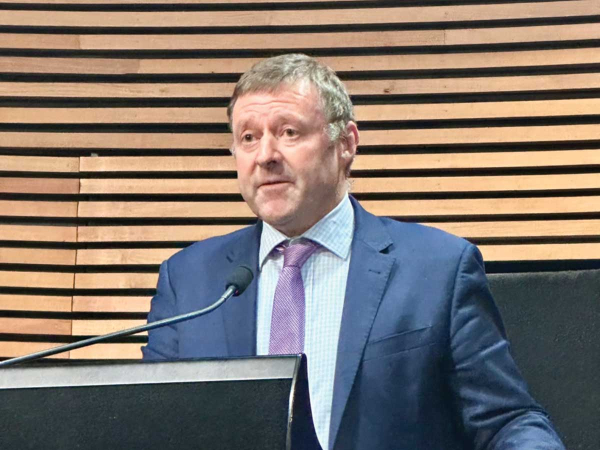
The Minister for Rural Communities, Mark Patterson, says there's a massive infrastructure deficit in rural areas.
 increase font size
With a general election under five weeks away, Rural News is asking major political parties about their policies and positions on key issues facing the primary sector. We will run their responses to each question over the next four weeks. The ACT Party and the Greens didn't respond in time.
With those in the primary sector facing uncertainty - geopolitical events, looming El Niño and a general election around the corner - what assurances of support can you give the farming community?
There can be absolute assurance that New Zealand First will continue to prioritise the primary sector within the next government. We have a strong policy focus on regional New Zealand and understand implicitly that 82% of New Zealand's merchandise exports are derived from the efforts of our farmers, growers, fishers and foresters. Sectors that are not only vital for underpinning thriving rural communities but fundamental to the overall economic performance of New Zealand as a whole.
We have a proven track record of standing up for maligned and neglected industries like mining, fishing, aquaculture, forestry and wool and will continue to promote policies that prioritise their future.
Our track record in using our political leverage in coalition negotiations is to secure funding for regional infrastructure, previously via the Provincial Growth Fund (PGF) and during this term of government, the Regional Infrastructure Fund (RIF). We have secured funding for key regional infrastructure like flood protection, water storage and irrigation projects and port upgrades.
We believe the regions earning the money should get a fair share back from Wellington. Regional development will continue to be a huge focus for us and policies like returning half of mining royalties to to the regions they are extracted from will further advantage rural New Zealand.
Just like the cost-of-living crisis, our farmers are having a cost-of-farming crisis. Rising costs, energy insecurity, biosecurity risks and extreme weather are all putting pressure on farming businesses and our rural communities.
Government has a role to play in easing those pressures. We are focused on practical policies that give the rural sector the confidence and certainty they need to remain profitable, build resilient businesses, and plan for the future. Our Small Business Action Plan is an example of this. Small business owners will get paid sooner, get more support to invest in the equipment they need, and keep more of what they earn.
Our track record and farm profitability is the best assurance we can offer.
When we came into government, farmers were facing a price on livestock emissions, a ute tax and a pile of new rules from Wellington. We scrapped the ute tax in our first weeks. We scrapped He Waka Eke Noa and took agriculture out of the ETS. And we started cutting back the red tape.
Farmers noticed. In late 2023, rural confidence in the Federated Farmers survey was at an all-time low of negative 66%. Within two years it had rebounded to plus 37%, one of the biggest turnarounds, because farmers were allowed to farm again. We declared Labour's war on farmers over, and we've celebrated your success. Farmers are now more confident about profitability than at my time since records began.
The sector has responded. Food and fibre exports are forecast to hit a record $64.3 billion this year. Across the whole economy, exports are up around $20 billion since we took office. One in every seven New Zealanders works in the primary sector, and our goal is to double export value in ten years.
Trade is a big part of that. We've concluded deals with the UAE and the six Gulf states. Our free trade agreement with India comes into force on 20 October. It removes or cuts tariffs on 95% of what we sell there and opens up a market of 1.4 billion people. Exports to the EU have risen $3 billion.
Today we have more market access than we can supply. That's a good problem to have, but we need to fix it. In our next term, our land use flexibility policy will make it easier for farmers to change how they use their land, so they can produce more while still meeting our sensible environmental and climate obligations.
Strong national numbers don't make life easy on every farm. Conflict in the Middle East is pushing up fuel and fertiliser prices.
El Niño could bring a dry summer. Farmers carry that risk every day, and we know it.
So we'll keep backing you when it gets tough. That means the Rural Support Trusts, Farmstrong and the Rural Wellbeing Fund. It means simpler rules and consents for on-farm water storage. It means $40.5 million over four years for catchment groups, because locals usually know what works best in their own patch.
And it means certainty. We've replaced the RMA. For the first time, food and fibre production is now written into the new Natural Environment Act as a goal.
We'll also soon announce new policy on water storage and irrigation. It will boost rural production and give the world's best farmers the certainty to invest.
We believe there are two things farmers - and indeed all New Zealanders - need from the government in these increasingly uncertain times. Political stability and investment in innovation.
Returning stability to politics is central to Opportunity's platform this election. That's why we have called for a 30-year infrastructure strategy with the buildout of our roads, bridges, power plants and other critical infrastructure led by the Infrastructure Commission, not politicians. It's also why we will convene cross-party plans for health, education and energy - so the system settings for these services stop changing each election cycle. Underpinning our commitment to stability is our Citizen's Voice policy, which will mainstream the use of Citizen's Assemblies in central and local government to ensure that decisions are real, lasting and informed by the communities those decisions affect.
Innovation is how we meet the challenges coming at us, because there are no problems that farmers and Kiwi innovators cannot solve, if given the proper support to get on and solve them. Our Breakthrough Economy policy includes a generational uplift in our research and development spending, with a focus on funding our regional polytechnics, agricultural scientists and technology incubator programmes properly. We will also back small businesses, like farms, to step-up their technology rollout through a 25% tax credit on new investments, and make financial and accounting support services for small businesses more widespread.
The Minister for Rural Communities, Mark Patterson, says there's a massive infrastructure deficit in rural areas.

A Labour-led Government won’t be bringing back the controversial freshwater rules of 2020.
National’s much-touted free trade deal with India featured in the Rural Issues Debate at Mystery Creek, Hamilton on Wednesday night.
Leading figures from the major political parties will be questioned on their primary sector policies at the Rural Issues Debate at Mystery Creek Events Centre, Hamilton, on 30 September.
OPINION: A founding principle of Groundswell NZ is that farmers, and people generally, should be provided with full and accurate information about regulations that directly affect them.


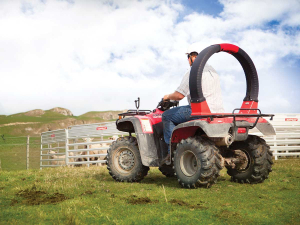
When Northland leather worker Vernon Suckling started making horse saddles 50 years ago, quad bikes and side-by-side vehicles were unheard of.
Alliance Group has confirmed that eligible farmer-shareholders who supply and continue to back the business will receive up to $20 million later this year, following the strategic investment partnership with Dawn Meats.
With a general election under five weeks away, Rural News is asking major political parties about their policies and positions on key issues facing the primary sector. We will run their responses to each question over the next four weeks. The ACT Party and the Greens didn't respond in time.
The red meat sector is in great heart.
Dr Scott Champion, Foundation for Arable Research chief executive, says that everyone in the supply chain had a role to play in driving the sector's long-term success.
Entries opened on Monday, 5 October 2026 for the 2027 New Zealand Dairy Industry Awards (NZDIA), which organisers describe as the nation's biggest celebration of excellence in the dairy sector.