PGG Wrightson Revenue Tops $1.1b as Profit Jumps 46%
After delivering a strong financial year, rural trader PGG Wrightson says the coming months will depend on customer confidence and weather.
 increase font size
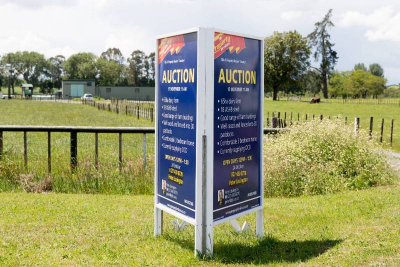
Farm sales are dropping, according to data released by the Real Estate Institute of New Zealand (REINZ).
There were 63 less farm sales (-14.2%) for the three months ended May 2019 than for the three months ended May 2018. Overall, there were 380 farm sales in the three months ended May 2019, compared to 362 farm sales for the three months ended April 2019 (+5.0%), and 443 farm sales for the three months ended May 2018.
1,409 farms were sold in the year to May 2019, 3.1% fewer than were sold in the year to May 2018, with 34.2% less dairy farms, 26.3% more Ggazing farms, 13.8% less Finishing farms and 6.7% less arable farms sold over the same period.
The median price per hectare for all farms sold in the three months to May 2019 was $22,244 compared to $26,219 recorded for three months ended May 2018 (-15.2%). The median price per hectare decreased 1.7% compared to April 2019.
The REINZ All Farm Price Index fell 4.0% in the three months to May 2019 compared to the three months to April 2019. Compared to May 2018 the REINZ All Farm Price Index rose 0.2%. The REINZ All Farm Price Index adjusts for differences in farm size, location and farming type, unlike the median price per hectare, which does not adjust for these factors.
Five of the 14 regions recorded increases in the number of farm sales for the three months ended May 2019 compared to the three months ended May 2018. Gisborne (+9), Northland (+2) and Hawke’s Bay (+1), Taranaki (+1) and Nelson (+1) were the top regions to increase the number of farm sales compared to May 2018. Waikato recorded the most substantial decline in sales (-21 sales) followed by Bay of Plenty (-13 sales). Compared to the three months ended April 2019, eight regions recorded an increase in sales with the biggest increase being in Canterbury (+14 sales).
REINZ rural spokesman Brian Peacocke says nationwide sales data for the 3 month period ending 31 May 2019 confirms the general easing in sales activity currently being experienced around the country compared to the equivalent period 12 months ago.
“In spite of that trend, however, sales activity for the month of May 2019 alone has continued surprisingly well in most land use categories compared to mid-autumn figures, the exception being a solid lift in sales numbers for grazing properties.
“On the rural front, discontent smoulders strongly in a number of regions, fanned particularly by the ongoing emergence of evidence of sales of good pastoral land to forestry interests, this activity being aided and abetted by the Overseas Investment Office providing an environment conducive to investment from off-shore interests.
“This factor, coupled with the inexorable grind of the full range of compliance issues and an evident hardening of lending criteria from within the banking sector is adding to a mood of widespread concern and caution within the rural sector.”
After delivering a strong financial year, rural trader PGG Wrightson says the coming months will depend on customer confidence and weather.

Fonterra has opened its upgraded Chengdu Application Centre, bringing New Zealand dairy expertise closer to customers in one of China's fastest-growing regions.
Tatua chair Stephen Allen says he leaves the co-op with a deep sense of gratitude for the people who have contributed to its success.
Ravensdown has reported a net profit before tax and rebate of $50.1 million for the year ended 31 May 2026.
The latest data from the Real Estate Institute of New Zealand (REINZ) reveals a mixed rural property market due to consistent inflation concerns.



Testing confirms H5 bird flu in a single northern giant petrel, found dead on a remote Cape Palliser beach in the Wairarapa, says Dr Mary van Andel, the Ministry for Primary Industries' (MPI) Chief Veterinary Officer.

"What's for dinner?" may sound like a simple question, but for many Kiwi parents, answering it has become a job in itself.
Fifty Eight years ago, on the 16th of August 1968, August Claas, the founder of the harvesting company and father of Helmut Claas, personally presented a Claas Senator combine harvester to Scottish farmer John Steven.
New Zealand consumers are paying more for beef mince than ever before, with the average retail price now sitting above $24 per kilogram, according to Rabobank.
State farmer Pamu has delivered its strongest operating result on record.
Four years since it was first detected in New Zealand, researchers and growers now know much more about management of maize pest fall armyworm (FAW).