Milk Powder Prices Prop Up Farmgate Milk Price
Milk powder prices are keeping farmgate prices up, helping processors offset the dip in milk fat prices.
 increase font size
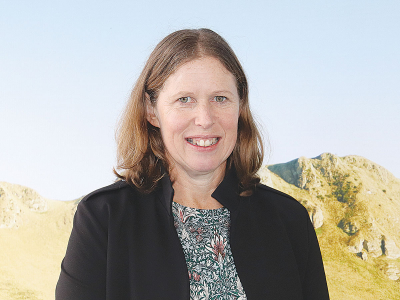 ANZ rural economist Susan Kilsby.
Meat and dairy prices are strong and horticulture is leaping ahead, yet farmer and business confidence in the primary sector remains low – especially dairy.
That’s the picture painted in the latest ANZ Bank Agri Focus report.
Its key message is that somehow NZ has been able to get good prices for its products despite the global economic slowdown.
The bank’s agricultural economist Susan Kilsby says prices on the international market are still strong. Meat returns are largely underpinned by China demand to fill the gap created by its shortage of pork.
Better prices and the low NZ dollar are boosting returns to farmers, she says.
“Lamb and mutton prices are at record levels at the moment and beef prices aren’t too far behind,” Kilsby told Rural News.
“But not a lot of stock is going through the processors at this time of the year. The lower dollar is due to the weakness of the global economy. But the good news for NZ is that its products seem unaffected by this and are fetching good prices.”
China is the key to this, strongly demanding beef, mutton and lamb.
Kilsby says the beef going to China is reducing the quantity going to the US, which has traditionally taken meat for the hamburger trade. These two strong markets are contributing to prices holding up well.
“There is strong demand in China for mutton and poorer lamb cuts. This has pushed up the price for culled ewes here and is underpinning lamb prices.”
Kilsby doesn’t see the demand from China disappearing anytime soon and predicts ongoing demand for our beef.
ANZ also has a positive outlook on the dairy sector and so has revised its forecast milk payout up by 15 cents to $7.15/kgMS.
But despite this, confidence in the dairy sector is the lowest it’s been for 20 years or more, she says. The cause is the uncertainty dairy farmers are facing over environmental regulations.
“Despite the national policy statement by the Government there is still uncertainty on how the actual rules will impact individual farmers at the regional council level,” she explained. “The industry is well aware there is change ahead, but is still working through what this will mean for farmers and their business.”
Kilsby concedes that high debt levels in the dairy industry are also an issue. She says some banks are now requiring farmers to repay some principal on their loans, in contrast to interest only payments for some time.
Meanwhile the strong growth horticulture has seen in recent years is expected to continue -- in exports of apples, SunGold kiwifruit (sales up on last season) and growing international appetite for avocados.
“Consumers worldwide seem to love avocados, but the challenge for our industry is to supply the demand,” Kilsby said
Milk powder prices are keeping farmgate prices up, helping processors offset the dip in milk fat prices.
Case IH has unveiled its redesigned next generation Puma Series tractors, said to offer improvements in connectivity, operator comfort, fuel efficiency and drivability.
Cameron Reed lives between two worlds.
A milk glut around the world shows no sign of easing, putting downward pressure on farmgate milk prices for the next few months.
The new dairy season is kicking off with plenty of risks to the forecast farmgate price, both upside and downside, says ANZ agricultural economist Matt Dilly.


High country stations, mixed sheep and beef farms, Māori-owned farms, corporates and family operations are among the nine commercial farms taking part in the Livestock Innovation Farming Transformation programme, known as LIFT.
OPINION: New health and safety guidance unveiled by the Government recently provides farmers greater certainty about what is expected of them when managing risks on farm.
The National Animal Welfare Advisory Committee (NAWAC) is seeking public feedback on proposed changes to the Code of Welfare for Rodeos.
A New Zealand initiative supporting farmers to restore the health of grazing landscapes has received international backing through the Regenerative Fund for Nature, a global collaborative fund supporting regenerative agriculture and the communities that produce natural fibres for the fashion industry.
Combine premium New Zealand products, blend in a family ritual and what do you get? A world-class functional drink.
Entries are now open across eleven regions for the 2027 New Zealand Dairy Industry Awards (NZDIA).