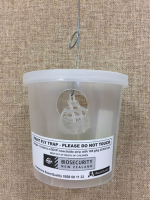
2018/19 — The summer of fruit flies
Not long after a few BMSB post-border detections were dealt with, another familiar biosecurity threat has raised its head.
 increase font size

Rural land holders in three areas totalling around 900ha on the outskirts of New Plymouth are being invited to join a possum control scheme that already covers almost all the Taranaki ring plain.
The Taranaki Regional Council wants to extend its Self-Help Possum Control Programme to about 160 properties south and east of the city, stretching from the coast north of Omata to Mangorei Rd.
"Possums are a major threat to agriculture, forestry and native biodiversity, and the self-help programme has allowed Taranaki to keep them under control," says the council's animal pest manager, Steve Ellis. "The scheme's been running since 1992 and by the end of this year it will cover 231,000ha.
"It's an effective partnership between land owners and the council, and it enjoys good support from farmers."
The New Plymouth sections will be included in the programme if at least 75% of land occupiers, representing at least 75% of the land area, agree to take part. Council contractors will undertake an initial "knock-down" operation to reduce possum numbers to a very low level. All land holders in the area will then be obliged to maintain the low level by undertaking annual control.
"We provide advice, education and assistance to the land occupiers," says Ellis. "For example, we supply traps and baits at cost price, organise the training and licensing that's needed for using some types of baits, and supply lists of certified contractors if people don't want to do the maintenance work themselves."
The council is approaching land holders individually about joining the scheme. A decision is expected by early March, with the initial knock-down operation to run for six to eight weeks beginning shortly afterwards.
Land holders with questions about the programme can call the council on 0800 736 222 and ask for the Animal Pest section.
Not long after a few BMSB post-border detections were dealt with, another familiar biosecurity threat has raised its head.

Weed threat velvetleaf has been confirmed in maize and silage in several sites in Waikato – meaning it has come in through a different pathway than that found in fodder beet.
The fight is on against the pest velvetleaf.
MPI is asking farmers and growers of arable crops to look out for a highly invasive pest weed that has appeared on a handful of South Island properties.
Farmers will be able to observe first-hand the impressive impact of a biocontrol agent.



The primary sector is leading New Zealand's economic recovery, according to economist and researcher Cameron Bagrie.

Dairy industry leader Jim van der Poel didn't make much of the invitation he received to the recent New Zealand Dairy Industry Awards in Rotorua.
Farmers around the country are going public big time, demanding their local district, city and regional councils come up with amalgamation plans that meet the needs of rural communities and don't allow urban councils to dominate.
The battle for the rural vote is on and parties are securing high profile names to try and bolster their chances at the general election.
Horticulture New Zealand says proposed changes to the Plant Variety Rights Act 2022 will drive innovation, investment and long-term productivity.
More than 1200 exhibitors will showcase their products and services at next month’s National Fieldays, with sites nearly sold out.