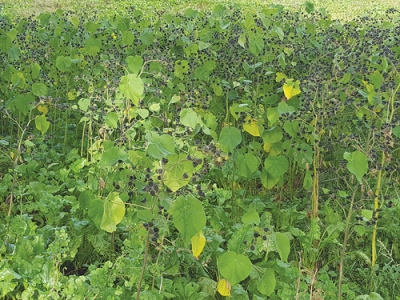
The fight is on against the pest velvetleaf.
Considered a serious cropping pest, velvetleaf has been found in fodder beet crops in Marlborough, Waikato, North Canterbury and Central Otago.
The Ministry of Primary Industries is investigating how this has occurred; it appears likely to have come from imported fodder beet seed.
"All farmers who have planted fodder beet seed should check their crops carefully for signs of velvetleaf," MPI says.
"Those who have planted Kyros or Bangor varieties should be particularly vigilant. Potentially contaminated seed has been sold all around New Zealand."
The Waikato Regional Council says it's working with MPI on the containment and eradication of two new outbreaks of the pest plant velvet leaf in the region.
The new Waikato outbreaks, at Matamata and Piopio, have been linked to possibly contaminated imported fodder beet seed, which is believed to have led to a number of velvetleaf finds in the South Island.
"We became aware last week of the new infestation sites in Waikato and we're supporting the ministry in its efforts to respond to them," says the council's pest plants team leader, Darion Embling.
The first time velvetleaf was discovered in Waikato was in 2011 when the pest was found in maize on farms mostly in Matamata-Piako district, and one find each in Waikato and Waipa districts. The source of this outbreak is unknown. The regional council has contained this outbreak and is working towards eradication.
"We're keen to help ensure the new outbreaks at Matamata and Piopio also don't lead to widespread problems," says Embling.
Farmers are also advised to photograph any plants and mark their location so they can be found again easily. The ministry warns against pulling up plants and says a technical expert will visit and carefully remove any plants to make sure velvetleaf seed, if present, is not spread.
Velvetleaf seeds are particularly hardy. They can persist for up to 50 years and can survive digestion and silage production.
Sightings of this weed should be reported to MPI on 0800 80 99 66.