Farmers Warned Over Track Dangers After Wairarapa Floods
The terrible floods that hit the Wairarapa may have subsided, but the danger to farmers still exists, according to local Federated Farmers president Rob Hickson.
 increase font size
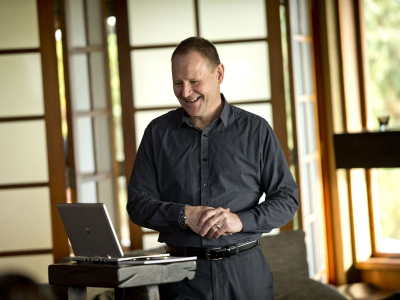 Lance Burdett. Photo: WARN International.
Perhaps the biggest hinderance to farmers' wellbeing is their lack of social life, says former police crisis negotiator Lance Burdett, who has begun his tour of the South Island to encourage wellness.
Social life, exercise and sleep are the three things that keep all of us well, he says.
He says for farmers, exercise is pretty well covered by the daily running of the farm, but a lack of social life has the most impact on rural wellbeing.
Burdett, a former crisis negotiator with 22 years experience working with police – and the military, emergency services, prisons and the FBI – now runs a consultancy called WARN (wellness, awareness, resilience and negotiation). It provides tips and techniques for people to handle difficult situations by understanding what goes on in their’s and others’ brains.
Burdett will share his message in a speaking tour of 16 South Island rural centres arranged by the regional Rural Support Trusts with support from MPI.
He says there are two ways to “get things out of your head” – one is to speak and the other is to write. But for farmers the biggest problem may be isolation and not talking.
Burdett’s speaking tour will include three different programmes for various audiences: Rural Support Trust’s own people on how best to engage with their clients, a second for merchants and others who deal with farmers, and the third for farmers themselves.
The three-week tour starts in Timaru and Fairlie on May 6. It follows a successful tour of Central North Island regions last year. The full schedule is on the Rural Support website.
The terrible floods that hit the Wairarapa may have subsided, but the danger to farmers still exists, according to local Federated Farmers president Rob Hickson.

New Zealand’s rural sector has once again demonstrated its generosity, with the second Rural Industry Leaders Dinner, Debate and Auction raising an impressive $400,000 for the Rural Support Trust.
The Rural Support Trust is hosting a series of community wellbeing events featuring former NZSAS soldier and Victoria Cross recipient Willie Apiata.
Rural Support Waikato is inviting farmers, growers, and rural communities to take a well-earned break and join us for 'Brunch on Us' - a series of all-sector, relaxed drop-in events across the region.
The strain and pressure of weeks of repairing their flood-damaged properties is starting to tell on farmers and orchardists in the Tasman district.


Minister of Conservation Hon Tama Potaka has appointed Susan O'Regan as Chair of the Queen Elizabeth II National Trust (QEII) for a three-year term.
Red meat farmers are welcoming Labour’s plan to review the Emissions Trading Scheme and not to campaign on pricing agricultural emissions.
Where any worker in the kiwifruit industry is mistreated, we expect the authorities to take action.
Mid Canterbury Federated Farmers arable chair, Bevan Lill, said Beef + Lamb NZ data indicated that for the last six years, the average arable return on investment was about 0.8% while inflation ran about 4% - so the average arable farm was going backwards at about 3% a year.
Seed and grain companies share the concerns of arable farmers about the viability of their sector, says Seed and Grain New Zealand chief executive Dr Sarah Clark.
The New Zealand Institute of Forestry (NZIF) says unnecessary changes to New Zealand’s Emissions Trading Scheme (NZ ETS) will seriously erode investor confidence and result in significant reductions in forest planting rates.