Farmers Warned Over Track Dangers After Wairarapa Floods
The terrible floods that hit the Wairarapa may have subsided, but the danger to farmers still exists, according to local Federated Farmers president Rob Hickson.




 increase font size
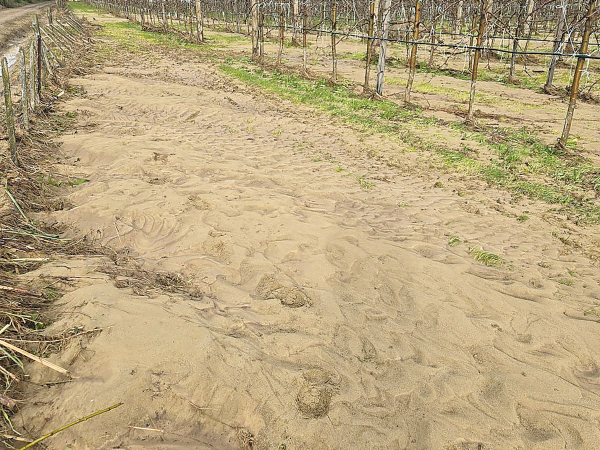 Orchards and farms in the Nelson and Tasman regions were inundated by floods this month.
"The worst of the worst" is how Richard Kempthorne, the chair of the Nelson Tasman Rural Support Trust, describes the cumulative effects of the two storms that have wreaked havoc across the top of the South Island.
He told Dairy News that farms - dairy and sheep and beef, orchards and lifestyle blocks - along the Motueka River have been dramatically affected with land washed away, debris and silt deposited on land and huge damage done to infrastructure.
"I have never seen it as bad as this and it's not only damage to properties; infrastructure, namely roads, have been badly damaged. At one stage there were 30 roads, including the state highway closed across the region.
"Re-instating basic infrastructure will be in the multi-millions, not the hundreds of the thousands," he says.
Richard Kempthorne says with roads closed, children were unable to get to school and people could not get to work. He says the problem was compounded by basic things such as power and internet outages and damage to water supply facilities.
"For some people the recovery will take many months - for others, years," he says.
For many people the first flooding event was a huge disaster and in the 10 or so days between the two storms, they had repaired some of the damage, only to find this undone by the second storm.
There are also reports that the most recent event brought down more silt and this is a huge problem for both livestock farmers and horticulturalists. Forest owners have also been hit with trees flattened by high winds.
Kempthorne says, for livestock farmers, the answer may be to wait until the silt dries out and if it's not too deep, sow it in grass and potentially mix it in with existing soil. For orchardists, the lessons learned from Cyclone Gabrielle may help save trees that have flooded or covered in silt.
As the heartbreaking task of cleaning up continues, the Rural Support Trust is surveying the farmers and growers to see what help they need from voluntary groups such as Enhanced Task Force Green to help clean up debris and also from Task Force Kiwi.
Kempthorne says RST has set up an 0800 number - 0800 787 254 - that people wishing to join Task Force Green can call and register to help.
Kempthorne says government Ministers and officials have visited the region to get a first-hand look at the devastation. He says at this stage it's too early to get an accurate estimate of the cost to repair the damage the floods and storms have caused, but they realise the event is putting huge stress on people and they want to have services in place to look after their mental wellbeing.
He says the RST is now pulling together a whole lot of information to provide to government a very accurate assessment of the financial help that will be required to get the region back on its feet.
The terrible floods that hit the Wairarapa may have subsided, but the danger to farmers still exists, according to local Federated Farmers president Rob Hickson.

New Zealand’s rural sector has once again demonstrated its generosity, with the second Rural Industry Leaders Dinner, Debate and Auction raising an impressive $400,000 for the Rural Support Trust.
The Rural Support Trust is hosting a series of community wellbeing events featuring former NZSAS soldier and Victoria Cross recipient Willie Apiata.
Rural Support Waikato is inviting farmers, growers, and rural communities to take a well-earned break and join us for 'Brunch on Us' - a series of all-sector, relaxed drop-in events across the region.
The strain and pressure of weeks of repairing their flood-damaged properties is starting to tell on farmers and orchardists in the Tasman district.



Now in its fourth year, the 2026 Fencing Industry Awards, formed part of the proceedings of the FCANZ Conference, held in Nelson during August.
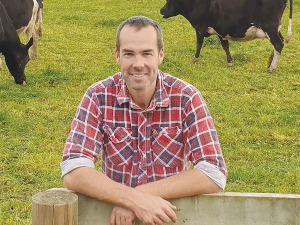
DairyNZ deputy chair Cameron Henderson has been re-appointed unopposed for another term.
OPINION: The stats speak for themselves.
Farms across the upper North Island are trialling different pasture mixes as part of a research programme that aims to build greater resilience into farming systems.
Election years are always a concerning time for farmers, according to DairyNZ chair Tracy Brown.
The Ballance Farm Environment Awards are coming to the West Coast of the South Island.



OPINION: It seems Canterbury processor Synlait is still in the doldrums.
OPINION: Get offside with New Zealand First leader Winston Peters at your own peril.