It's The Margins That Matter
OPINION: It appears to be difficult for people who haven’t tried to run a business to understand the difference between assets and cash.
 increase font size
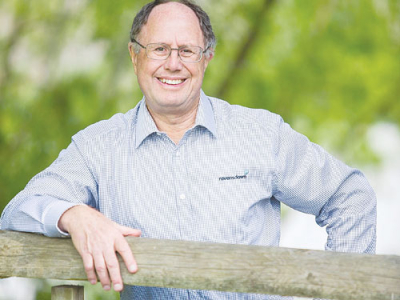 Ravensdown’s John Henderson says the co-op firmly supports the Farming Leaders’ Pledge.
Ravensdown chair John Henderson has added the co-op’s weight to a pledge by New Zealand farming leaders to help make our rivers swimmable for future generations.
The Farming Leaders’ Pledge was signed by a group of NZ pastoral farming leaders representing at least 80% of farmed land, committing them to working to make rivers swimmable for their children and grandchildren.
Henderson said Ravensdown is an organisation whose purpose is strongly aligned with the pledge.
“I grew up and now farm beside the Rangitikei River. I’m committed to seeing this pledge to fruition,” said Henderson.
“Those who are not familiar with Ravensdown may have thought it odd that a fertiliser company is represented in the group making the pledge. But the truth is it couldn’t be more appropriate.”
Henderson said the co-op does more than import and manufacture key nutrients for the pastoral farming sector.
“We have the fastest-growing environmental consultancy business in NZ and in the whole team employ the largest number of certified nutrient management advisors in the country.
“It’s not the size of our consultancy we pride ourselves on though, it’s the quality of advice and our sense of common purpose -- to enable smarter farming for a better NZ.”
The leaders group making the pledge includes a Ravensdown director, sheep and beef farmer Bruce Wills.
But Henderson said that with Wills there in his own right as a farming leader, Ravensdown wants to clearly state its support for the pledge. The co-op is intent on minimising sales of its products to only what is necessary, he said.
“We’ve had this debate in the boardroom. If a farmer rings up and says ‘I want 500 tonnes of nitrogen and I’m going to put it on at 200kg/ha’, we’re going to say to him ‘We won’t sell it to you’. There’s a bigger picture here than just Ravensdown’s profit. We’re all in the same boat, whether you live in Auckland or Tutira.”
The co-op is putting a lot of effort into technological advances such as computer-controlled variable-rate precision spreading from the air.
Henderson said NZ needs smarter farming for the sake of its environment, prosperity and for communities.
“As farming faces disruptive trends that will have a bearing on the value it contributes to NZ, Ravensdown is evolving so that the children of today and tomorrow benefit from our efforts. It’s long-term thinking and stewardship, building something lasting that collectively we can be proud of.
“The water pledge is a great example of this kind of thinking and Ravensdown has an important role to play in making this vision a reality.”
Henderson said Ravensdown was formed 40 years ago by farmers who wanted robust science, quality products and advice on working smarter and more efficiently.
“The shareholders of today are looking for ‘smarts’ that centre on trusted science, strong relationships and a concern for the environment.
“The pledge to make and keep NZ rivers swimmable requires a long-term commitment and is a multi-faceted challenge. But with collaboration, science, technology and the will to do so, we will be able to achieve this goal,” Henderson said.
OPINION: It appears to be difficult for people who haven’t tried to run a business to understand the difference between assets and cash.
OPINION: In the 1980s, concern was expressed in West Germany about the falling birth rate. Some simple analysis was performed by Professor Helmut Sies, physician and biochemist at Dusseldorf University. His letter ‘A new parameter for sex education’ was published in Nature in 1988:
When it comes to annual rebates, it's been a long time between drinks for Ravensdown shareholders.
Ravensdown has reported a net profit before tax and rebate of $50.1 million for the year ended 31 May 2026.
Farmer owned co-operative Ravensdown has signed a two-year naming rights sponsorship of the Canterbury A&P Show.
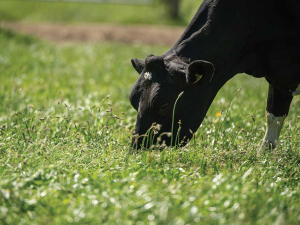
Farms across the upper North Island are trialling different pasture mixes as part of a research programme that aims to build greater resilience into farming systems.
Election years are always a concerning time for farmers, according to DairyNZ chair Tracy Brown.
The Ballance Farm Environment Awards are coming to the West Coast of the South Island.
Most dairy regions around the country have had a pretty good season so far says Tracy Brown.
Rural leader Mark Hooper has been appointed as an independent director to the NZPork board, bringing extensive farming, governance and advocacy experience to the role.